Add The New York Post on Google For some, 9/11/2001 is distant history. But for many families that lost a loved one, 9/11 is — even now, 25 years later — as present and immediate as yesterday.
Early that morning, I walked to my polling place to vote in New York City’s mayoral primary. Shortly afterward, we heard the news: a small plane had struck the World Trade Center. When we saw the size of the gash on television, my heart sank: I knew it couldn’t have been a small plane. And then the second plane hit.
Three Bloomberg LP employees — Peter Alderman, Bill Kelly and Paul Ortiz — were at acustomer conference at Windows on the World in the North Tower. They never made it home to their families. Neither did nearly 3,000 others.
The scale of the loss and depth of the grief our city suffered remains hard to put into words, but it is seared into our hearts. And it is not just the sadness we remember.
In the dark days following 9/11, our city and country came together like never before. We gave blood. We donated food. We volunteered. We prayed. We hung American flags. We thanked those in uniform. We attended vigils and funerals. We all did all we could, though it never felt like enough.
That spirit of unity was unlike anything most of us had ever experienced. It was patriotism at its best: love of country in action, through service to one another. And it was a spirit I was determined to keep alive as I began the greatest challenge and privilege of my life — leading our city forward as its new mayor.
When I took the oath of office, many wondered whether the city would ever recover. People worried that residents and businesses would flee and crime and decay would return. And the most pressing question of all hung over us: what to do with the World Trade Center site.
Some wanted the whole 16 acres to be a memorial. Others wanted cultural buildings but no commercial ones, while others wanted to rebuild exactly what had been there. After attending so many funerals and seeing so much grief, I made a solemn promise that the city would build a memorial worthy of the sacrifices of so many.
But I also believed the greatest tribute we could pay to those we lost, and the strongest rejection of the terrorists we could make, was to bring new life and vitality back to the site, and all of Lower Manhattan, by reimagining and rebuilding in ways that would attract new families, companies and visitors.
Doing that meant making room for all the proposed elements: commemoration, culture and commerce, plus a renewed spirit of community, through new housing, open space and a reconnected street grid.
Not everyone agreed, of course, and we didn’t control the site; the states of New York and New Jersey did, through the Port Authority, which had leased it to a private company, Silverstein Properties. We could not dictate what got built there, but we collaborated closely with them and we got to work on what we could control — what happened all around the site.
We began working to turn an area that had long been a 9-to-5 business district into a 24/7neighborhood, with new homes, schools, parks, businesses and cultural opportunities. “A downtown for the 21st century,” I called it.
As the years passed, we made steady progress that people could see and feel on the streets, but the World Trade Center site remained empty. Disputes among different groups kept arising, which kept turning into delays, which kept pushing out construction timelines.
By 2006, the Memorial plan had stalled. Costs had soared. Design decisions became divisive. And as people began to wonder if it would ever get built, donors stopped giving.
Failure was not an option. We owed it to the families — and to the city and the country — to do everything we could to get the Memorial and museum built, so I agreed to become chairman of the effort.
In the months that followed, the great team we assembled broke logjams, brought down costs and raised money needed for construction. We worked with victims’ families to resolve difficult questions, including how the names would be arranged on the Memorial. And we set a clear goal: open it by the 10th anniversary.
Thanks to countless people, we kept our commitment. On September 11, 2011, families gathered at the completed Memorial. Its brilliant design, by a city employee and immigrant named Michael Arad, was selected by a special jury after an open competition that drew more than 5,000 submissions.
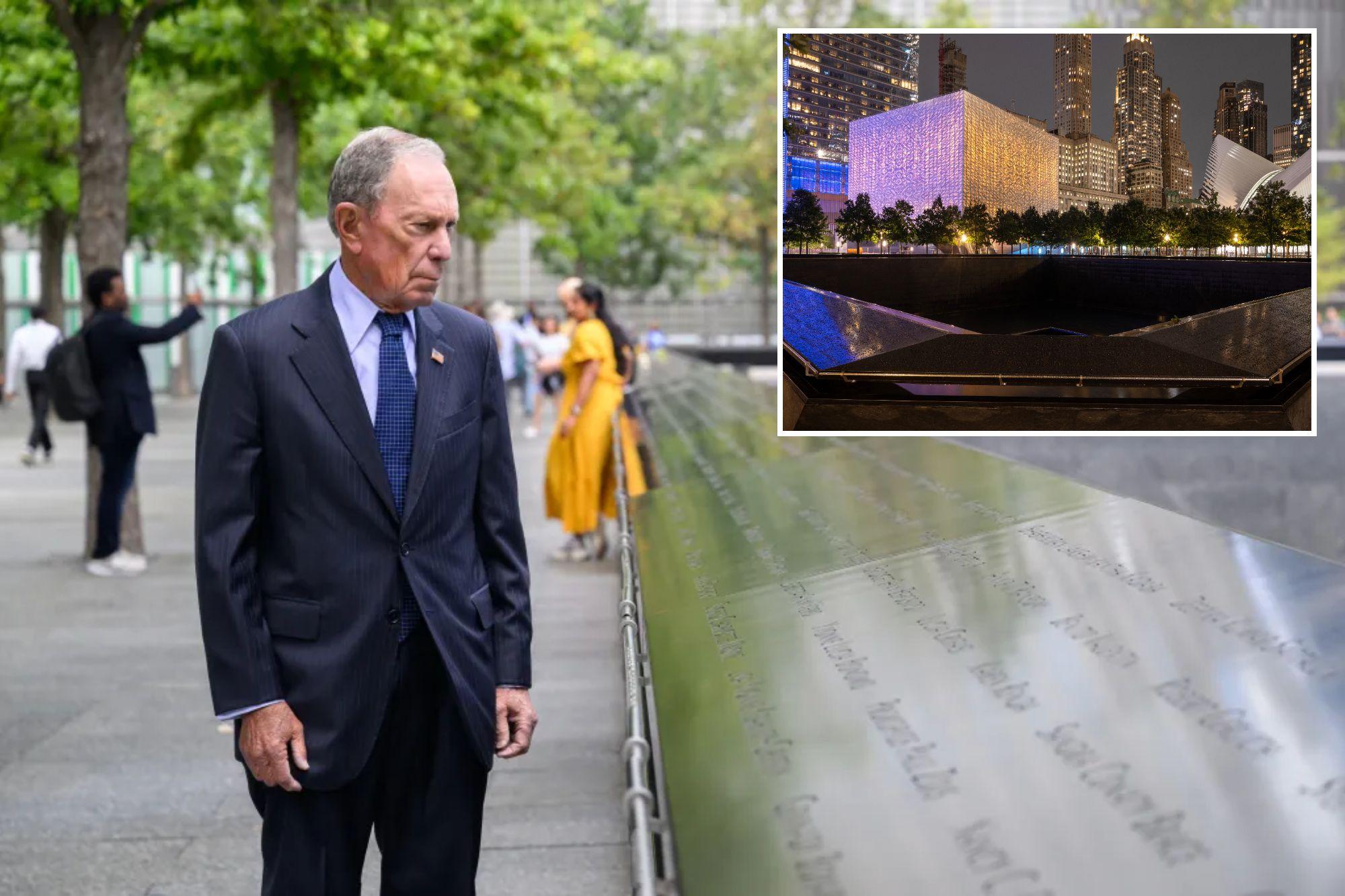
Standing at the Memorial and seeing the names etched in bronze, the reflecting pools set in the footprints of the Twin Towers and the waterfalls that drop beyond our line of vision is deeply moving. More than 100 million people from around the world have experienced it, and many of them have also visited the powerful and inspiring museum completed several years later.
The museum’s mission — preserving the stories of 9/11 and honoring its heroism and compassion — grows more urgent with each passing year. About one in three Americans are now too young to remember the attacks. In the decades ahead, responsibility for carrying that history forward will pass from those who lived it to those who learned it.
In 2023, we opened the Perelman Performing Arts Center (PAC NYC), a project we championed in City Hall and that I have chaired. The center stands next to the Freedom Tower and the tree-filled Memorial plaza, bringing together culture, commerce, commemoration and community, all in one place. Today, people come to the World Trade Center to remember, to work and to meet friends and see theater — just as we had hoped all those years ago.
On the sacred ground of the World Trade Center, memory lives on. So does life. And so does the spirit that inspired us in the wake of 9/11: unity, resolve and a patriotism that transcends party lines.
Twenty-five years later, our country could use more of that spirit. And so in honoring the vow we made back then — “Never forget” — let us also remember, and share with the next generation, the full extent of its meaning.
Michael R. Bloomberg is the founder of Bloomberg and Bloomberg Philanthropies and chair of the 9/11 Memorial & Museum and PAC NYC. He served as mayor of New York from 2002-2013.