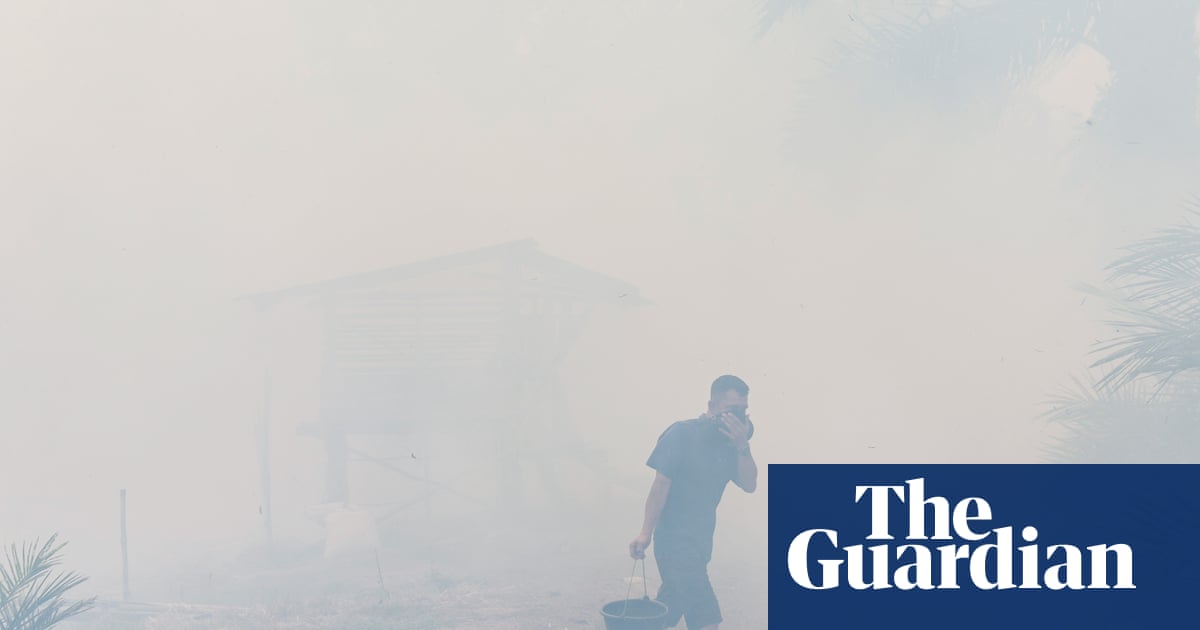
Fiercer wildfires in drying forests are occurring globally, as seen in this image from Indonesia in August 2026. Photograph: Mast Irham/EPAView image in fullscreenFiercer wildfires in drying forests are occurring globally, as seen in this image from Indonesia in August 2026. Photograph: Mast Irham/EPAClimate ‘feedback loops’ could worsen global warming by 30%, study findsEmissions of planet-heating methane and CO2 from natural sources are worsening the climate crisis, paper says
Rising global temperatures caused by the burning of fossil fuels are transforming the world’s forests, wetlands and tundra to the point they are releasing emissions that could further worsen global heating by as much as 30%, a new study has found.
As the world heats up, permafrost in the high latitudes is thawing, fiercer wildfires are burning in drying forests and wetlands and lakes are warming. All of these changes are themselves causing the release of planet-heating methane and carbon dioxide locked in trees and soils, therefore worsening the climate crisis, the paper states.
While scientists have long known of these “feedback loops” that amplify the impact of direct pollution from burning coal, oil and gas, the emissions from natural sources are largely unaccounted for in climate projections.
This additional heating is however significant, researchers found, with emissions from natural sources set to amplify global heating by 20% to 30% by the end of this century. This would add an estimated 0.2C to 0.4C to the global average temperature by this time, depending on the overall action taken by countries to combat the climate crisis.
View image in fullscreenFumaroles are seen in an area of cultivated cattail swamps to mitigate air pollution threat at the Salton Sea on 19 February 2021 near Calipatria, California. Photograph: David McNew/Getty ImagesEven small fractions of temperature change across the global climate can greatly change the risk of severe and deadly heatwaves, floods, drought and other impacts.
The United Nations last week conceded the international pact to constraint the global temperature rise to 1.5C above pre-industrial levels will be breached in the next few years, causing climate impacts such as this summer’s record heatwaves and wildfires to “strike faster, hit harder and last longer.”
Yet the increase in the world’s fever will likely be even larger than most projections currently account for, the new research warns, as they do not factor in the methane and CO2 that will spew from permafrost, wetlands, freshwaters and wildfires – the four areas the paper analyzed.
“This hidden multiplier is missing from the models guiding climate policy, so those models are likely underestimating how much warming is coming – and overestimating how much carbon we can still afford to emit,” said Sam Abernethy, a scientist at Spark Climate Solutions Research who led the research, published in Environmental Research Letters.
The disruption of the world’s carbon cycles is now being seen in “real time”, said Rob Jackson, a Stanford University scientist and study co-author. “The results are a wake-up call, and it’s imperative that they be included in the next generation of climate policies,” he added. “Failure to do so will make meeting the world’s climate goals less and less likely.”
There has been long-standing concern that should global heating melt enough of the Greenland and Antarctic ice sheets, thaw enough permafrost, warp crucial ocean currents and turn the Amazon rainforest into a savannah, the world will career past a series of catastrophic tipping points where the climate system spins wildly outside any sort of restraining human influence.
The planet is getting closer to such a “point of no return” where this runaway global heating becomes reality, a separate study earlier this year warned.
View image in fullscreenSevere erosion of the permafrost tundra in the Yukon Delta, Alaska in 2019. According to scientists emissions from natural sources set to amplify global heating by 20% to 30% by the end of this century. Photograph: Mark Ralston/AFP/Getty ImagesThis latest paper makes clear that action by countries to cut fossil fuel pollution will still lessen the amount of additional emissions that come from landscapes. Under the most optimistic climate scenario where emissions are cut quickly, natural sources will add 0.2C of warming, the paper found. Under a worse case higher emissions scenario, 0.4C will likely be added.
Current policies put in place by governments are likely to see the global temperature rise to 2.6C above pre-industrial times, according to Climate Action Tracker. This will likely cause severe disruption and hardship to billions of people through sea level rise, crop losses and other consequences.
“One of the most troubling aspects of climate change is that warming can trigger natural processes that cause still more warming,” said Bill Ripple, an ecologist at Oregon State University who helped author the research earlier this year on runaway heating. He was not involved in the new paper, which he called “important”.
“This does not mean that a Hothouse Earth trajectory is inevitable, but it provides another warning about the possibility of reinforcing feedbacks that can amplify the warming humans initiate,” he said.
“The paper also reminds us why every fraction of a degree matters. The more we warm the planet, the more we risk activating natural processes that add still more greenhouse gases to the atmosphere. This makes rapid reductions in fossil fuel emissions even more urgent.”