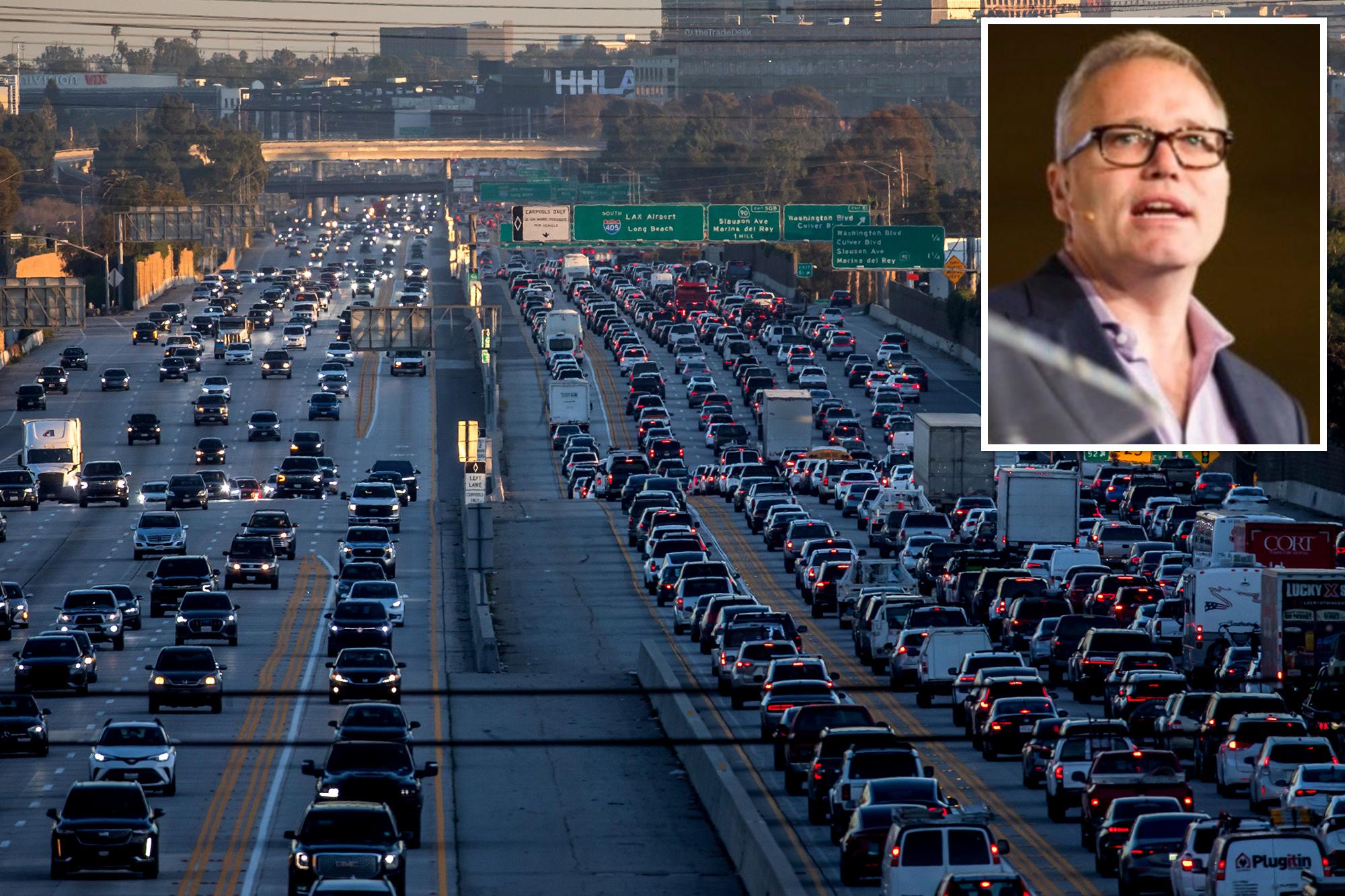
Add The California Post on Google A California CEO has slammed the state after relocating his company to Texas, citing high costs, taxes, regulations and a difficult business climate.
Notoriously high cost of doing business finally became too much for Hil Davis, who packed up his firm and headed more than 1,300 miles to the outskirts of Austin.
Davis, CEO of Digital Brands Group, didn’t mince words when explaining why his apparel and e-commerce company abandoned its California headquarters.
“Doing business in the state of California sucks,” Davis told Fox News Digital.
The company has relocated its headquarters to Round Rock, a booming community just outside Austin, where it has leased roughly 70,000 square feet of office and warehouse space as it expands its collegiate sports apparel operation.
And Davis says the move wasn’t necessarily about finding cheaper rent.
The Texas facility costs the company about the same as the space it previously occupied in Vernon, California, roughly five miles south of downtown Los Angeles.
Instead, Davis said a laundry list of California expenses and headaches ultimately tipped the scales.
Sky-igh living costs, lengthy employee commutes, escalating operating expenses and the growing burden of litigation all factored into the decision, he said.
“When you start to add all those things up,” Davis told the outlet, “it doesn’t work. It doesn’t make sense. It’s too hard.”
Texas, meanwhile, offered what Davis described as a more attractive business equation, including faster permitting, a strategic location for shipping products to colleges across the country and access to Austin’s creative workforce.
California Post News: Facebook, Instagram, TikTok, X, YouTube, WhatsApp, LinkedInCalifornia Post Sports Facebook, Instagram, TikTok, YouTube, XCalifornia Post Opinion California Post Newsletters: Sign up here!California Post App: Download here!Home delivery: Sign up here!Page Six Hollywood: Sign up here!
Gabriela von zur Muehlen, senior vice president of the Texas Association of Business, said the Lone Star State has continued to attract people and companies looking for a lower-tax environment.
“If you work hard and create a business, it’s clear there’s great opportunity here and you’re not going to be taxed out of your livelihood for just putting in the hard work.,” von zur Muehlen told Fox News Digital. “Absolutely we’re seeing that flow into Texas.”
The corporate exodus has become an increasingly contentious issue in California, particularly as lawmakers and voters debate whether to impose additional taxes on the state’s wealthiest residents.
One proposal would impose a one-time tax of as much as 5% on Californians with fortunes exceeding $1 billion. Supporters argue the measure could generate billions for health care and other public programs, while opponents contend that wealthy residents could simply relocate, taking their future tax contributions with them.
California also has the nation’s highest state sales tax rate at 7.25%, according to the Tax Foundation.
The state’s housing costs add another major burden. California’s housing costs are roughly twice the national average, with some of the country’s highest rents and exorbintant home prices in major markets such as San Francisco and San Jose, according to CNBC.
Data compiled by the Public Policy Institute of California shows that corporate headquarters have also been leaving the state.
From 2011 through 2021, about 1,250 headquarters — roughly 2.3% of the state’s more than 53,000 headquarters — left California. Those departures represented approximately 83,200 headquarters jobs or 3.6% of the total.
Tesla moved its headquarters from Palo Alto to Austin, while Chevron shifted its headquarters from San Ramon to Houston. SpaceX has also maintained major operations outside California.
Still, California remains a powerhouse for technology, entertainment and creative industries. Davis acknowledged that Silicon Valley and Los Angeles have deep talent pools that are difficult for other states to duplicate.
Digital Brands Group will also maintain some production operations in Los Angeles despite moving its headquarters.
But for Davis, the company’s future is now tied to Texas.
Some employees are eager to make the move, he said, while others have deep California roots and may remain behind.
As California wrestles with taxes, regulations and the cost of living, Digital Brands Group has already made its decision, becoming another company betting that everything really is bigger, and potentially easier, in Texas.