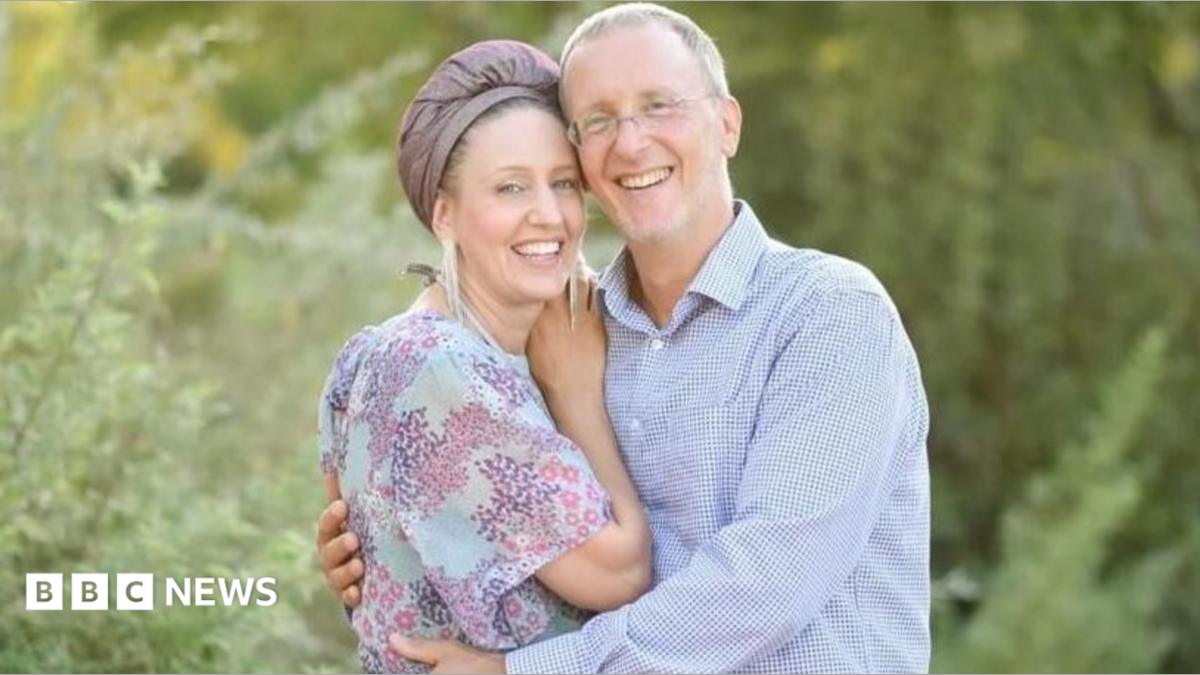
Jonathan Wittenberg, a senior rabbi of Masorti Judaism, called what is taking place in the West Bank ‘a Chillul HaShem, a violation of God’s name of the worst order’. Photograph: Sophia Evans/The ObserverView image in fullscreenJonathan Wittenberg, a senior rabbi of Masorti Judaism, called what is taking place in the West Bank ‘a Chillul HaShem, a violation of God’s name of the worst order’. Photograph: Sophia Evans/The ObserverSenior UK rabbis come out in support of sanctions on Israeli settlementsSpiritual leaders stress diversity of views within Jewish community and warn against inaction on settler violence
Prominent British rabbis have backed Ed Miliband’s sanctions on Israeli settlements, warning that the time for inaction on settler violence must come to an end.
The intervention comes after the UK’s chief rabbi, the spiritual leader of mainstream Orthodox Jews in the UK, Sir Ephraim Mirvis, described UK sanctions against illegal Israeli settlements in the occupied Palestinian territories as a “dark day for British Jews” and warned they could embolden people who “use hatred as a weapon against Jews”.
The sanctions were also condemned by the Board of Deputies of British Jews and The Jewish Leadership council.
But other senior rabbis, many from the progressive wing of the community, have since come forward to stress the diversity of views within the British Jewish community, with some backing Miliband’s sanctions, while others warned that concern about the measures should not become an excuse for ignoring settler violence and expansion, and others calling for the government to go further.
Jonathan Wittenberg, a senior rabbi of Masorti Judaism, said he was in the Palestinian village of Umm al Khair while Miliband was delivering his speech, and had seen the results of settler violence “with my own eyes”.
“What is taking place today in the West Bank is a Chillul HaShem, a violation of God’s name of the worst order. We cannot stay silent. This is terrible for Palestinian people who want to get on with their lives in peace. It is terrible for Israel,” he said.
Wittenberg added: “We must speak out. We must do so out of deep concern for what is human and just, and for the sake of Israel and Judaism. We cannot turn away.”
While he acknowledged that the British Jewish community does not have to agree with everything the British government chooses to do, he said: “The time is for action.”
Rabbi Alexandra Wright from The Liberal Jewish Synagogue in London, and vice-chair of the British Friends of Rabbis for Human Rights, said while not everyone in the community will support the sanctions, action was needed as “the occupation and escalating violence are harming Palestinians and Israelis”.
She said: “The sanctions are the UK’s commitment to a two-state solution. The Anglo-Jewish community is committed to a Jewish state that is founded, not on oppression and violence, but, in the words of Israel’s declaration of independence, ‘on freedom, justice and peace as envisaged by the prophets of Israel’.”
Wright, who had also recently visited the Palestinian village Umm al-Khair, which has faced relentless attacks by Israeli settlers, called on the Jewish community to “not hold back any progression towards a two-state solution”.
Jeremy Gordon, the rabbi of New London Synagogue, who came out in favour of Miliband’s sanctions, said: “It is wrong to argue for silence, inaction or ‘the use of carrots’ – appeasement – before the settler movement and those who support it. The playbook of these settlers is predicated on the notion that they will be appeased or ignored, and that well-meaning Jews the world over overlook their illegal and criminal actions.”
Lev Taylor, rabbi of Kingston Liberal Synagogue in London, described the sanctions as a sign “the government is moving in the right direction”. He added: “Some of my Israeli members have been campaigning for sanctions exactly like this … The Judaism in which I believe repudiates this brutal occupation.”
He pointed to the statements from Israeli member of the Knesset Gilad Kariv, who said: “The blame for the European countries’ announcement of sanctions falls squarely on the shoulders of Netanyahu, Smotrich, Katz, and Sa’ar.”
There is also some consternation within the Orthodox community at the suggestion that British Jews are uniformly opposed to the sanctions.
Miliband, the foreign secretary announced sweeping sanctions on trade with Israeli settlements in the West Bank on Tuesday, with the government taking the position that Israel’s occupation of the Palestinian territory was unlawful.
The measures were coordinated with France, Canada and nine other countries that were also introducing sanctions on Israel over the increasing expansion of settlements, which the UK government says is threatening the future of a Palestinian state.
Jonathan Boyd, executive director for Institute for Jewish Policy Research, explained there are no robust survey data on whether British Jews support sanctions on Israeli settlements specifically. “However, the available evidence shows that views on Israeli government policy and the conflict are quite diverse, varying by age, denomination and political outlook.
“At the same time, they also show that most British Jews feel a strong emotional attachment to Israel and have become increasingly concerned about antisemitism in Britain since October 7.”
Rabbi Charley Baginsky and Rabbi Josh Levy, co-leaders of Progressive Judaism, which represents about one-third of Jews affiliated to synagogues and estimates the same proportion of non-affiliated Jews share its values, described sanctions as a “clumsy tool” that could have unintended consequences. They warned that “measures directed at Israeli settlements are not the same as an attack on Jews. We should take care not to collapse the distinction between them.”
They called on those against sanctions to offer more than statements condemning violence, adding, “inaction is not neutral. It too is a political and moral choice.”
Wittenberg, Baginsky and Levy all asserted their opposition to the Boycott, Divestment and Sanctions movement, and welcomed Miliband’s stance against it.
Tuesday’s sanctions announcement prompted a swift backlash from Israel, which ordered the closure of the British consulate in Jerusalem and banned 12 British MPs and activists from entering Israel.
Washington’s ambassador to Israel, Mike Huckabee, threatened that the US could take retaliatory action over trade, but the US secretary of state, Marco Rubio, said the US would “obviously” not follow the UK government’s actions but did not want to see the West Bank destabilised.
The UK foreign secretary said he regretted what the Israeli government had announced but was “proud of what we did yesterday and it was the right thing to do”.
Miliband accepted the closure of the British consulate in Jerusalem would be “damaging” but said the government had “weighed up the costs and benefits in advance of this”.