Add The California Post on Google Want to peek under the hood of a spaceship?
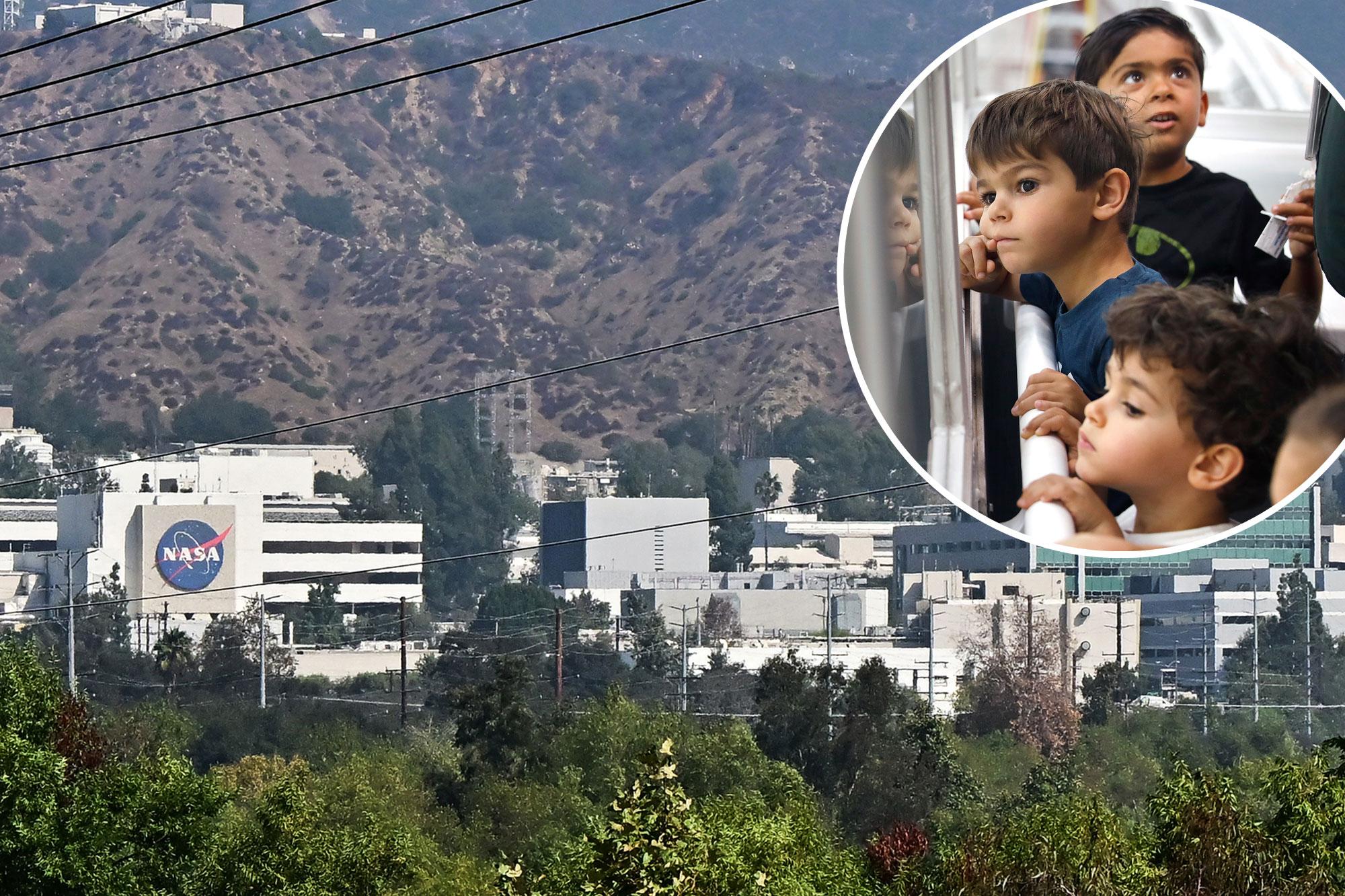
NASA will swing open the pod bay doors and welcome the public inside its secretive Jet Propulsion Laboratory in Pasadena next month — after three years of keeping the gates to its pioneering space technology palace slammed shut.
For two days (Oct. 10–11) and at no charge, Southern Californians will be able to legally penetrate the perimeter of one of the Los Angeles area’s most famous landmarks — one that most will rarely see up close and personal, as part of the lab’s rare Explore JPL event.
That is, if you can score a ticket. They don’t cost anything, but they’re hotly in demand — and were snapped up within hours of the announcement.
But don’t panic, organizers say — spaces to attend will be rereleased as cancellations come in.
And it’s worth checking availability over the next few weeks, as there’ll be so much to see.
The tour includes a look at the Space Flight Operations Facility, a landmark mission control center that has monitored major space missions including Mariner, Viking, Voyager and Mars 2020.
Visitors will get a chance to learn about cutting-edge innovations in robotics research, including robotic moon explorers and search and rescue rovers. There are multiple themed exhibitions about famous US space missions. You’ll also be able to peek into the center’s Microdevices Laboratory to witness how “miniature technologies are shaping the future of exploration.”
The lab also features full-scale models of the Perseverance Mars rover, Voyager and Galileo spacecraft.
First opened in 1936, the JPL celebrates its 90th anniversary this year. The lab was created to conduct groundbreaking research on rocket experiments.
The lab built and launched Explorer 1, the first successful artificial satellite launched by the US in 1958, designed and operated the Mars Exploration Rovers, and manages NASA’s deep space network, an international system of radio antennas used to communicate and support interplanetary spacecraft.
The JPL has lately been at the center of a string of suspicious deaths and disappearances of scientists connected to the JPL and other government-run laboratories.
JPL astrophysicist Carl Grillmair was murdered on the front porch of his rural Southern California home in February.
Monica Reza, JPL’s former director of the Materials Processing Group, disappeared in Angeles National Forest in June of last year, while out hiking. Her whereabouts remain unknown.
Frank Maiwald, another JPL scientist, died in July 2024 without explanation, and Michael Hicks, who worked on NASA Deep Space 1 Mission and several other high-profile projects, died in July 2023 at the age of 59. He worked at JPL from 1998 to 2022.
Earlier this year, the federal government announced a probe into the mysterious chain of events.
Former FBI Assistant Director Chris Swecker told the Daily Mail in April that the cases could be considered suspicious.
“You can say these are all suspicious, and these are scientists who have worked in critical technology,” Swecker told the the outlet, hinting that foreign intelligences could be behind the strange cases.
“China, Russia, even some of our friends — Pakistan, India, Iran, North Korea — they target this type of technology.”
California Post News: Facebook, Instagram, TikTok, X, YouTube, WhatsApp, LinkedInCalifornia Post Sports Facebook, Instagram, TikTok, YouTube, XCalifornia Post Opinion California Post Newsletters: Sign up here!California Post App: Download here!Home delivery: Sign up here!Page Six Hollywood: Sign up here!