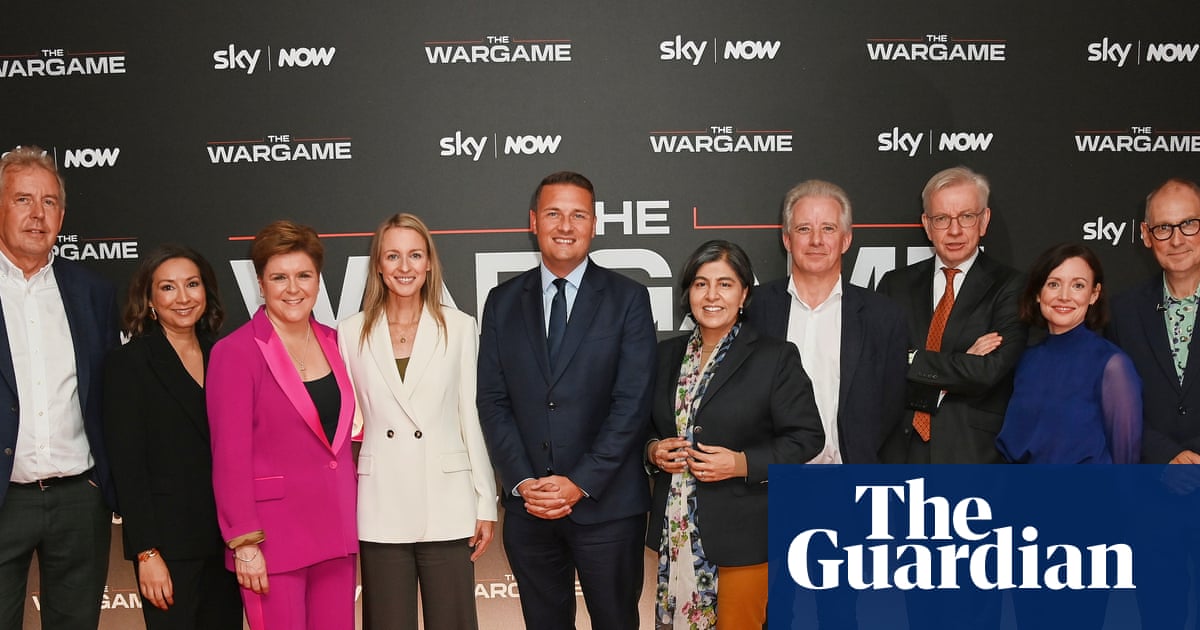
Wargame, due to be broadcast this month, features a host of former politicians who have to deal with a ‘war-gamed’ attack on Britain. Photograph: Dave Benett/Alan Chapman/Getty Images for SkyView image in fullscreenWargame, due to be broadcast this month, features a host of former politicians who have to deal with a ‘war-gamed’ attack on Britain. Photograph: Dave Benett/Alan Chapman/Getty Images for SkyWes Streeting praises Wargame TV series for highlighting UK defence needsMinister says new series, which depicts Russian attack and features Michael Gove and Nicola Sturgeon, will ‘make people think’
A docudrama depicting a Russian attack on a Britain led by an unlikely pairing of Michael Gove and Nicola Sturgeon has been praised by the defence secretary, Wes Streeting, for writing “my spending review submission”.
Wargame, due to be broadcast on Sky later in September, features a string of former politicians advised by ex-securocrats, grappling with an unusually powerful Moscow, while highlighting limitations in the British military.
It features Gove, a Conservative minister for more than a decade, as prime minister – a job he unsuccessfully ran for in 2016 – and Sturgeon, the former first minister and leader of the Scottish National party, as his deputy, in a mock Downing Street Cobra emergency situation room.
Read moreLabour figures include Jim Murphy, a former Scottish secretary, as the foreign minister, as well as Harriet Harman and Ayesha Hazarika, a journalist and peer, who plays the role of director of communications in the embattled team.
After a preview screening at the National Gallery in central London, with many of the former politicians present, Streeting said: “On behalf of the association of UK defence secretaries, thank you for my spending review submission”.
Though the war depicted was of “a low likelihood, all be it high impact,” Streeting said he anticipated the show would stimulate public debate on defence spending, currently planned to rise by about £30bn by 2035.
Streeting said Wargame would “play a role in making people think about where they would put defence in the order of priorities as voters,” though he added that wildfires, floods and other natural disasters should also prompt the public to think how they would be able to cope in a crisis.
The scale of the cash increase, pushed for by US president Donald Trump but signed up to by the UK and other Nato allies, is such that it would require taxes or borrowing to be raised, or substantial cuts from other government spending after the next election.
The five part programme is a spin off from a Sky News podcast, presented by the journalist Deborah Haynes, who has helped to develop the television show. “We want our country to understand better what the threat is, what credible defence is”, she said.
Producers said a series of incidents involving Russian sabotage in the UK and Europe had made the programme more relevant. During filming in mid-June, a Russian frigate south of the Isle of Wight unexpectedly fired warning shots near an approaching pleasure yacht in the Channel, terrifying a British couple on board.
Gove – a minister who served continuously between 2010 and 2024 - said it come had a surprise to him how limited Britain’s missile defence capability was during filming, an issue highlighted in the show.
“For anyone watching, they will think WTF. How did we get into that situation?” It was, he added, “quite sobering” for somebody who had been in government for as long as he had, though he had not been a defence minister.
A succession of cuts to defence spending made by Conservative and Labour governments from the end of the cold war until the early part of the decade have reduced defence investment and left the navy struggling to deploy warships and submarines.
Since then, there has been a growing consensus across the centre of British politics for increased defence spending. Though Russia remains fully employed in its war in Ukraine, Moscow retains the ability to conduct cyber, sabotage and disinformation operations in the UK.
Sturgeon said the programme could help dispel “the optimism bias that this won’t happen”. Gove said: “I never thought I would say this, but I agree 100% with Nicola”.