Cambodia is cracking down on scam operators, with the effects being felt mostly among young Africans: Thousands of trafficking victims are now stuck in the Asian country with no money, no passport, and no prospects.
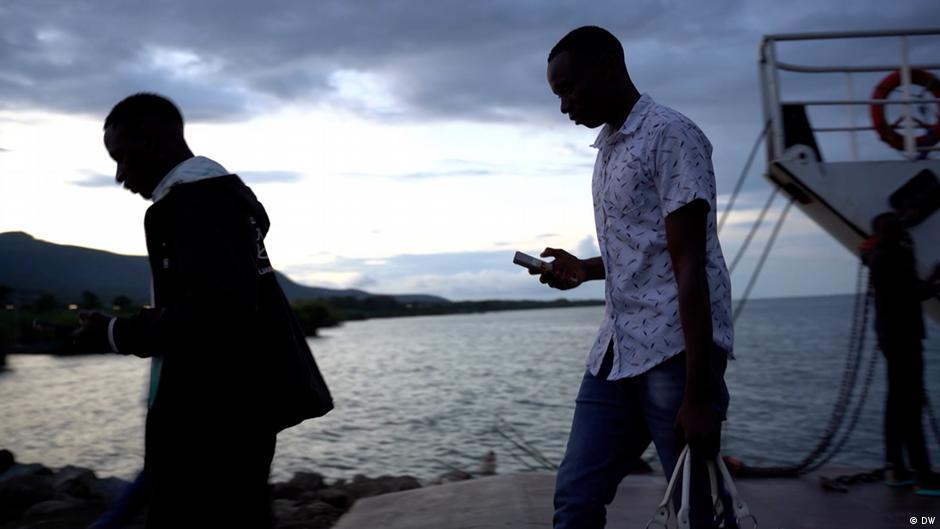
https://p.dw.com/p/5MGvXMany of the Africans trafficked to Cambodia are lured there with false promisesImage: DWAdvertisementSoutheast Asia has long emerged as a major hub of highly organized online fraud operations, targeting people all around the world.
According to the United Nations, these operations generate tens of billions of dollars annually, having long surpassed the illegal drug trade as the most profitable activity for criminal networks, as reported by the United States Institute of Peace.
However, those who fall prey to scams and other fraudulent activities aren't the only victims of these criminal rings; the scam industry in Southeast Asia alone is powered by at least 300,000 trafficked workers from 66 countries, who are routinely subjected to torture, sexual abuse, and forced labor, according to a recent UN Human Rights report.
Dream job abroad? It could be a trafficking trap To view this video please enable JavaScript, and consider upgrading to a web browser that supports HTML5 video
African nationals now form the largest group of those trafficked to and stranded in countries like Myanmar and Cambodia, without any viable pathway to go back home, says the NGO Freedom Collaborative.
In Cambodia, one of the main obstacles for facilitating any return is the fact that many African countries like Uganda, Liberia, Ghana, of Nigeria have no consular representation.
"But also because some countries have zero interest," says Montse Ferrer, co-regional director of Amnesty International, who finds equal blame for the situation in many of the countries of origin.
"They're not even picking up the phone, let alone providing the paperwork for the money for them to go back."
Ferrer believes that keeping the situation unchanged has also been in the interest of the Cambodian government for a long time:
Many trafficking victims now have overstay fines for their visas against their names in Cambodia, reaching thousands of dollars in many instances.
"They don't allow NGOs to provide the support these people need, and instead they have resorted to arresting and threatening them," Ferrer told DW.
Following great pressure from the international community — including threats of financial sanctions by the US, the UK, Canada and the European Union — Cambodia did eventually agree to launch a crackdown on the scamming industry earlier this year.
According to the Cambodian Ministry of Information, the initiative resulted in many arrests and triggered a mass exodus of dubious operatives from scamming industry.
Inside Cambodia's scam industryTo view this video please enable JavaScript, and consider upgrading to a web browser that supports HTML5 video
But the crackdown also created a secondary crisis: Thousands of trafficked foreign workers remain stranded in the country without documentation nor legal status; now, they also lack shelter and money in many instances, NGOs say.
Many who have sought in Cambodia help have reportedly been placed in immigration detention, while others have to sleep rough and beg for food.
Instead of being given protection, many of the trafficking often victims now face stigmatization and abuse on the street of the capital Phnom Penh and elsewhere.
Emmanuel David is one of many of the trafficking victims stuck in Cambodia. The 28-year-old Liberian national arrived there last year after a treacherous irregular journey originating in Vietnam.
"My friend told me there was work in Cambodia, but he did not explain that it was scamming work," David explained.
The scamming company had offered him a lucrative deal of making around $800 (€700) per month, which is more than double the average wage for qualified individuals in Liberia, according to the Civil Service Agency of Liberia.
The reality hit quite differently: Once there, he was forced to work 14 hours a day to deceive women on various dating apps to part with their money.
But David was initially unable — and later unwilling — to meet the set target quota of scams per day.
In response, the criminal group he worked for started billing him for food and accommodation through his wages, and later even confiscated his belongings — including his passport.
David says he also faced substantial physical violence, including beatings, for four months.
Eventually, he left "with no documents and no money," and is now hoping to find a way back to Liberia.
Another survivor, who asked to remain anonymous for fear of retaliation, also recounted how he was "beaten and [subjected to] electric shocks."
The abuse resulted in him having to be hospitalized for three weeks, and is now unable to pay his medical bills.
Pia Oberoi, chief of the Right to Development Section at UN Human Rights, told DW that "despite the promise of a good salary, most come out in debt."
She also confirmed that more and more of the trafficking victims in Southeast Asia come from African countries, "because there is clearly a recruitment industry that's built around Africa, targeting African nationals."
Kenya scammers lured abroadTo view this video please enable JavaScript, and consider upgrading to a web browser that supports HTML5 video
Other victims have corroborated this development, describing hundreds of Africans packed into heavily fortified compounds.
"Once you're inside there's no way out," an informant, who also chose to remain anonymous, told DW.
He said the compounds have their own laws, and that sexual abuse and psychological violence are an integral part of how they operate.
The police, he says, just turns a blind eye — at best.
Amnesty International speaks of an unfolding humanitarian crisis, warning that escapees are widely being treated as criminals rather than as trafficking victims.
"They shouldn't be punished for crimes they were forced to commit," Oberoi highlights, though her pleas appear to land on deaf ears.
Several of the victims contacted by DW said their governments were "slow" to help with their repatriation.
DW attempted to contact several African foreign ministries to hear their side, but has not received any response.
A statement issued by the Cambodian government meanwhile said that more than 700 compounds run chiefly by Chinese nationals had been raided, with 58,266 foreign nationals deported and nearly 30,000 suspects arrested over the past year.
However, the Cambodian government did not reply to DW's direct request for further information.
The UN's International Organization for Migration (IOM) meanwhile said it's trying its utmost to help the trafficking victims; but in the face of severe budgetary constraints, it can only provide "limited, prioritized support."
Humanitarian groups also warn of a high risk of victims being re-trafficked, even for those who have managed to return to their countries of origin.
In some instances, those who come back home are stigmatized as a failure — "a situation that is really unbearable," says Ferrer.
Emmanuel David is a prime example: He feels obliged to to apologize to his family for not returning a success. When asked about his little daughter, he says that "daddy can't go home without money."
To his mind, he hardly is the victim of his circumstances.