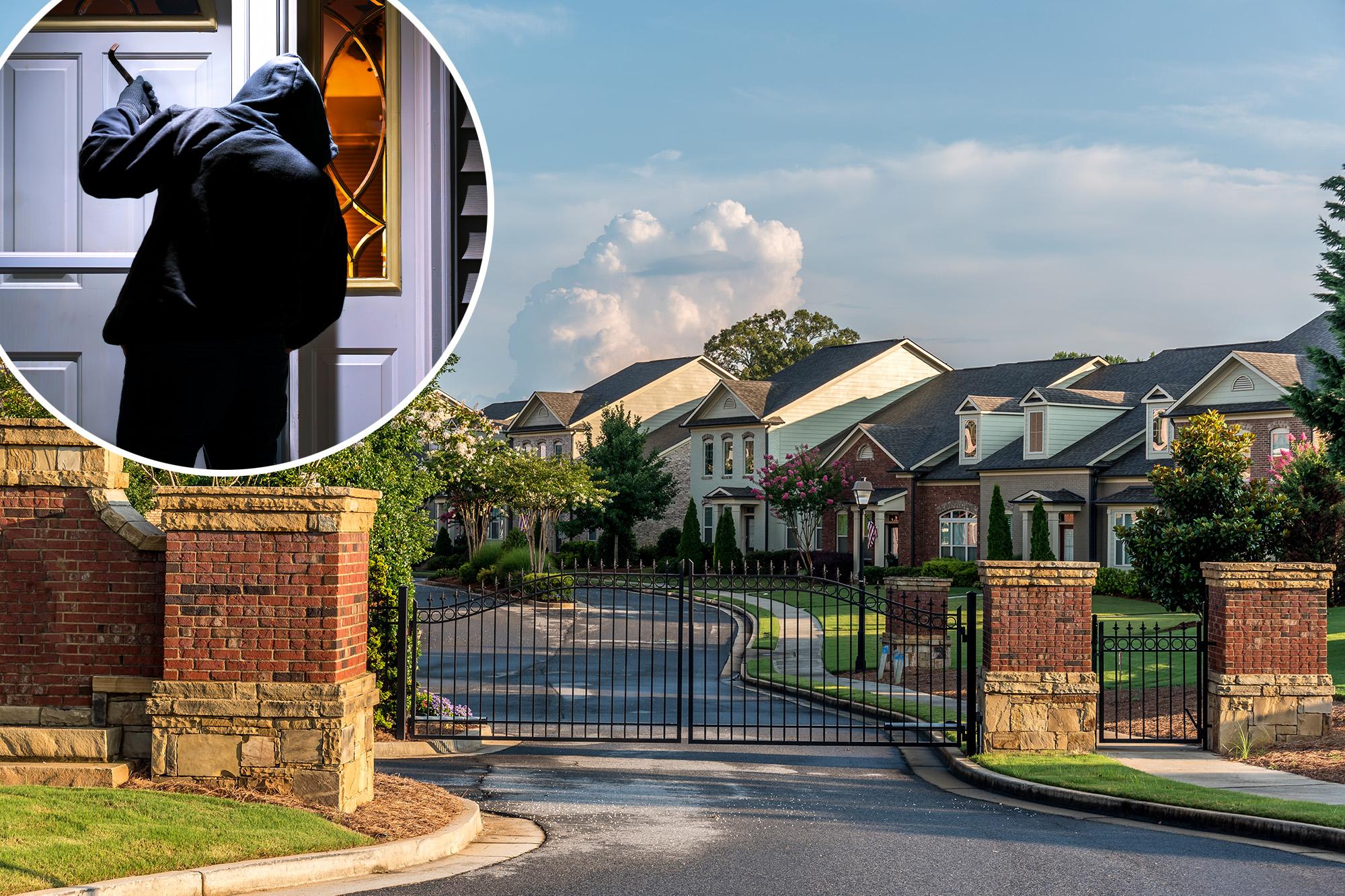
Add The New York Post on Google Forget granite countertops. The hottest home upgrade in America right now might be a locked gate at the end of the driveway.
A new study finds that half of US adults would pay above market price for a house in a neighborhood with a gated or controlled entrance, and nearly a third say they’d shell out at least 6% more for the privilege.
The numbers come from a survey of 1,000 American adults conducted by Tri-State Gate, a Westchester County company that installs automated driveway gates.
Real estate data backs up at least part of the trend. Homes in gated communities already carry a roughly $30,000 premium over comparable ungated properties, according to prior research from the American Real Estate Society.
What makes the survey notable isn’t just the price tag buyers are willing to eat. It’s the disconnect between how dangerous people think their neighborhood is and how safe they actually feel inside it.
Sixty nine percent of respondents said crime where they live hasn’t gotten any worse. Yet 72% admitted they don’t feel fully at ease at home. Only 28% picked the option “very safe, I feel genuinely protected,” while the majority landed on a more hedged answer, “mostly safe, but I stay alert.”
“What stands out to me in this data is that people aren’t necessarily reacting to crime. Most of them said crime in their neighborhood hasn’t changed. What they’re responding to is a lack of control,” Matthew Prato, president of Tri-State Gate, told The Post.
“A gate doesn’t change what’s happening in the neighborhood; it changes who can pull into your driveway without you knowing. For a lot of homeowners, that’s the difference between thinking about their home when they’re away and not thinking about it at all.”
That unease is showing up in behavior, not just survey answers.
Sixty nine percent of respondents now own a security camera or video doorbell, and checking the footage has become something close to a nervous habit.
A third of camera owners say they check their feed multiple times a day, and when you add in people who check daily or whenever an alert goes off, more than eight in 10 camera owners are monitoring their homes constantly.
Despite all that vigilance, most Americans are strangely passive when it comes to acting on it.
Fifty six percent said it would take an actual break-in or a visible pattern of crime nearby before they seriously invested in physical security upgrades, rather than doing it preemptively. That’s a striking number given that break-ins remain rare.
Just 8% of households reported experiencing one or an attempted one in the past two years. Package theft is a far more common headache, with 23% of respondents saying a delivery has been swiped off their doorstep.
The takeaway is less about actual danger and more about the psychology of feeling watched, or unwatched.
Crime rates nationally have been trending down for years, and separate polling from Gallup has found only a small share of Americans call crime in their area a serious problem.
But that data hasn’t translated into peace of mind. If anything, the rise of doorbell cameras and 24/7 footage may be feeding the anxiety it was supposed to cure, turning homeowners into round-the-clock monitors of their own front steps.