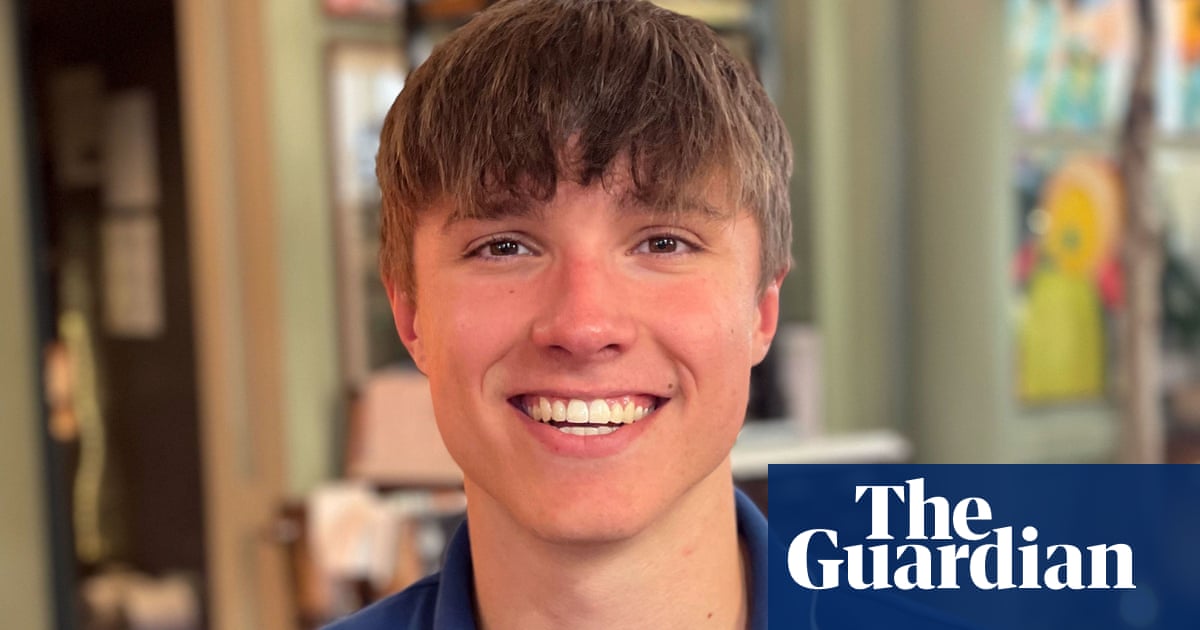
Webber, 19, was one of three people fatally stabbed by Valdo Calocane in June 2023. Photograph: Nottinghamshire police/PAView image in fullscreenWebber, 19, was one of three people fatally stabbed by Valdo Calocane in June 2023. Photograph: Nottinghamshire police/PABarnaby Webber’s death in Nottingham attack was ‘potentially preventable’, inquiry toldMore rapid use of blood products may have raised chance of 19-year-old making it to hospital, though chance was low, says counsel
The death of a 19-year-old student who was killed in the Nottingham attacks in 2023 was “potentially preventable”, a public inquiry into the incident has heard.
Barnaby Webber and Grace O’Malley-Kumar, both 19, and Ian Coates, a 65-year-old caretaker, were fatally stabbed by Valdo Calocane, a paranoid schizophrenic, on 13 June 2023.
In 2024, Calocane was sentenced to an indefinite hospital order after admitting three counts of manslaughter on the grounds of diminished responsibility and three counts of attempted murder.
The inquiry is examining the events leading up to attacks, and has heard evidence from various local authorities, including health professionals and police officers, as well as Calocane’s family, in order to assess the “events, acts and omissions” that led to the killings.
During closing submissions on Tuesday, it heard how a panel of medical professionals had assessed the emergency medical response to the attacks and the “survivability” of victims.
Rachel Langdale KC, counsel to the inquiry, said the assessment had found that “more rapid administration of blood products” could have increased Webber’s chance of getting to hospital and possibly undergoing surgery.
The 19-year-old had a “far less” than 50% chance of surviving his injuries, which was classed as “potentially preventable”, Langdale said. She added that O’Malley-Kumar and Coates’s deaths were “not preventable”.
View image in fullscreenFrom left: Ian Coates, Barnaby Webber and Grace O'Malley-Kumar. Photograph: Nottinghamshire police/PAThe assessment, which also acknowledged the efforts of emergency services, found that a more rapid administration of blood to Webber would have to have been coupled with multiple other rapid and meticulous steps “in order for Barnaby to survive to intensive care”.
The inquiry also addressed the emergence of further evidence after hearings had concluded in early June.
At the start of closing arguments, the inquiry’s chair, Deborah Taylor KC, said it was “disappointing”, and that further evidence “ought to have been identified by core participants and disclosed earlier”. She called on them to provide all corrections and omissions by 31 December.
Such evidence included the police discovery of a holdall bag at Calocane’s former address in Nottingham in the days after the attack. The bag contained notebooks that were not disclosed to the inquiry until June this year.
The books contained notes from Calocane in which he described himself as God, and said police had “mind-reading software” and that he had the power to “resurrect people”, the inquiry heard.
Other documents created by Calocane were found in a bin at the property, containing bullet points about explosives, including TNT and nitrate fertiliser. Such notes were not identified or taken into account by police, nor made available to the Crown Prosecution Service or to psychiatric experts, the inquiry heard.
View image in fullscreenCalocane appearing at Nottingham crown court in 2024. Photograph: Elizabeth Cook/PAThe lawyer representing bereaved families, Tim Moloney KC, said one of the notes appeared to say “Manchester Arena”. Calocane had also searched online for “large venues in Nottingham”, he said.
“Nobody has ever asked [Calocane] why he was researching explosives and large venues, because they couldn’t,” Maloney said. “There was a failure to investigate [Calocane’s] historical behaviour and actions.”
The inquiry was also not told of violent assaults committed by Calocane until after the hearings concluded in early June. One involved an assault on a colleague in a warehouse in 2021, and in another he punched a colleague in Normanton in February 2023.
Evidence presented to the inquiry earlier this year detailed how Calocane had committed a string of violent incidents in the years before the attacks, leading to him being sectioned four times in the space of two years.
An arrest warrant was also out for Calocane at the time of the Nottingham attacks, after he failed to appear in court for the alleged assault of a police officer, the inquiry heard previously.
Closing submissions will conclude on Wednesday and a report detailing the inquiry’s findings will be published next year.