Add Decider on Google More On: 9/11 11 Best New Movies on Netflix: September 2026’s Freshest Films to Watch Stream It Or Skip It: ‘Turning Point: Generation 9/11’ on Netflix, a Gut-Wrenching Documentary About a Pivotal Moment in History Stream It Or Skip It: ‘9/11 Reunited’ On Hulu And Disney+, Where People Who Helped Each Other Survive The World Trade Center Attack Reunite For The First Time In 25 Years Never Forget: Best 9/11 Documentaries, Shows, and Movies To Watch on Netflix, HBO Max & Prime Video Director Brian Knappenberger’s new documentary, Turning Point: Generation 9/11, is a tough watch. No surprise there. But it’s a meaningful, arguably necessary watch, the film offering fresh insight into the impact of a generational tragedy.
Specifically, the doc – part of Knappenberger’s Turning Point series, and a follow-up to 2021’s five-part miniseries Turning Point: 9/11 and the War on Terror – focuses on people from the generation that was so young on Sept. 11, 2001, they have at-best vague memories of the terrorist attacks, if they have any at all. Using harrowing footage from the ground at the World Trade Center in New York City, at the Pentagon, and where United Flight 93 crashed in Pennsylvania, Knappenberger pieces together an emotionally wrenching reiteration of the horrifying events of that day. From there, he outlines a diaspora of tragedies across the globe, from a two-decade war in Afghanistan to America’s current toxic political divide, and the trauma inflicted on individuals therein.
And that means sitting down with a variety of people and hearing their testimonies, all of which are inevitably emotionally wrenching. Here are some of their most heartbreaking stories:
Smoak was five years old on 9/11. He remembers being home sick from school and seeing his grandparents react to the TV news reports. When he got older, he began to understand the hows and whys of what happened, and vowed to serve his country by joining the Marines. His squadron was sent to Kabul in 2021 for America’s full military withdrawal from the country, which prompted the totalitarian Taliban to take control of the country. Pandemonium ensued at the Kabul airport as Afghan citizens tried to escape the country. Smoak was there that day, when an ISIS suicide bomber detonated an explosive that killed 169 Afghan civilians and 13 American troops, including some of Smoak’s closest friends.
Pachucki was 21 years old on 9/11. She’s an oral historian who curated audio for New York City’s 9/11 Memorial and Museum. In one scene, her voice cracks and she’s near tears as she describes how firefighters shook each other’s hands before they entered the World Trade Center buildings, to their likely death. We hear some of the tapes she compiled, whether they’re stories of people who watched the planes crash into the World Trade Center skyscrapers, or the phone calls of people trapped in the building or on Flight United 93, delivering their final words to loved ones. One such call concludes with a horrible crashing sound as one of the towers begins collapsing. For any viewers too young to remember 9/11, such moments put personal tragedies in sharp focus.
Nguyen was four when he was boarding the bus for preschool and his father, Khang Ngoc Nguyen, rushed out the door for a last-second kiss goodbye. It was the last time An saw his dad. Khang was a Vietnamese citizen who escaped Saigon after it fell to American forces in the Vietnam War. An says his father was a poster child for the American dream: An immigrant who worked hard after arriving in the U.S., studying engineering and eventually landing a job as an electrical engineer for the government. Khang was at the Pentagon on 9/11 when terrorists crashed a plane into the building, killing him and 124 others.
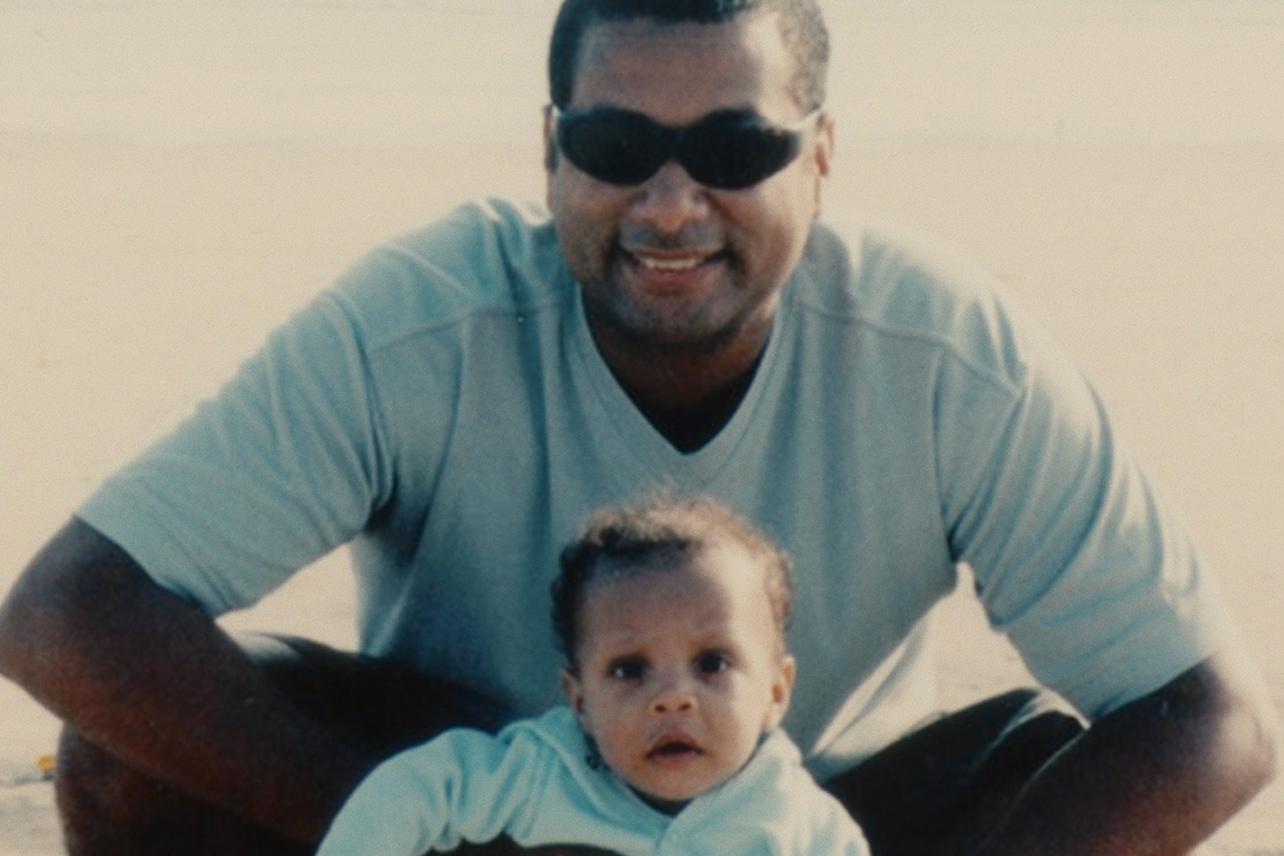
Homer was still in diapers on 9/11 – 10 months old. She only remembers her father from photographs and stories. LeRoy W. Homer, Jr. was the co-pilot of Flight 93, which was hijacked by terrorists who intended to crash into the U.S. Capitol in Washington D.C.; flight personnel and civilians rushed the cockpit and diverted the plane, which went down in Pennsylvania, killing 44, including four hijackers. Laurel shares how she has always felt an empty space where her father should be, and how she’s been cruelly harassed by internet trolls who believe the events of 9/11 were faked. She wrestles with the conflicting emotions of losing her father despite the fact that it was for the greater good, the turn of events on the plane preventing further death and destruction. Her voice cracks as she says she feels shocked that she “made it out” of the aftermath, having been through such a harrowing ordeal at such a young age.
Durani was 11 years old and living in his home country of Afghanistan on 9/11. He speaks about living in the closed-off society enforced by the Taliban. Citizens didn’t realize the attacks occurred until the U.S. military arrived in the country, initiating a war and searching for 9/11 mastermind Osama bin Laden. The U.S. soldiers were greeted as heroes, further fueling Durani’s dream to become a fighter pilot, fulfilled after he moved to America, got his training, and returned to Afghanistan to fight against Taliban forces. As the American occupation dragged on, Durani got married and started a family – a family that was torn apart at the Kabul airport in 2021. He and his children escaped to America. His wife is still in Afghanistan, suffering under the oppressive Taliban regime.
Wilson was three years old on 9/11. He joined the Marines not because of 9/11, but to fight ISIS, which he cites as the difference between his generation and those who fought in the 2000s, the early days of the “global war on terror.” The first shot of Wilson makes you wonder: What is that big scar on his neck? He, Smoak, and Christian Sanchez, another participant in this doc, were among the Marines sent to Kabul in 2021 to facilitate order at the airport. They were not only undertrained for the situation, but were ordered to work with Taliban forces, the same people they used to shoot at. The scene was chaotic even before the suicide bomber arrived.
When the explosive went off, Smoak describes seeing a severed arm flying through the air, and finding the body of his best friend, Cpl. Daegan Page. Sanchez was shot in the shoulder amidst the turmoil. Wilson was 10 yards from the blast – with a collapsed lung and a variety of other debilitating injuries, he crawled over the corpses of friends and colleagues and laid down on the ground, convinced he was a goner. Sanchez saw medics wheel Wilson out. Wilson wasn’t breathing, but was saved by doctors, hospitalized and intubated. That’s where the scar came from. We see Wilson today, playing with his children, his pregnant wife nearby.
Razvi owned two small businesses in New York City on 9/11. His Pakistani family immigrated to the U.S. when he was seven – “The first thing I did was eat pizza,” he said. He describes the devastation he felt when ash blackened the sky and covered people, the buildings, and streets. Not long after, he had to reiterate the fact that he was an American when others in his neighborhood began to ask, “Why did your people do this?” He shares how his daughter was harassed and assaulted at school because she’s Muslim.
Khan experienced similar antagonization as Razvi – she was 16 on 9/11, and recalls how she and her sister, the only Muslims in school, were sent home early that day as school officials feared for their safety. She talks about “the real spread of the cycle of violence” as America started wars in the Middle East. Now she’s an investigative journalist for The New York Times Magazine, and has traveled to Afghanistan to report on the citizens’ experiences of the war and Taliban rule. She hopes her work cuts through the melee of modern journalism, so much of which has become untrustworthy, and the propaganda put forth by the U.S. government.
John Serba is a freelance film critic from Grand Rapids, Michigan. Werner Herzog hugged him once.