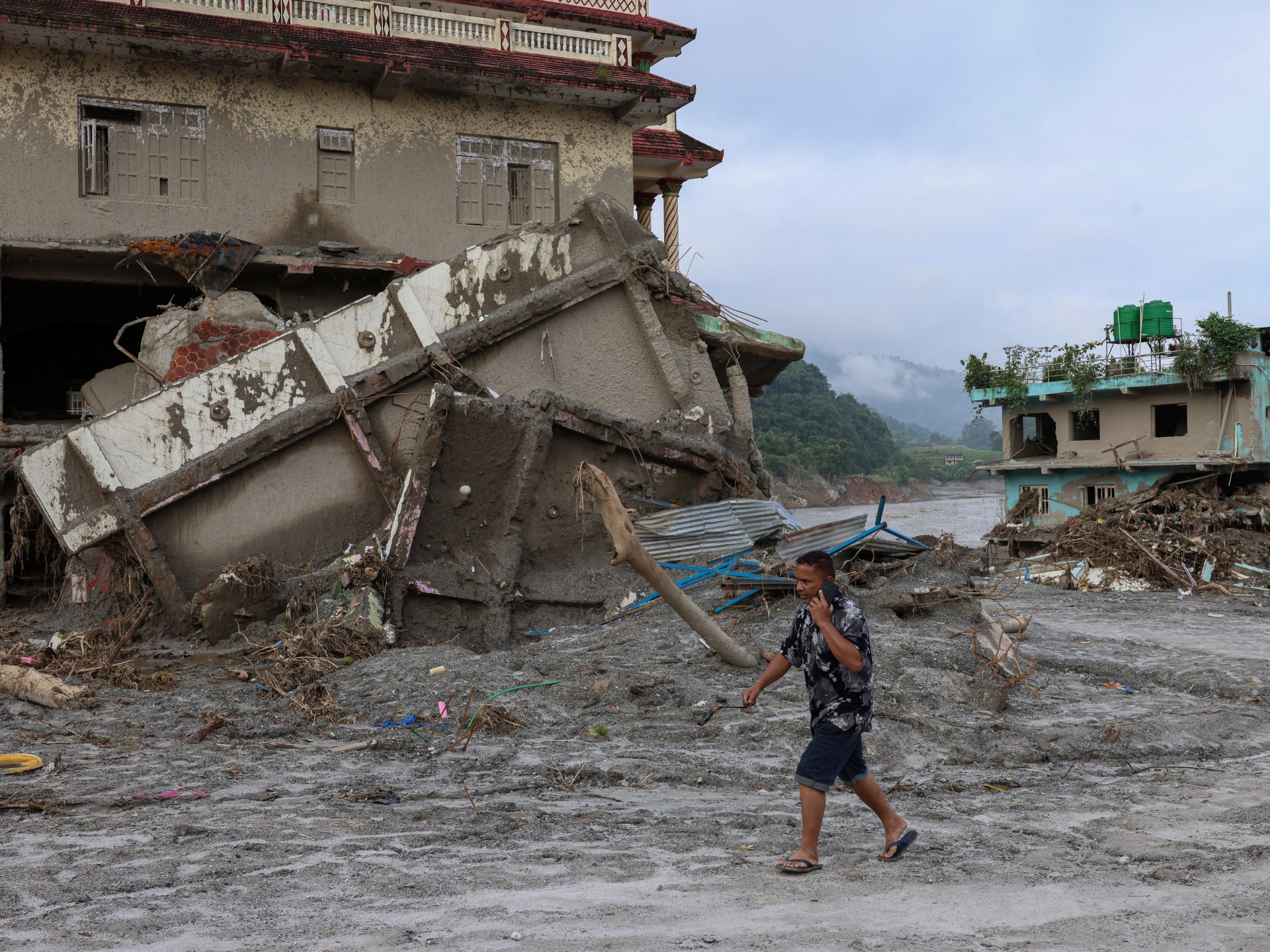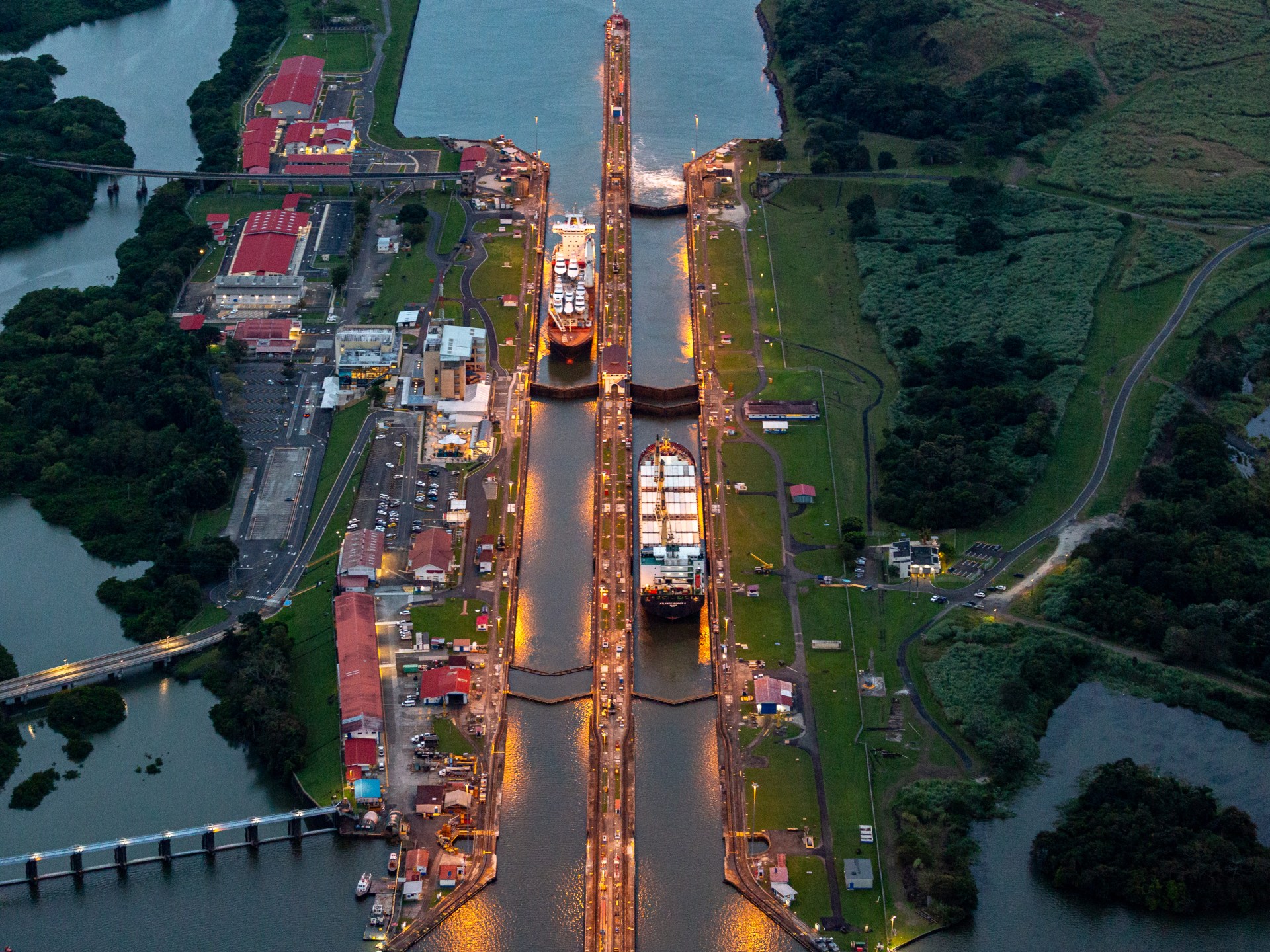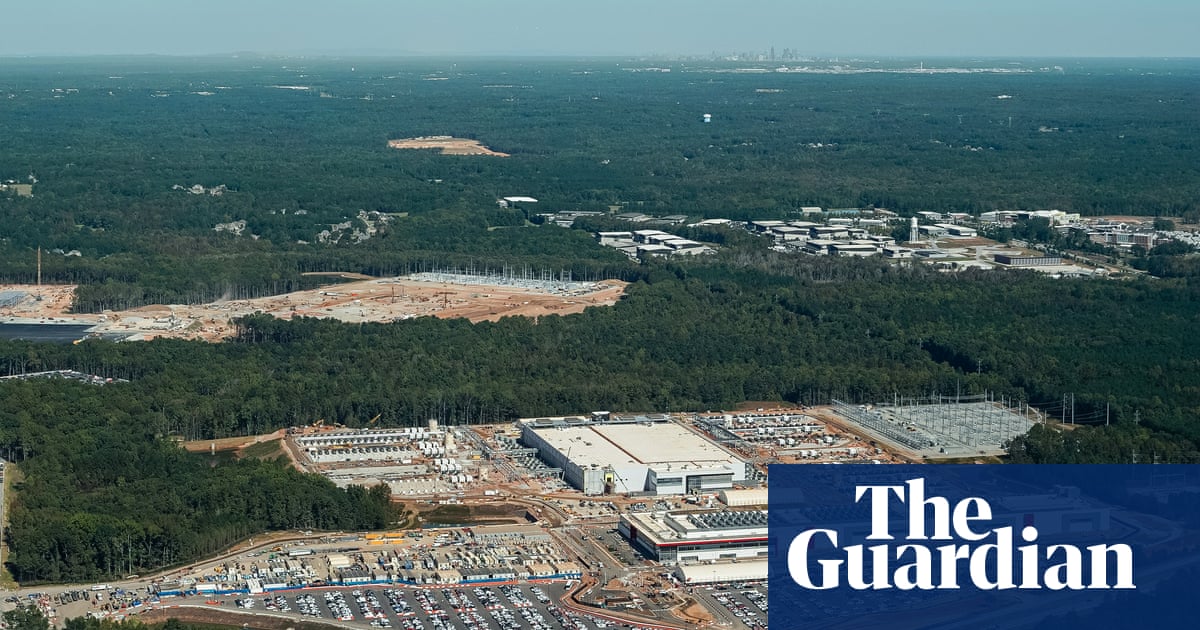
The QTS datacenter complex under development in Fayetteville, Georgia. Photograph: Elijah Nouvelage/Bloomberg via Getty ImagesView image in fullscreenThe QTS datacenter complex under development in Fayetteville, Georgia. Photograph: Elijah Nouvelage/Bloomberg via Getty ImagesUS datacenters face further backlash over wastewater pollutionFrom rare bacteria to ‘forever chemicals’, a series of cases of violations or alleged pollution has prompted alarm
When officials in Wyoming conducted a routine test on the water that was being discharged from a massive under-construction Meta datacenter, it was a shock to find it contained a rare and potentially hazardous bacterium.
While the wastewater flushed into sewers in Cheyenne, Wyoming, was never destined for the public drinking supply, the presence of Cupriavidus gilardii bacterium in 801,000 gallons of water ejected by a contractor for the datacenter earlier this year was still unnerving.
Concerned that residents could be exposed to the bacteria if they inhaled evaporating droplets of the water used for irrigation, Cheyenne officials took until July before deciding to stop taking wastewater from Meta’s contractor, Goat Systems – a decision that is now being appealed.
“It was a big surprise,” said Frank Strong, water resources manager at the city’s board of public utilities, about the discovery. “Out of a sense of caution we’ve shut it down until we can find out more information.”
Meta, which is behind the $800m, 960-acre artificial intelligence (AI) datacenter campus, said independent testing by its contractor found no evidence of the bacterium and questioned the validity of the city’s own tests.
“Meta is committed to being a good neighbor in Cheyenne, which includes helping protect local water resources,” said a company spokesman. “We appreciate the board of public utilities’ detailed release of information, which confirms the board found no impact to the public or environment.”
However, the bacteria-laden water in Wyoming is just the latest in a series of alarms raised across the US about datacenters and water – not just how much of it they are sucking up, but also what’s in the water when it is funneled back into rivers, streams and public water systems.
In Virginia, authorities have brought enforcement actions against several datacenters for wastewater and wetland permit violations, in West Virginia stormwater runoff from an incomplete datacenter has twice flooded surrounding houses, all while locals and activists have campaigned against the discharge of heated water from an upcoming datacenter into Lake Seneca, in New York.
The Waterkeeper Alliance, a network of environmental organizations, said 55 of its affiliated groups across the US were working on datacenter-related issues, with 80% of these campaigns centered on concerns that pollutants may be leaching into the environment via discharged water.
Some of this backlash is now set to play out in the courts. In Georgia, Flint Riverkeeper has said it will sue the QTS datacenter in Fayetteville for allegedly ejecting “massive amounts of dirt [and] massive concentrations of metals” into the Flint River over the past two years.
“Datacenters are a critical concern for Waterkeeper groups around the globe, in part due to their wastewater concerns,” said a Waterkeeper Alliance spokeswoman. “Datacenters have been documented as sources of a wide range of toxic pollutants, including Pfas, heavy metals and antibiotic-resistant bacteria.”
Datacenters require large amounts of water for their construction and operation, including for cooling the power-hungry computers at their heart, although the industry points out its water use is a fraction of that of other thirsty sectors, such as agriculture. A mid-sized datacenter can consume about 300,000 gallons of water a day.
After water is used for cooling or, such as at the Meta facility in Cheyenne, for cleaning debris from pipes in “fill and flush” operations, liquid is ejected back for reuse under terms set by pretreatment permits issued by counties or local wastewater utilities.
This water, released to prevent buildup of minerals and scaling in pipes, can contain heavy metals or Pfas, the “forever chemicals” that are linked to an array of health problems when ingested. These Pfas can be found in the “closed loop” cooling systems that the datacenter industry lauds for using less water.
When used as a coolant, water can come back out hotter than when it was taken, which has alarmed critics of a controversial gas-fired facility that is pivoting from powering crypto mining to AI and draws water from Lake Seneca. The water, opponents point out, can be discharged at a temperature of 108F (42C) into the lake.
“It’s going into a trout stream, where trout are stressed at temperatures of 70F (21C) or higher, and that hot water is also a contributing factor to harmful algal blooms, which is a toxin to both humans and animals,” said Yvonne Taylor, vice-president of Seneca Lake Guardian and president of the National Coalition Against Cryptomining.
“If there are algal blooms, people can’t even run their water, because once this stuff gets into their systems it’s very difficult to remove. So you can’t even shower, or you don’t even want to flush your toilet. You definitely don’t want to give your pets water from this.”
Vulcan Infrastructure and Power, which is behind the revamped facility, has previously stressed it has complied with all relevant environmental laws. The company was approached for further comment. New York has issued a temporary moratorium on huge, hyperscale datacenters and Taylor claimed there was swelling support across the US for a national pause.
“These facilities are spreading across the country like a cancer,” she said. “AI datacenters are very, very good at greenwashing and trying to paint a picture that sounds like everything is going to be nothing but unicorns and rainbows, when in fact what we’re finding out is just the opposite.”
Finding out what is in wastewater from industrial facilities can be challenging, however. An environmental group has sued the city of Racine, Wisconsin, to force more details on the water use of a $3.3bn Microsoft datacenter while the city of The Dalles in Oregon sued its local newspaper, the Oregonian, in 2021 to block the public release of water data related to a Google datacenter, before subsequently dropping the case.
“We need to know what is in this wastewater but there is a void of information,” said Chris Manganiello, water policy director at Chattahoochee Riverkeeper in Georgia, where a rash of new datacenters are set to draw water from the Chattahoochee. “I would like there to not be more Pfas going into the river but there is this level of anxiety because we don’t know what’s there.”
Alarm about wastewater is part of a broader backlash against datacenters that has rattled some Republicans, even those previously enthusiastic about building AI infrastructure, who have scrambled to recast them as a political liability and vow some scrutiny of their development.
Read moreIn Wyoming, Harriet Hageman, a Republican congresswoman and devoted ally of Donald Trump, wrote to Mark Zuckerberg, Meta’s chief executive, to demand answers to the bacterial contamination. “Water is a precious resource in our state, so it is of immense concern to learn the system marketed to reduce a datacenter’s water consumption caused this contamination,” Hageman said.
Trump himself, however, has been unmoved by the sharp public turn against AI datacenters, calling them a “golden goose” that creates jobs and wealth. His administration has sought to make it harder for the public to learn about and comment on what datacenters are doing, such as their water use.
“The only reason that communities throughout the USA. should not want datacenters is if they want to end up being backwards and poor,” the president posted on Truth Social last week. “If they want to be successful and rich, with far lower taxes and jobs all over the place, let Data Reign.”