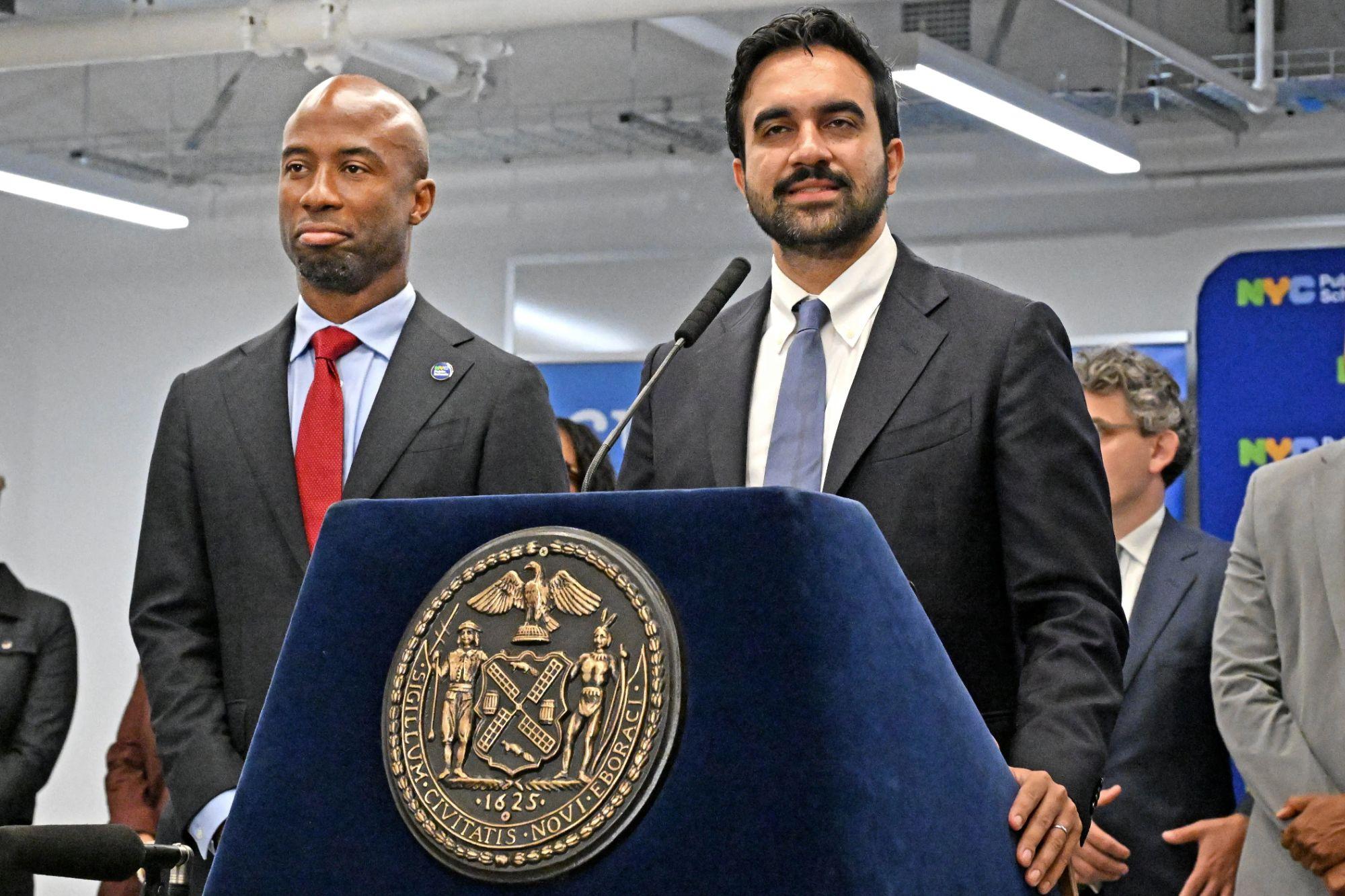
Mayor Zohran Mamdani and Schools Chancellor Kamar Samuels speaking at a press conference ahead of the new school year on Sept. 2, 2026. Gregory P. Mango for NY Post See more of our coverage in your search results.
Add The New York Post on Google New York City’s students will return to school this week — sort of: One in three of them will miss at least 10% of the school year.
Chronic absenteeism is the most obvious obstacle to student achievement.
Even if the city Department of Education boasted the best curriculum, the most qualified teachers and limitless cash, kids can’t learn if they’re not physically present.
Is it any wonder half won’t finish the school year reading at grade level?
Chronic absenteeism exploded during the COVID-19 pandemic and remains stubbornly high.
In the 2018-19 academic year it stood at 26.5%, only to spike to 34.8% five years later.
The bad habits start young: 37.8% of kindergarteners were chronically absent in the 2024-25 school year.
A robust body of research correlates absenteeism, especially in early grades, with negative outcomes in school and later in life, including poorer standardized test scores and greater likelihood of drug use and criminal-justice involvement.
Unexcused absences, which make up the largest share of overall absenteeism, have the biggest impact on academic performance.
High rates of absenteeism can disrupt classroom instruction and make it harder for peers with consistent attendance to learn.
Asking taxpayers to spend record sums on public education, only to have a third of students miss large chunks of the school year, is the ultimate indictment of the poor value proposition city schools offer.
The DOE will spend more than $42,000 on each student, yet even those who attend will spend 130 fewer hours in classrooms than the national average.
This dysfunction is one reason why so many families are opting out of the system.
K-12 enrollment in New York City public schools has plummeted by over a tenth since 2020, or over 100,000 students.
Many families enroll in pre-K, only to flee before kindergarten: 52,400 children applied for pre-K seats in 2024–25, but only 46,370 later applied for kindergarten.
The School Construction Authority predicts the system will lose another 150,000 students over the next 10 years.
Charter schools, meanwhile, continue to grow, with five new schools opening this year.
The charters enroll an estimated 152,000 students, representing 16% of the entire pupil population.
For one thing, charter leaders are laser focused on attendance.
They emphasize its importance with parents, track attendance carefully and contact families promptly when students miss class.
Charters encourage punctuality directly, too: Students with perfect attendance receive special awards, and those who arrive at school consistently late incur penalties.
When charter students log too many absences, administrators have the flexibility to address it; they can require teachers to spend time addressing underlying issues with families.
That’s possible because charter teachers are not unionized, and not bound by strict timetables set in the DOE contract.
Nonetheless, reducing chronic absenteeism should be a top priority of Chancellor Kamar Samuels and district superintendents.
It will be impossible to raise achievement levels if students aren’t in school consistently.
This is not a new problem, but in years past elected officials made attendance a priority.
Mayor Mike Bloomberg launched a multi-year crusade in 2010 to reduce chronic absenteeism.
The effort included multimedia advertising, pairing troubled kids with “success mentors” and even automated phone calls from celebrities urging students to show up for school.
Out of the 100 schools that participated in Bloomberg’s programs, 58 saw reductions in chronic absenteeism.
The fact that school leaders and public officials have not treated the post-pandemic spike as an emergency underscores how DOE has declined — even as per-pupil spending has soared well beyond Bloomberg-era levels.
DOE is now mandating each school to designate a staff member who will be trained to act as an absenteeism “avoidance liaison.”
These staffers should offer a mix of supports to ensure that families bring students to school regularly — as well as consequences for those who exceed a certain number of unexcused absences.
Samuels must next target high-risk students with an early-warning system to flag unexcused absences and intervene quickly.
Absenteeism is a problem in urban districts nationwide: Detroit, for one, is experimenting with cash-incentive rewards for students who show up.
Reasonable minds can differ on this approach, but at least city leaders are taking the issue seriously enough to try unconventional solutions.
Finally, we need better data: New York, both city and state, drags its feet on releasing attendance data.
That leaves local researchers stuck with numbers from the 2024-25 school year — even as states like Connecticut and Rhode Island update public attendance dashboards monthly.
The first step toward fixing New York City’s schools is getting students back into them.
Danyela Souza Egorov and John Ketcham are fellows at Manhattan Institute.