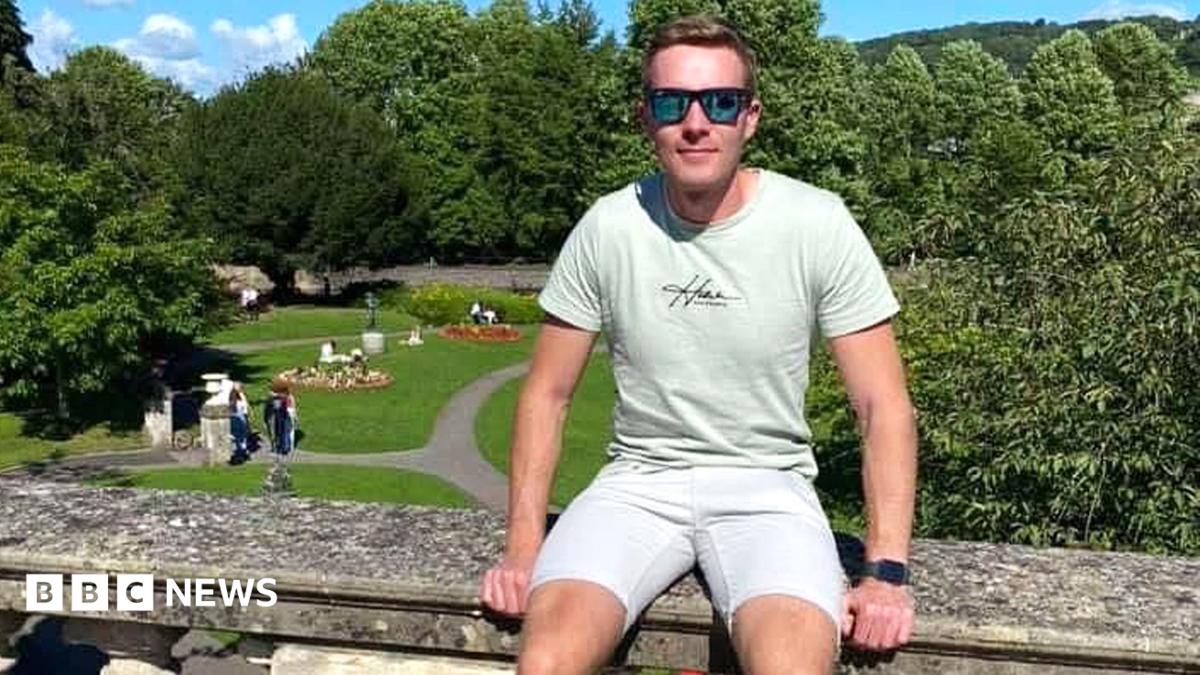
Image source, Stephen CoppockImage caption, Oli Coppock had a career in digital marketing and was feeling positive about his future
Health correspondentPublished10 minutes agoIn May 2024, a few months after having treatment for a brain tumour, Oli Coppock went to Warrington Hospital's emergency department with bad headaches and dizziness.
He underwent tests and assessments, but did not have a brain scan, and was sent home. It was a decision that ultimately ruined his life at the age of 32, his family says. A week later, with fluid building up on the brain, he suffered a cardiac arrest. He did not recover and now lives in almost complete paralysis.
Oli's case is just one of a growing number of clinical negligence claims being made in England relating to A&E care. An analysis by the BBC shows there has been a 41% rise in cases over the past five years, with doctors linking it to the long delays and pressures being seen in emergency departments.
Oli's father, Stephen, says he knows A&E staff are under pressure, but he cannot understand how a brain scan was not ordered, given his son's medical history.
Despite the brain tumour and a recent diagnosis of multiple sclerosis, Oli was otherwise fit and well and positive about his future. He had a career in digital marketing, loved going to the gym and did some DJing in his spare time.
Stephen says the whole family – including Oli's six siblings - has been left "angry and broken" by what happened to him.
Image caption, Stephen Coppock says the whole family has been left broken by what happened to Oli
"The hospital didn't get the basics right and my son has paid a terrible price – it's ruined his life. It was an awful error. He trusted the health service and believed it was there to help him, not destroy him."
He says Oli's body is now twisted and paralysed and he has no ability to move around. His breathing, feeding and toileting are all done through tubes at the neurological rebab centre where he is being cared for. He can only communicate through blinking, but Stephen believes he understands everything going on around him.
"There is no worse space for a human to occupy – it's a permanent living nightmare."
Image source, OtherImage caption, Oli, who is being cared for in a neurological rehab unit, communicates by blinking
North Cheshire and Mersey NHS Foundation Trust, which runs Warrington's A&E, has now accepted a breach of duty in not ordering a CT brain scan, which on the balance of probabilities would have identified the fluid build-up in his brain and led to surgery to address it.
In a statement, the trust said: "We are deeply sorry that Mr Coppock did not receive that standard of care that should be expected and we recognise the distress and lasting impact on patients and their families when harm is caused."
An interim damages payment has been agreed. However, Oli's solicitor, Tanzeela Aslam, head of medical negligence at Express Solicitors, says the time taken to get to this point – more than two years – has just added to the failings, depriving him of access to funds for therapies and support that could have improved his quality of life.
"Oli's case illustrates how preventable errors within the NHS can have devastating and life-changing consequences for individuals and their families."
She says she is seeing more and more A&E-related cases – something she too puts down to the growing pressures.
"There has been an increased reliance on corridor care for patients, and we are seeing cases across A &E departments of misdiagnoses that have led to serious injury and in some cases death."
A BBC analysis of NHS Resolution figures using published data and freedom of information requests showed there were more than 1,623 A&E-related clinical negligence claims in 2025-26 in England – up from 1,151 in 2020-21.
It means A&E is now the single biggest area for clinical negligence claims in terms of number. The value of those claims exceeded £550 million last year.
Not all claims will result in damages being paid – that happens in about half of all cases. The NHS sometimes accepts liability but it is judged compensation is not needed.
And there were points during the 2010s when the number of claims were higher per A&E attendance than they were now before falling.
But the sustained increase over the past five years is causing concern, say experts.
The pattern is not being repeated in other areas, such as maternity or orthopaedics, and the low point in 2020-21 is thought to be unrelated to any behaviour changes by patients during the Covid pandemic as it takes three years on average for a claim to be submitted.
The Royal College of Emergency Medicine told the BBC it was worried about the rise, linking it to increasing pressure and long delays being seen in A&E in recent years.
Over the last two years one in 10 patients who attended A&E spent more than 12 hours waiting to be treated or discharged.
RCEM's Dr Adrian Boyle said the figures were "sobering".
"This is a concern. But it is not surprising when you see how busy departments are. People are staying longer and pressure on staffing is increasing."
But he said clinical negligence cases were still relatively rare – happening in only around one in every 17,000 attendances.
NHS Resolution, which supports NHS trusts with clinical negligence claims, said it was taking action on the "high volume" of claims and has published reports to help the NHS learn from mistakes.
Such mistakes include missing the signs of acute deterioration in patients, failing to order the necessary tests and scans and making incorrect diagnoses.
NHS England said there were signs A&E waiting times were improving - and many of these claims related to historic cases a few years old.
Matthew Hopkins, of NHS Alliance, which represents hospitals, said health bosses were "making every effort is made to ensure safe, high-quality care, and that lessons are learned when that falls short".
For Stephen, "every waking hour" is spent worrying about his son.
"I know staff are under pressure," he says, "but this is about doing the basics right. They failed Oli."
Additional reporting Nat Wright