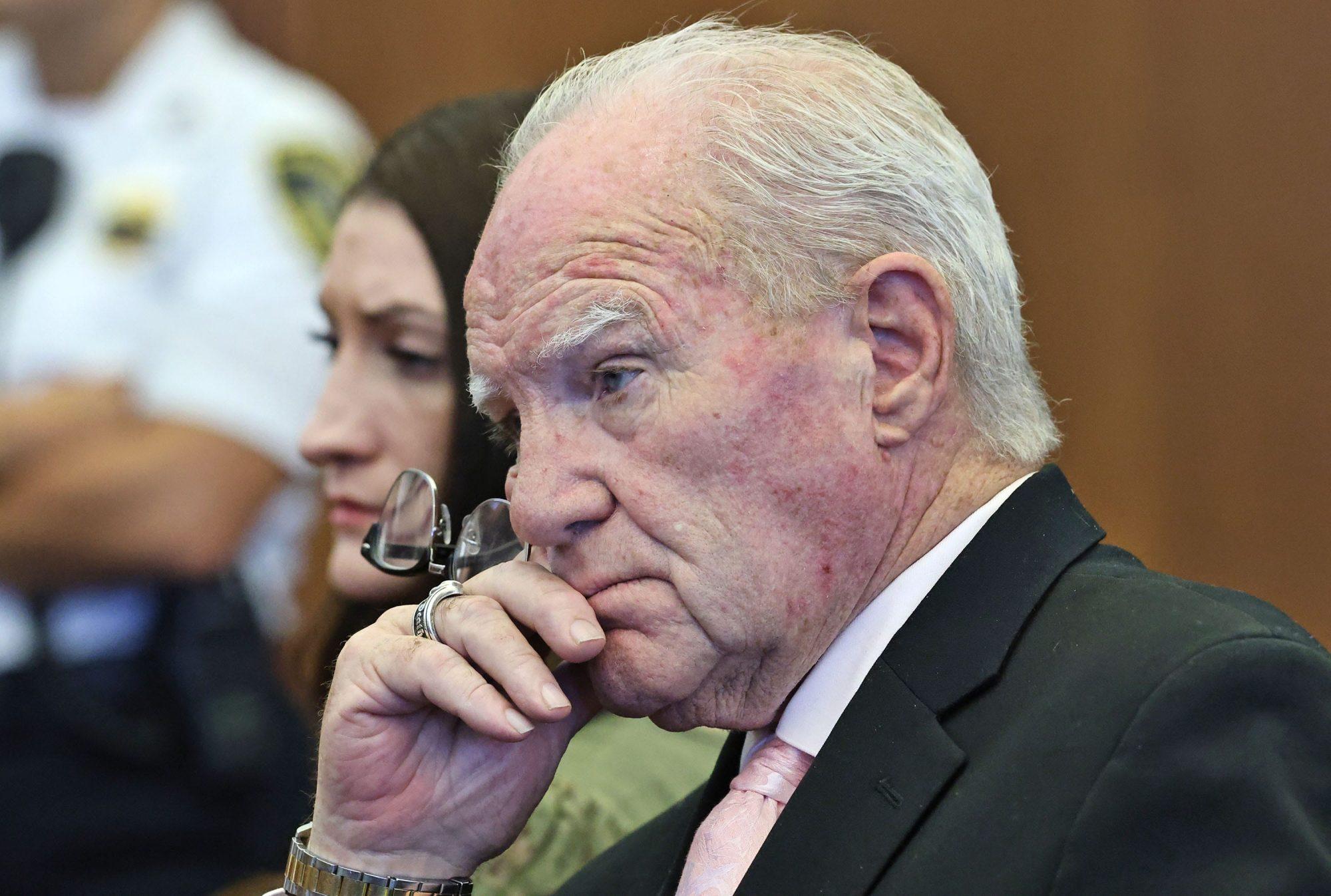
Defense attorney Kevin Reddington and Lindsay Clancy listen to the judge talk to the jury after declaring a mistrial in Plymouth Superior Court on Friday, Sept. 4, 2026. Judge William Sullivan thanked the jurors for their service and for their commitment to the case. USA TODAY Network via Reuters Connect See more of our coverage in your search results.
Add The New York Post on Google Lawyers are supposed to protect and defend America’s justice system.
Kevin Reddington, the Massachusetts attorney defending Lindsay Clancy, seems more like an abuser thereof.
In what law professor Jonathan Turley described as “a breathtaking abandonment of restraint and decency,” Reddington went after the lone holdout juror in the case of the killer mom — a (so far) unknown figure who we’re told was one of the panel’s three males.
Reddington, in an unhinged press conference after a mistrial was called, accused the dissident of stealing his fellow jurors’ time: “They know that they were robbed by one man for whatever his agenda was, who stole seven weeks of the life of these other jurors.”
He also charged the holdout with hostility toward the disabled — that is, toward the crazed defendant.
Citing the Americans with Disabilities Act, Reddington claimed that leaving a man who didn’t buy Clancy’s insanity plea on the jury was like leaving a racist on a jury.
“The scene was a fitting end to a visceral trial,” Turley observed — “but it added a vindictive element that should prompt Judge William Sullivan to call out the seasoned defense attorney.”
Reddington’s inflammatory comments fueled a crowd of Clancy’s supporters, who condemned the local district attorney for, in their view, caring only about the three dead children, and not the suffering of the mother — you know, the one who admitted killing those children.
Traditionally, lawyers don’t attack jurors.
Citizen jurors are an important, in fact essential, part of our justice system, and those who serve on juries are performing a public service (for a pittance in pay).
In the short term, Reddington’s remarks risk poisoning a future jury pool in Clancy’s case — by making future jurors in a retrial afraid to stand by their own views for fear of being hung out to dry.
His accusations put a target on the holdout juror’s back — and Internet sleuths, or leaks, are likely to get his name out before the furor dies down.
This sort of harassment may be a breach of legal ethics, and certainly doesn’t reflect well upon the Massachusetts bar or on the legal system that seems to be tolerating it.
Meanwhile, Reddington’s unsupported claim of ADA bias is conceivably actionable, and certainly stupid.
The jury heard weeks of testimony; public opinion on the case is fractured.
Reddington can’t honestly believe that prejudice was this juror’s only reason for dissent.
That doesn’t mean his effort to disqualify the holdout via a last-minute motion to the Massachusetts Supreme Court was unethical — just aggressive, and legally weak.
His attempted character assassination after the fact, on the other hand, was just plain wrong.
Perhaps he has committed the cardinal lawyer’s sin of getting too close to his client, or perhaps he couldn’t stand having victory snatched away from him by a single juror.
Either way, it’s a very bad reflection on Kevin Reddington, who has abused his position as an officer of the court to make these remarks, exhibiting poor judgment and worse behavior by an experienced lawyer who should know better.
We have for the last couple of generations seen our political leadership class — which certainly includes much of the bar — engage in a game of civilizational Jenga, removing various supporting pillars of our society, one by one, mostly in moments of pique when things don’t go their way.
Think lawfare prosecutions of political opponents, or using censorship to sway an election.
For juries to do their duty, and to be seen as legitimate, they must be independent, with all members free to vote as their conscience demands.
Twelve individuals, making up their own minds after evaluating the evidence as they see it.
Free to persuade one another in private deliberations — and free to reject such persuasion.
Sometimes, when a panel cannot unanimously agree, that will produce a hung jury.
In our system, that’s a protection for defendants: If 12 people can’t agree on their guilt based on the evidence presented, they can’t be convicted.
If jurors aren’t allowed to stick to their own opinions, juries can’t work.
Reddington should consider carefully if that’s what he really wants.
Glenn Harlan Reynolds is a professor of law at the University of Tennessee and founder of the InstaPundit.com blog.