Germany has asked the International Court of Justice to dismiss the case on jurisdiction grounds. It also said its arms exports to Israel were documented, published, and subject to more stringent checks than most.
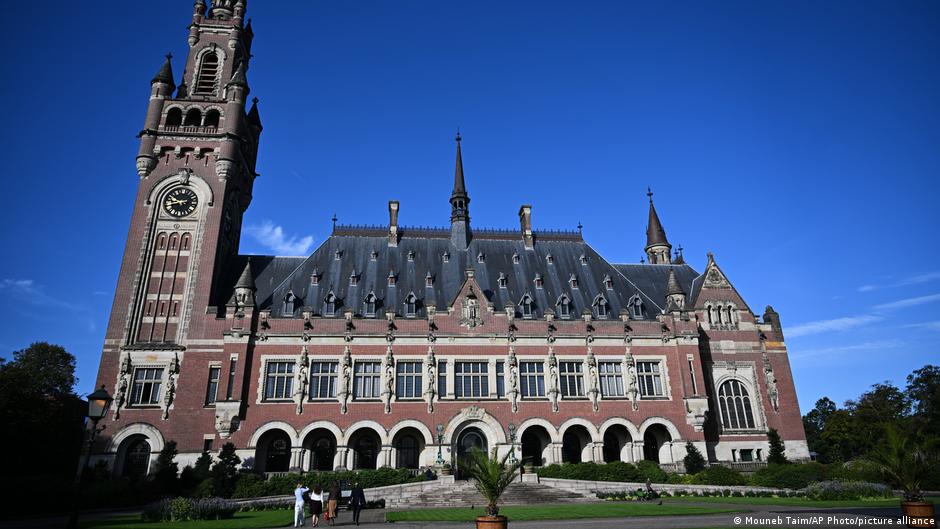
https://p.dw.com/p/5M61MThe latest hearing opened on Monday in The Hague, but if the judges deem a full trial necessary, that's likely to take yearsImage: Mouneb Taim/AP Photo/picture allianceAdvertisementGermany on Monday asked the International Court of Justice (ICJ) to dismiss a case brought by Nicaragua, accusing Berlin of violating the 1948 Genocide Convention by supplying arms to Israel amid its war with Hamas in Gaza.
If the ICJ, otherwise known as the World Court, decided to hear the case, the process would likely take years and be contingent on the findings from separate Gaza-related cases in The Hague.
But Germany is arguing it shouldn't even go that far, saying that Nicaragua did not follow proper processes and that the dispute does not fall in the international court's jurisdiction.
Nicaragua, on the other hand, argues that the case should be heard because it and Germany are both signatories to the Genocide Convention — despite neither side being directly involved in Israel and Hamas' war in Gaza and although the ICJ hearing on whether Israel committed genocidal acts in Gaza could take years.
Nicaragua accuses Germany of aiding and abetting genocide in Gaza by selling weapons to Israel, some of which it says have been used in Gaza.
An initial bid for an emergency injunction ordering a halt to exports failed in 2024 at the height of the war in Gaza, but Germany also failed in its bid to have the case summarily and permanently dismissed at the earliest opportunity.
The German government suspended weapons exports to Israel for around three months in 2025 as the conflict continued and casualty figures rose. But it has since restarted them amid the truce struck late last year that largely stopped the fighting, without ending Israeli strikes entirely.
Germany walks a fine historical and political line in the case.
On the one hand, the 1948 Genocide Convention was born in very large part from the lessons of the Holocaust and the spirit of "never again" after World War II. But to the same token, Germany has always sought to maintain close and cooperative ties with Israel, a state formed in very large part as a consequence of its mass extermination of Jews in Europe. It considers Israeli security part of its own raison d'etre as a modern democratic state.
Israel's war in Gaza was launched against Hamas after Hamas carried out the October 7, 2023 terror attacks on Israel. October 7 was the single deadliest day for Jews since the Holocaust. Hamas is a Palestinian Islamist group based in the Gaza Strip.
Germany is arguing both that the case should be dismissed on procedural grounds, and that Nicaragua's allegation of aiding and abetting genocide is unsubstantiated.
Although Germany, Nicaragua and Israel are all signatories to the Genocide Convention, a case like this where neither side is a direct party to a conflict is unusual. Its represenatives told the court that Nicaragua had not taken the proper steps before filing the legal challenge and arguing much of the case falls out of the ICJ's jurisdiction.
"Germany respectfully requests the court to reject Nicaragua's claims," Julia Monar, legal adviser to the German Foreign Ministry, told the judges.
"All German weapons exports to Israel and other countries are subject to strict review procedures that are more stringent than international regulations," Monar also told the court, a reference to Germany's intentionally restrictive weapons export policies adopted after World War II.
In mid-May this year, Germany's Bundestag parliament published information saying that between November 2025 — shortly after the truce was brokered — and March this year, exports worth around €167 million (roughly $194 million) were approved.
Could Trump's Gaza plan cost Palestinians their property?To view this video please enable JavaScript, and consider upgrading to a web browser that supports HTML5 video
Nicaragua's case is based on the South African lawsuit at the ICJ accusing Israel of genocidal acts in Gaza.
In a preliminary hearing — the findings of which Israel rejected — the court found it plausible that Israel could have committed genocidal acts in Gaza and called for a full hearing. That process will take years, with court sessions not expected until 2029.
A full hearing in Nicaragua's case against Germany, should the ICJ choose to pursue one, could well rely on a resolution in the broader genocide allegations against Israel.
More immediately, Nicaragua is expected to lay out its arguments in The Hague on Tuesday.
A decision on Germany's bid to shelve the case entirely is tentatively expected some time this year.
The ICJ is the top UN court dealing with disputes between states and alleged violations of various international treaties. Its rulings are final and cannot be appealed.
If you rely on our team for trusted reporting, please take a moment to select us as your Preferred Source on Google, so you'll always see our verified news first.