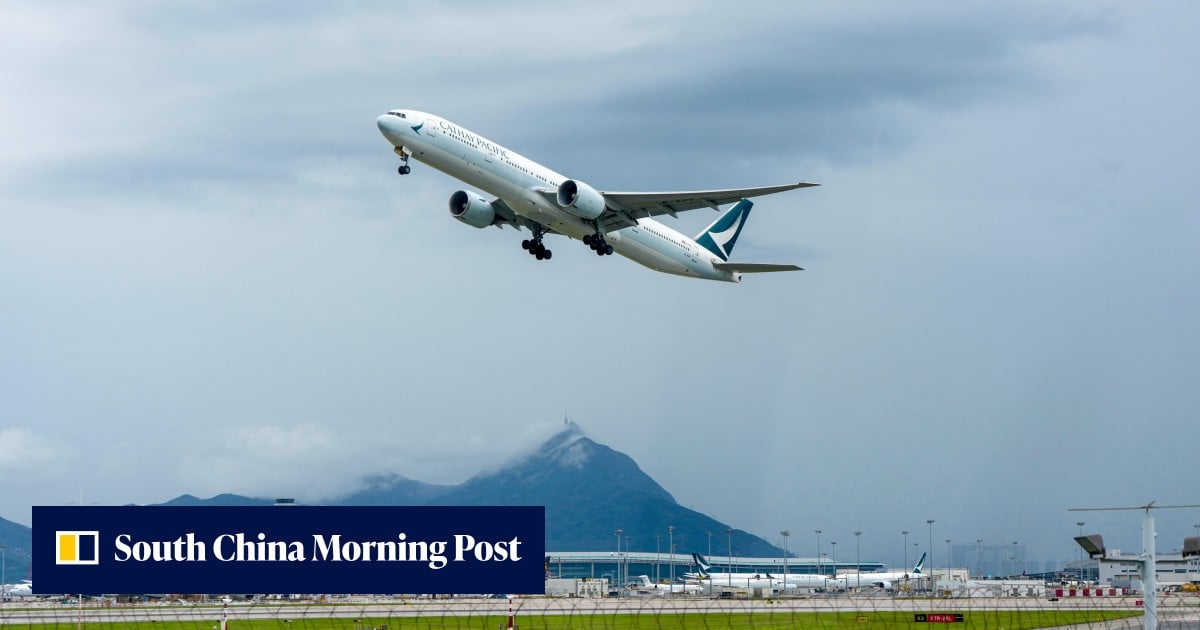
Second-phase trials with Contrails.org will target ultra-long-haul Asia and transpacific routes, building on early tests that reduced contrail warming impact by about 40 per cent
2-MIN READ2-MINLam Ka-singPublished: 6:45pm, 7 Sep 2026Updated: 7:02pm, 7 Sep 2026Hong Kong flag carrier Cathay Pacific and Google are expanding AI-powered flight trials designed to steer aircraft away from contrail-forming zones in the Asia-Pacific region, using the data to inform broader sustainability decisions.
Condensation trails, or contrails, form when aircraft fly through cold, humid patches of air, trapping atmospheric heat and accounting for roughly one-third of aviation’s total climate impact, according to Kemal Armada, product manager for climate and AI at Google on Monday.
He said the second phase of trials would partner with non-governmental organisation Contrails.org and conduct a randomised controlled trial on ultra-long-haul flights across Asia and transpacific routes.
“With this, we are going to expand our partnership into its new phase, where we are going to do a much larger trial that is going to include ultra long-haul flights,” Armada said.
The Hong Kong carrier became the first commercial airline in the Asia-Pacific region to test the technology in live operations and the first globally to trial contrail avoidance on ultra-long-haul routes, said Michael Yue, managing director and general manager at Google Hong Kong.
“It gives us a great opportunity to use predictive AI and to find cost-effective, scalable ways to mitigate the impact of contrails on the overall climate impact,” Yue said.