To play this video you need to enable JavaScript in your browser.This video can not be played
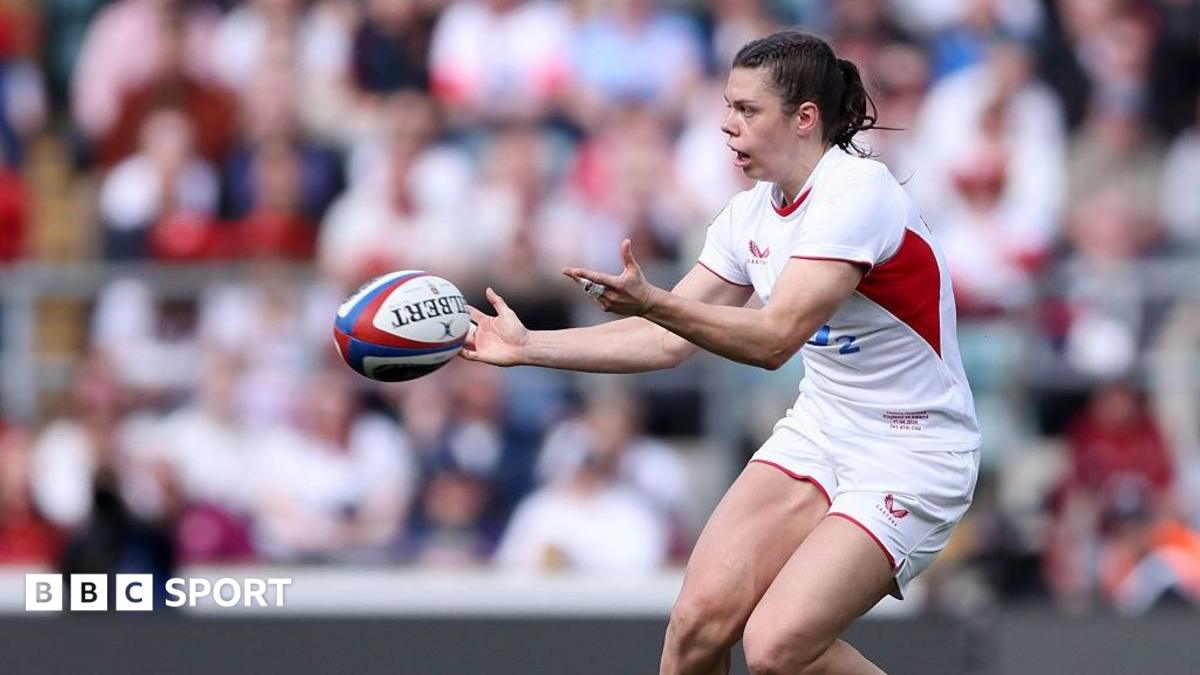
England will play Australia, Canada and New Zealand in the next three weeks and, like all the world's top women's players, they have some new equipment: a smaller ball.
During September and October's WXV Global Series, World Rugby is trialling a size 4.5 ball - about 3% smaller than the size five used in the men's game, but the same weight.
Their introduction has not been without controversy and for England hooker May Campbell, responsible for throwing the ball in at the line-out, told BBC Sport it can go "a bit skew-whiff".
One of England's kickers, Helena Rowland, has found a much bigger margin for error with the smaller ball, saying: "If you get it slightly wrong, the difference is massive."
The fly-half says England players have noticed passes "dying", falling to the floor earlier than expected, "which they wouldn't have done previously".
Not all feedback has been negative. Wales wing Lisa Neumann is a fan, saying "it's changed the game" for her passing because of improved grip on the ball.
The thinking behind the trial is that the smaller ball will suit women's physiology and improve their skillset. In other sports, like basketball, women use a smaller ball, and in athletics sprint hurdles are lower for females.
But Rowland says she has never felt "hindered" by playing with the same size ball as in men's rugby.
Players with a specific skillset may find the change harder than others. Hookers must throw in at a line-out, scrum-halves are the most frequent passers and fly-halves the most regular kickers.
Rowland explained: "We've learned for however long how to kick with a size five.
"So I've had 13-odd years of doing that and training my routine and trying to nail that and get as much consistency as I can.
"So it's about, I suppose, trying to pack all those years of training and all those kicks into a four- or five-week block to get used to it, to then go out on to the world stage."
Rowland added that she has not "necessarily seen any positives", saying: "I know some of the girls have said that from an offload perspective, it's maybe made them more confident.
"But for me, it hasn't. I don't think there's enough of a change in the ball for me to be able to be running around with it in one hand and offloading left, right and centre.
"I haven't necessarily found any of the positive impacts. I've just found it a bit harder to do my job."
A World Rugby spokesperson said everyone involved in the WXV Global Series, including players, coaches and match officials, would have their views taken into account "with equal value" through surveys.
Watch on iPlayerSmaller balls for women's rugby 'worst decision ever'
Some England players were given a size 4.5 ball to practise with in the off-season and Campbell says "there's no point in complaining about it", given every side in the WXV Global Series will be in the same position.
But she adds: "I feel like a lot of us don't know how it's going to change the game, and kind of the reason behind it changing and the data behind it.
"It's just this decision has kind of just happened that we're now trialling it at the top level."
To play this video you need to enable JavaScript in your browser.This video can not be played
Smaller WXV balls have 'changed the game'
One area of concern for the England players is the ball changing shape.
Campbell says they "played around" with how much the ball was blown up, adding: "In previous weeks it was actually a bit fatter, and then this week it definitely feels smaller."
Rowland agrees, saying: "There needs to be a bit more done in terms of how the balls are made. We had some new balls today versus the ones we've had for the last three weeks [and the difference] is massive.
"If you've been training with an old ball that's fat to then go into a game and it's a completely different shape, actually that makes a massive difference as well, which I think is something that you don't necessarily find so much in the size five."
The ball has already been trialled in the Under-18s and Under-20s Women's Six Nations as well as the HSBC Sevens Series.
Rowland says she would "love to see the data on if it actually has made a difference".
It seems a fair request, and is one that BBC Sport put to World Rugby, but we did not receive any data.
A spokesperson said: "The balls haven't been used in the international XVs environment yet so there isn't directly comparable data to share with players either directly or via their unions.
"Once we've built up a large enough data set of player responses, match official responses and game data, we'll publish the results, so it'll be available to players, unions, the International Rugby Players Association, coaches, match officials, the media and everyone else."
Some players are frustrated as they feel they have become guinea pigs on the global stage. To compound that frustration, they will then return to their clubs where the league season will be played with a size five ball once again.
BBC Sport asked World Rugby when the trial period is likely to conclude, and were told: "We'll be able to assess our position on women's 15s once the international window has started.
"This will allow for completion of the WXV tournaments and full analysis in early 2027. The evidence to date suggests that further exposure produces greater results."
While it looks like players and coaches will get to see the data in early 2027, any wider outcomes or decisions might take longer.