Add The California Post on Google It was a typical school day in December 1995. I was teaching fifth grade. The topic was the Constitutional Convention.
Fifteen minutes into the lesson, it was clear that I was losing my audience. Too many names. Too much talk. Too many abstract concepts about the machinery of government.
It was then that I had the epiphany. Make it a musical. Get the kids up and moving. Let them sing, dance, and debate their way through the most consequential summer in American history.
The theatrical elements were all there: one room, a cast of famous characters, lots of conflict, huge stakes.
Illustration of the signing of the Declaration of Independence. Getty Images Armed with my history degree, my piano training and my lifelong interest in musical theater, I began writing the book and lyrics. I recruited my piano teacher, Bill Augustine, to write the music.
By April 1996, we had a draft. The principal approved a pilot program with my class of 30 students. With Booster Club funds, I hired a choreographer from a local dance studio. We rehearsed for 90 minutes on Thursday mornings.
“Miracle in Philadelphia” had its first performance in early June 1996. It went over so well that, the next school year, the program was expanded to include all four fifth-grade classes, each with its own cast and its own performance date. Parents got involved, some helping with props, backdrops, costumes and the bake sale at intermission. Others who played instruments joined me in the show band. Among them were several studio musicians and the harpist for the LA Philharmonic.
The excitement and the learning generated by the performances made me wonder, “Why limit this kind of teaching to just one historical event?”
Two years later, Bill and I wrote a second show, “Hello Louisiana,” about the Lewis and Clark expedition. And two years after that, we wrote a third musical, “Water and Power,” about the industrial revolution in the cotton mills of Lowell, Massachusetts. For the Marquez fifth-graders, it was a school year unlike any other, one in which the music never stopped.
To me and the other fifth-grade teachers, it seemed clear that the musicals helped our students absorb and retain a significant amount of content. Our instincts were validated in 2002 after a team of UCLA researchers found that, a full year after leaving fifth grade, Marquez students scored more than twice as high on a standardized US history test compared to sixth-graders from 72 other elementary schools — a gap that held up even after researchers controlled for the schools’ general academic test scores.
When I retired from full-time teaching in 2016, the Marquez parents wanted the Performing History program to continue. So, for the past 10 years (except during the COVID-19 pandemic) I’ve gone back to campus one day a week to help the kids with their songs and dialogue.
In the spring of 2024, just two years shy of our 30th anniversary production, this story took an unexpected turn.
I was summoned to a Zoom meeting with six administrators from the Los Angeles Unified School District (LAUSD). Hmmm. Was LAUSD finally going to scale the program? Were toe-tapping tunes about to resound from hundreds of Los Angeles classrooms? Hardly.
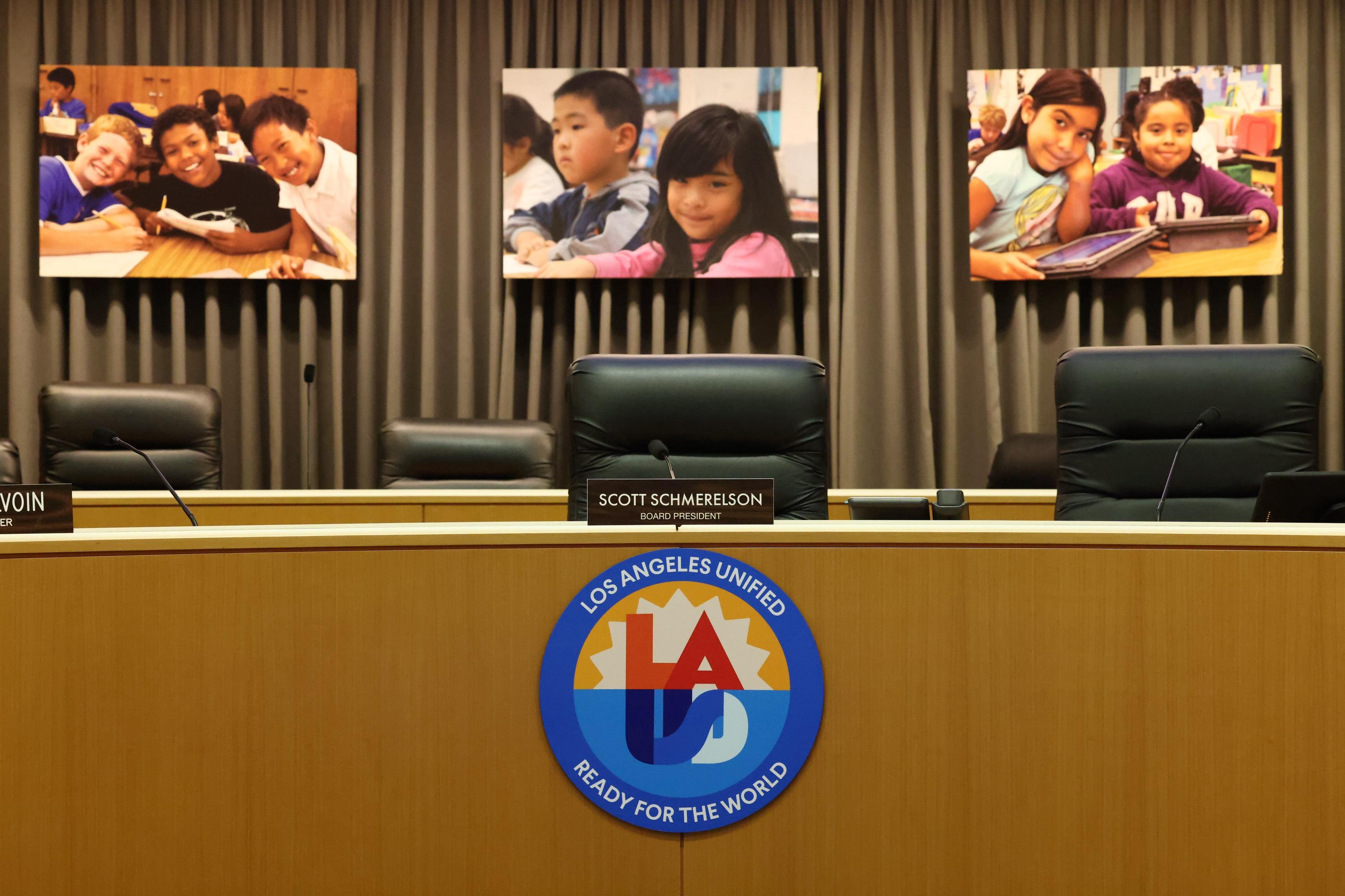
The Los Angeles Unified School District Headquarters’ board room. Jonathan Alcorn For CA Post Instead, I was questioned by curriculum specialists from the “American Indian/Alaskan Native and Indigenous Education Program.”
“Did you consult with people within the tribal nations depicted in the ‘Hello Louisiana’ script?”
“Does your script include references to tribal websites?”
What was this about? Well, apparently, a woman from South Dakota had called the Marquez principal, said she had seen a YouTube video of a dance number from “Hello Louisiana,” and she was sure the costumes of our Lakota Sioux were not authentic.
California Post News: Facebook, Instagram, TikTok, X, YouTube, WhatsApp, LinkedInCalifornia Post Sports Facebook, Instagram, TikTok, YouTube, XCalifornia Post Opinion California Post Newsletters: Sign up here!California Post App: Download here!Home delivery: Sign up here!Page Six Hollywood: Sign up here!
Instead of dealing with this matter in-house, the principal reported the complaint to the downtown office.
At the end of a 70-minute grilling, the chief interrogator asked me to submit all three scripts for review.
Several months later, I heard from the current fifth-grade teachers that the administrators were demanding significant cuts and rewrites.
“Are they going to tell me what they want changed and why?” I asked.
I was not to be included in the rewrite process, because I was no longer employed by the school district. My colleagues would do the rewriting. Also, I was barred from the Marquez campus until the rewrites were approved.
This process took so long that the class of 2026 had only enough time to perform two of the three shows. Missing out on “Water and Power” meant missing out on the struggle of the mill girls, one of the few documented girl-power episodes in early American history.
I received a phone call from Mike Morath, the Texas commissioner of education.
I wondered how he had heard about the program. But I didn’t ask.
Mike put me in touch with one of his regional superintendents who walked me through the Texas procurement process. In July of this year, I signed a contract.
Toe-tapping tunes will soon be resounding from fifth-grade classrooms in Midland, Austin and Dallas.
Censored in Los Angeles. Welcomed in Texas. Go figure.
Jeff Lantos is a retired teacher and composer based in LA.