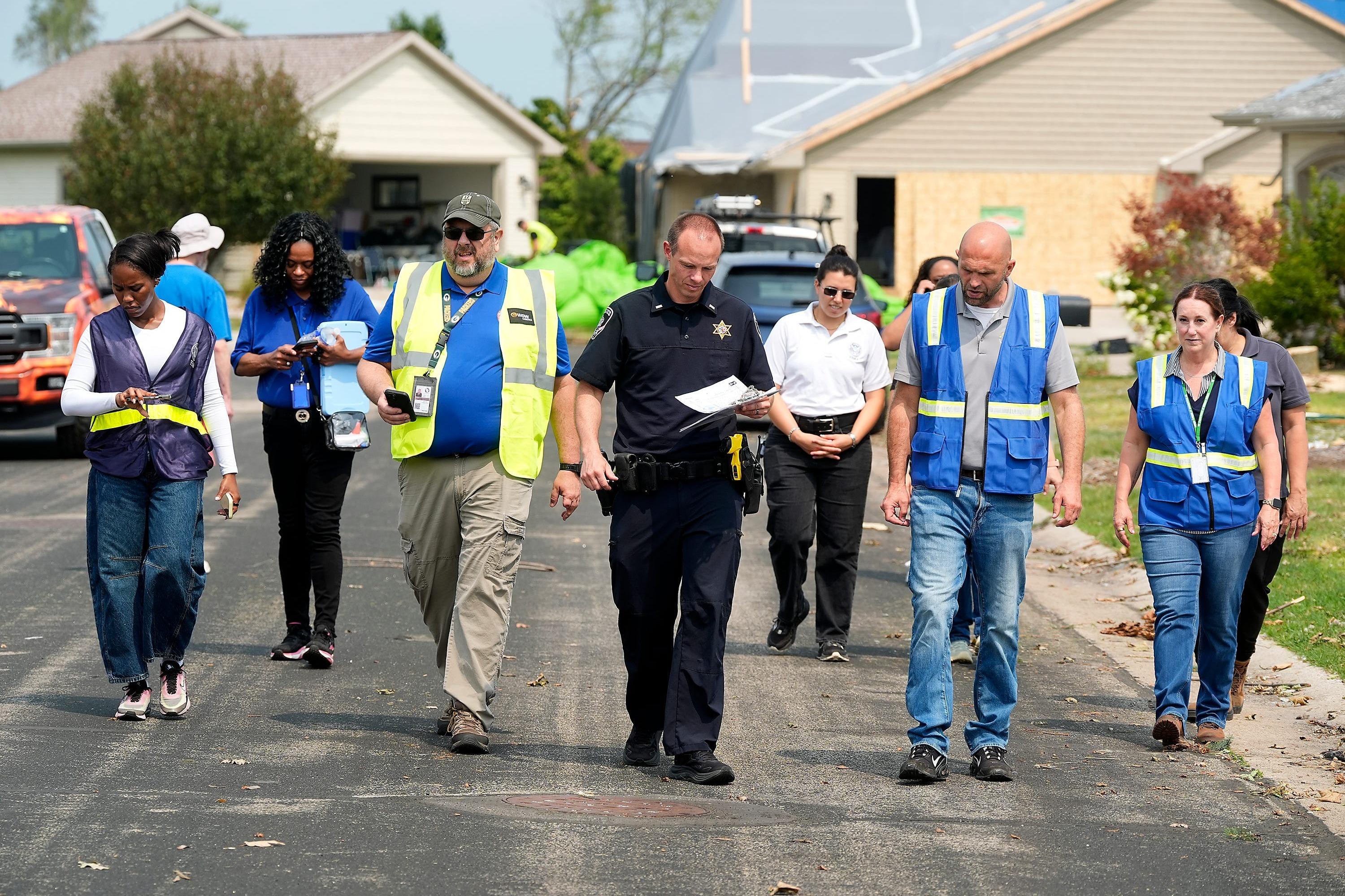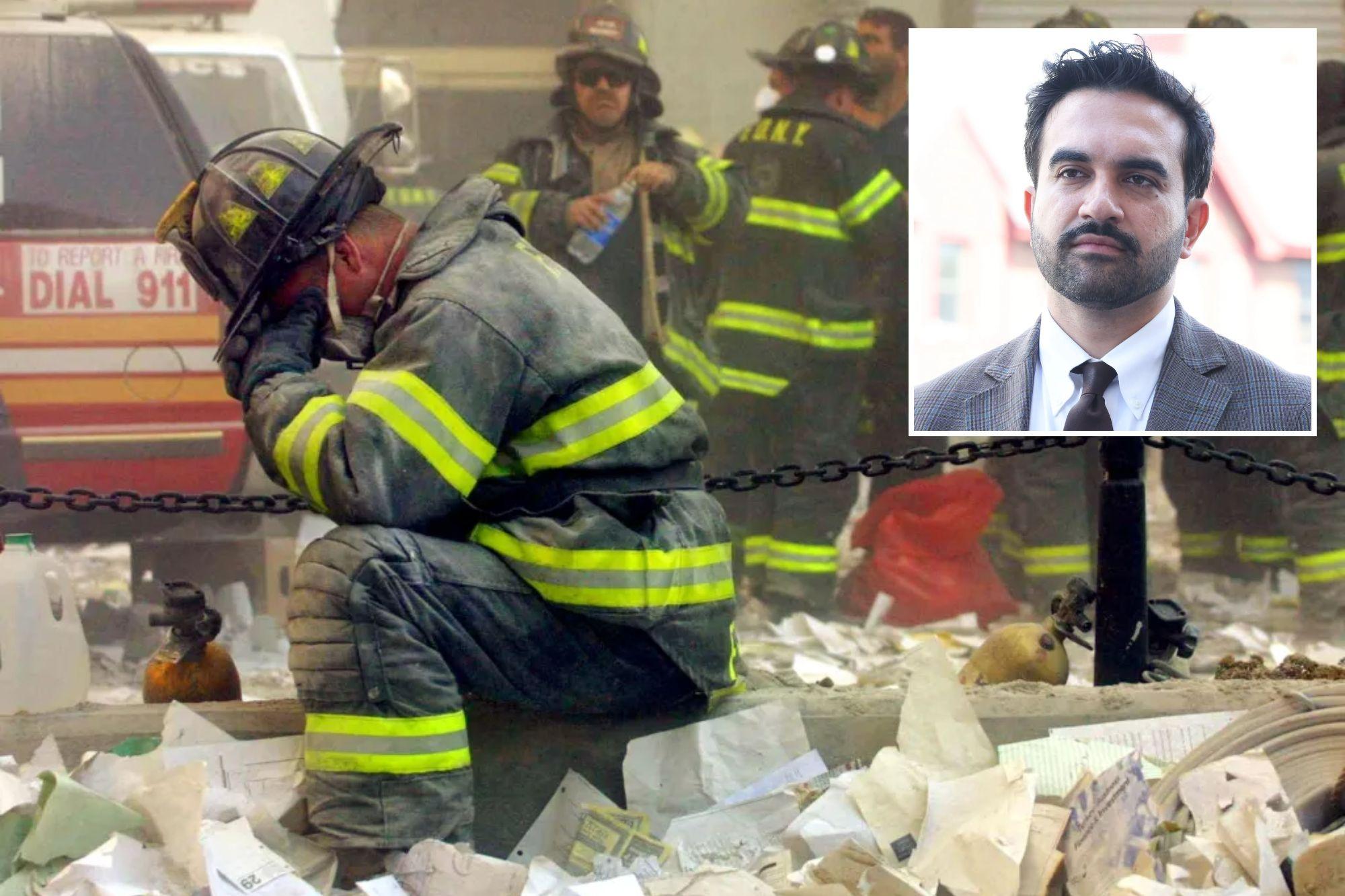
NYC Mayor Zohran Mamdani holds a security briefing ahead of the West Indian Day Parade at the Brooklyn Museum in Brooklyn, NY on September 4, 2026. Brigitte Stelzer for NY Post See more of our coverage in your search results.
Add The New York Post on Google The radical left’s recent efforts to twist and downgrade 9/11 disgust me to the core — and it’s not because I was some type of hero in that tragedy: I was just a journalist then as I am now.
I’m outraged because I personally witnessed true heroism on Sept. 11, 2001, and in the days that followed: New Yorkers who survived and banded together to rebuild this city. Indeed, one might ask, did these heroes do too good of a job? Consider how many in this city now indulge their luxury to forget, or even shamelessly try to paper over what happened.
As we approach 9/11’s 25th anniversary, it’s hard to believe how much of the debate around this historically tragic event has changed. We have a US Senate candidate in Michigan who recently campaigned with an influencer who once said “America deserved 9/11.” Our mayor — a 34-year-old former rapper who studied anti-American “Africana Studies” — can’t bring himself to denounce the terrorist rallying cry “globalize the intifada.”
Instead, Zohran Mamdani, like much of the left, prefers to lament the war on terror and “Islamophobia.” Never mind that the latter, in reality, has lately been dwarfed by the rampant antisemitism that he likes to minimize.
And then there’s the unspeakable crime that killed nearly 3,000 who were just showing up to their jobs that morning — janitors, secretaries, bond traders — a cross-section of the city and its moms, dads, daughters and sons. Never forget they perished alongside heroic first responders, who tried to save them.
Mamdani fans either have short memories or no memories of 9/11 at all because they weren’t yet born. The city has also changed. The mayor’s base of progressive Gen Z’ers — many of them transplants from around the country and indoctrinated by leftist college professors — have ventured into ethnic enclaves that once housed New York’s “gorgeous mosaic” of diversity that went back generations.
Even fresh immigrants who have since changed the city — in many cases for the better — lack both roots and remembrance of 9/11. Consider the bereaved families of cops or firefighters who lost their lives charging up dozens of flights of stairs inside the Twin Towers. I knew them as well as people who succumbed to cancer a few years later because of the toxicity that enveloped downtown Manhattan in the days that followed.
I covered the spectacle as a reporter at The Wall Street Journal, often on the ground and up close. I was a few blocks north of Ground Zero when I heard the first plane crash into the North Tower. I saw people running for their lives through streets that had been calm just minutes earlier; I ducked into a local gym and watched both buildings fall on TV, much to my horror.
Life for me was never the same for lots of reasons. My old man, a union ironworker, had spent years putting ton after ton of steel into those towers and its lobby month after month, year after year, when I was a kid growing up. In doing so, he developed maladies of his own that would kill him years before 9/11. In just a few minutes, everything that he had worked on and many of the people inside were gone.
For the better part of the next year, I reported on the tragedy and the city’s recovery, including that of Wall Street. The stock exchanges and brokerages had ground to a halt, something the terrorists sought as a potential death blow to the US economy.
It wasn’t a death blow, of course. I saw Dick Grasso, then head of the New York Stock Exchange, move mountains to repair the wiring that allowed trading to resume in less than a week. Wall Street bosses put cutthroat competition aside to get the markets running again. Rudy Giuliani proved why he was a great mayor. He led rebuilding efforts, then handed the reins to Mike Bloomberg, who ensured the city continued to recover and thrive.
The Saturday after 9/11, I went to Ground Zero and watched first responders, construction workers, cops, firefighters, working-class New Yorkers digging through the rubble in a desperate search for survivors. I still recall the stench from the burning debris and the dead that filled the air.
Charlie Gasparino has his finger on the pulse of where business, politics and finance meet Sign up to receive On The Money by Charlie Gasparino in your inbox every Thursday.
My brother was a doctor at Bellevue Hospital at the time. He and his team expected a deluge of wounded. When the bodies didn’t show up, he donned a pair of work boots, jeans and a sweatshirt and headed downtown. He was part of the “bucket brigade,” sifting through the wreckage looking for survivors, finding only body parts for bereaved families looking for some semblance of closure.
My own cancer was likely related to the chemicals and smoke I breathed in from the smoldering debris as I, like so many others who worked downtown, continued doing my job as best I could amid all of the confusion.
But as I look back, I’m somehow glad I was there. Consider this a bid to ensure 9/11 isn’t forgotten — and isn’t twisted into something other than the singularly evil act that it was.
And New York’s rebirth, I would submit, is the true embodiment of what it means to be an American.