Add The New York Post on Google My career in fashion began at Vogue, where I spent more than a decade working alongside Anna Wintour producing the Metropolitan Museum of Art’s Costume Institute Benefit and helping shape what became the Met Gala. I saw firsthand how deliberately its world was constructed: the guest lists, relationships, seating, sponsors, celebrities, and editorial vision that transformed a New York museum benefit into a global cultural event.
The public saw fashion and spectacle. I saw the power behind it: the power to make careers, elevate designers, and shape fashion history. An invitation could change a career. Anna’s support could confer stature. A Costume Institute exhibition could cement a legacy.
Anna Wintour’s impact on the Costume Institute is undeniable. Her genius was as strategic as it was aesthetic. She harnessed exclusivity, celebrity, and attention to raise hundreds of millions of dollars for the Costume Institute and expand its global reach.
Anna has long championed John Galliano. That is why the decision to devote the Costume Institute’s 2027 exhibition to Galliano carried such weight. Galliano’s antisemitism and racism were not confined to a single incident. In separate encounters, he directed antisemitic and racist abuse at others. In recorded footage, he declared, “I love Hitler,” said that people like those he was addressing should be dead, and invoked their mothers and forefathers being gassed. A Paris court later found him guilty of public insults, and Dior fired him. Yet John Galliano: Horizons would have given him one of the Costume Institute’s rarest distinctions: a major exhibition devoted to his career, amplified by a Met Gala scheduled for May 3, the evening Yom HaShoah — Holocaust Remembrance Day — was to begin.
Much has been made of Galliano’s apologies, recovery, and return to fashion. He received his second chance. The industry welcomed him back, and he rebuilt his career. But a return to success is not proof of redemption, and redemption does not erase accountability. A second chance allows someone to move forward; it does not ask us to forget what came before.
The question before the Met was this: whether one of the world’s most influential cultural institutions should choose to honor his legacy.
My grandparents survived the Holocaust. Their experience shaped how I understand remembrance: not simply as looking back, but as a responsibility for the choices we make today. I do not believe Galliano’s career should be celebrated by the Met. To do so on the evening Yom HaShoah began made the choice even more troubling, and one I could not ignore.
The exhibition has now been canceled. I won’t speculate about why Anna, Andrew Bolton, curator in charge of the Costume Institute, or the Met initially chose to move forward. But that choice remains worth examining, particularly against the history of American fashion.
Jewish creativity and entrepreneurship are woven into that history. For generations, Jewish designers and business leaders helped build New York’s garment industry and some of the world’s most influential fashion companies.
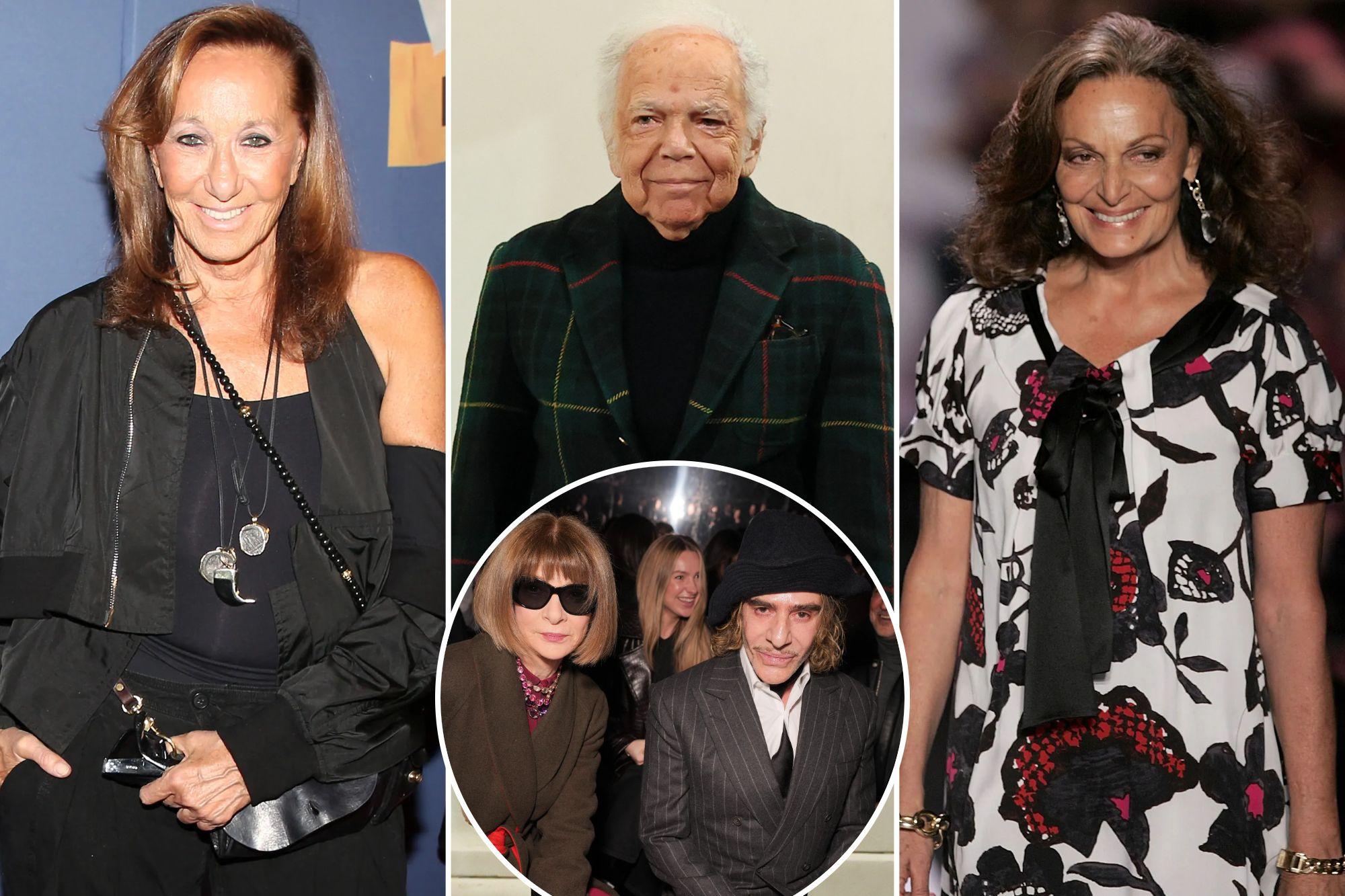
Ralph Lauren built a global lifestyle business and an image of America recognized worldwide, extending that presence to institutions including the US Open and Team USA. Calvin Klein transformed American minimalism and fashion advertising. Donna Karan changed how modern women dressed. Diane von Furstenberg, whose mother survived Auschwitz, made the wrap dress an enduring symbol of independence. Michael Kors took American sportswear global. Isaac Mizrahi brought an unmistakably New York voice to American design. Zac Posen, now Creative Director of Gap Inc., is helping shape one of America’s most recognizable fashion companies.
Their contributions stand on their own. Their work has been exhibited and represented by the Costume Institute, yet none has received the recognition of a solo retrospective devoted to their careers.
Against that history, the choice to bestow one of the Costume Institute’s rarest distinctions on Galliano is difficult to reconcile. He would have become only the third living designer to receive a solo Costume Institute exhibition, following Yves Saint Laurent in 1983 and Rei Kawakubo in 2017.
During my years helping build the Met Gala, I learned that these choices are never incidental. Who is invited, who is elevated, and who is given the museum’s stage all carry meaning. A Costume Institute exhibition of this magnitude is not simply historical preservation; it is institutional recognition with the power to shape a legacy. Museums do more than document creative achievement; through exhibitions, they confer cultural authority on the people they choose.
Galliano’s work belongs in fashion history, but his antisemitism and racism are part of that history too. His achievements cannot be separated from his conduct. Neither should be forgotten.
The Met made the right decision not to proceed. But the larger question remains: whose achievements do our institutions elevate, whose legacies do they amplify, and what history do those choices carry forward?
Museums preserve history. They also help write it. What they collect tells us what mattered. Whom they honor tells future generations who mattered most.
Stephanie Winston Wolkoff is the president and CEO of SWW Creative.