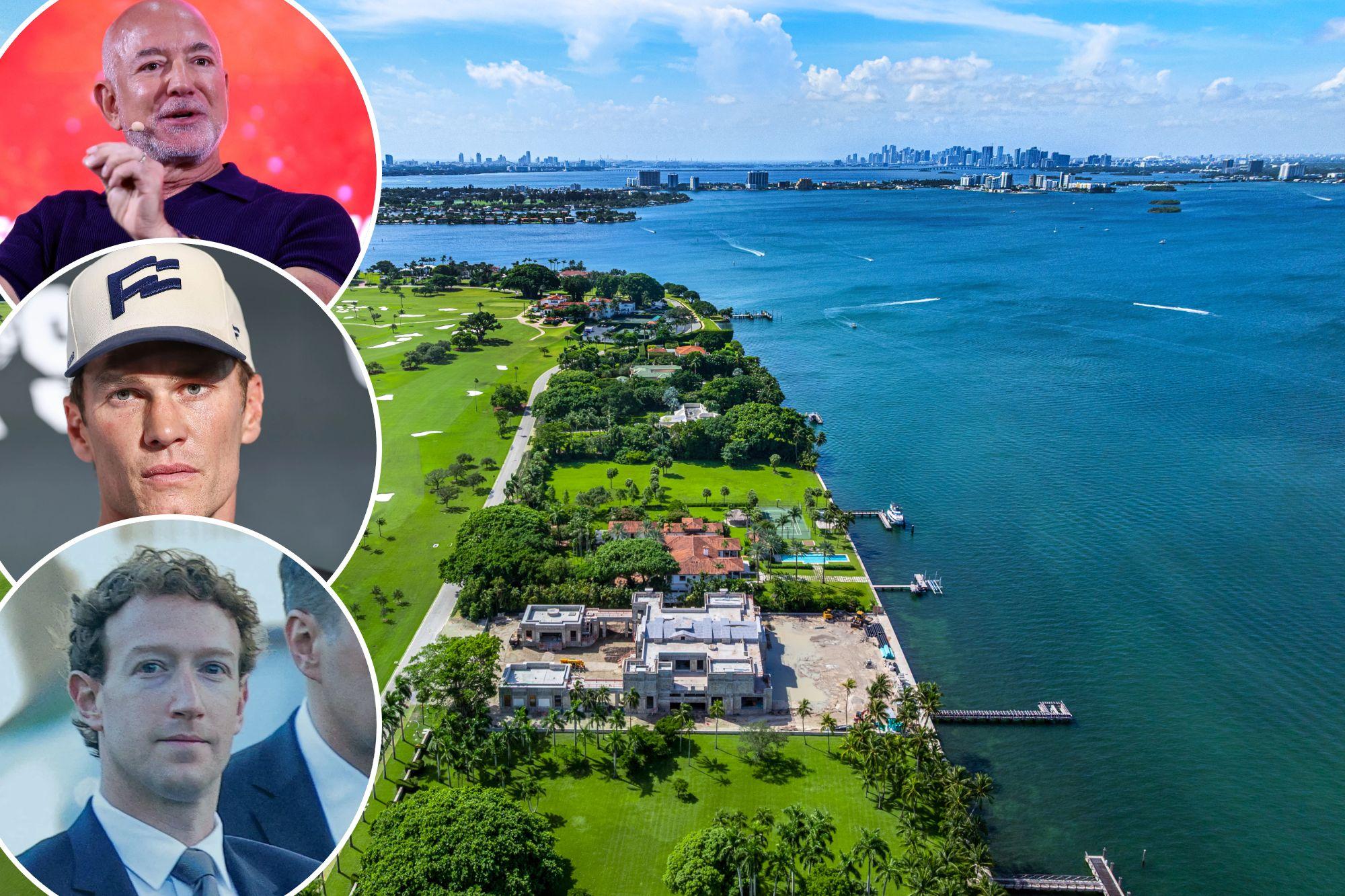
Add The New York Post on Google Money talks in Indian Creek Village. It just can’t talk its way out of a 103-page book stuffed with rules and regulations that deep-pocketed residents of this “Billionaire Bunker” must follow.
The 300-acre island off Surfside and Miami Beach has quietly become the address of choice for the planet’s wealthiest, but nobody gets a pass on the fine print — not even the guy who owns Amazon.
Jeff Bezos, Mark Zuckerberg, Tom Brady, Carl Icahn, and Ivanka Trump and Jared Kushner all call the enclave home. And all of them answer to a code written back when the community was incorporated in 1939 — one that still governs a population that clocked in at just 84 people in the last census.
For starters, these billionaires can’t land their choppers in their own backyards. And when it comes to the size of the mansions they call home, the rules also mandate strict minimums for square footage.
Willful violations of the Land Development Regulations carry fines up to $500 a day, on top of the threat of court enforcement or a yanked building permit.
Village Manager Guillermo Olmedillo oversees compliance, and the enclave backs it up with its own police department that one broker has described as openly hostile to anyone without clearance to be on Indian Creek.
As for those on the island, they have some real regulations to follow.
Yes, forget landing the chopper in the backyard. Helicopters and helipads are banned outright as an accessory use, full stop, regardless of how many private jets are parked at the airport.
Want a mansion instead? Better make it big, not small. The code sets a floor, not a ceiling, requiring at least 5,000 square feet of gross floor area, three quarters of it under the main roof. There’s no such thing as a modest starter home on Indian Creek.
Even the lawn has rules. Grass can’t grow past 6 inches high, and building coverage is capped at 25% of the lot — including hard surfaces, such as driveways, pools, tennis courts and patios. That leaves at least 55% of every property as landscaped or open space, whether the owner wants a lawn or not.
Waterfront mansions can’t hug the shoreline either. Principal residences need at least 100 feet of setback from the bay, front and side setbacks run 50 and 25 feet away, and accessory buildings have to stay 50 feet back from the water.
Pools get a little more leeway — they’re allowed to dip into that waterfront setback — but they can’t rise more than 3 feet above yard grade, and putting one in the front yard is banned outright.
Guest houses, cabanas and pool houses are permitted, up to two extra structures per lot, but they’re capped at 800 square feet and can’t be built to function as a standalone residence unless it’s for staff.
Fences and walls top out at 7 feet, have to sit back 10 feet from the property line and need landscaping to screen them from the street. Privacy, yes. Fortress walls, no.
Hurricane generators get their own paragraph entirely. Enclosures are capped at 18 feet wide, 20 feet long, and 12 feet high — and they have to sit 100 feet from the front property line, 100 feet from the water, 25 feet from the side line, and 10 feet from the house, with zero variance allowed on any of those numbers.
Subdividing a lot to squeeze out extra land is off the table completely, the code requires at least 200 feet of water frontage per residential site.
And even the pets are regulated: No packs, herds, litters, bevies or flocks larger than three without a village resolution approving it first.
The takeaway is simple. On Indian Creek, the water views come free. The exemptions don’t.