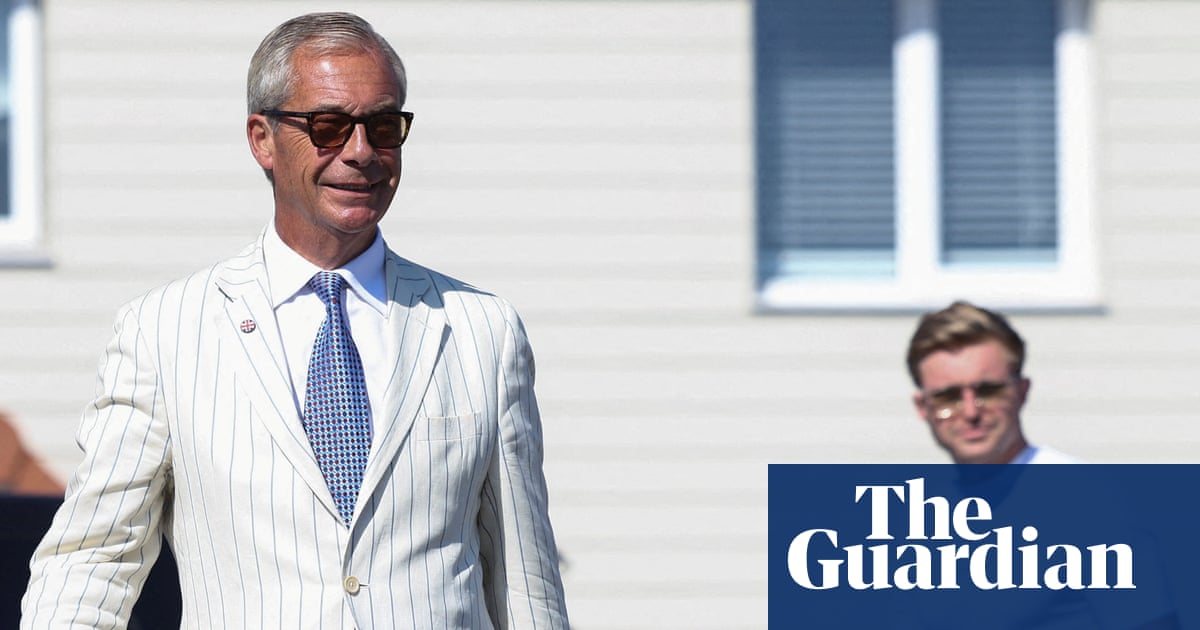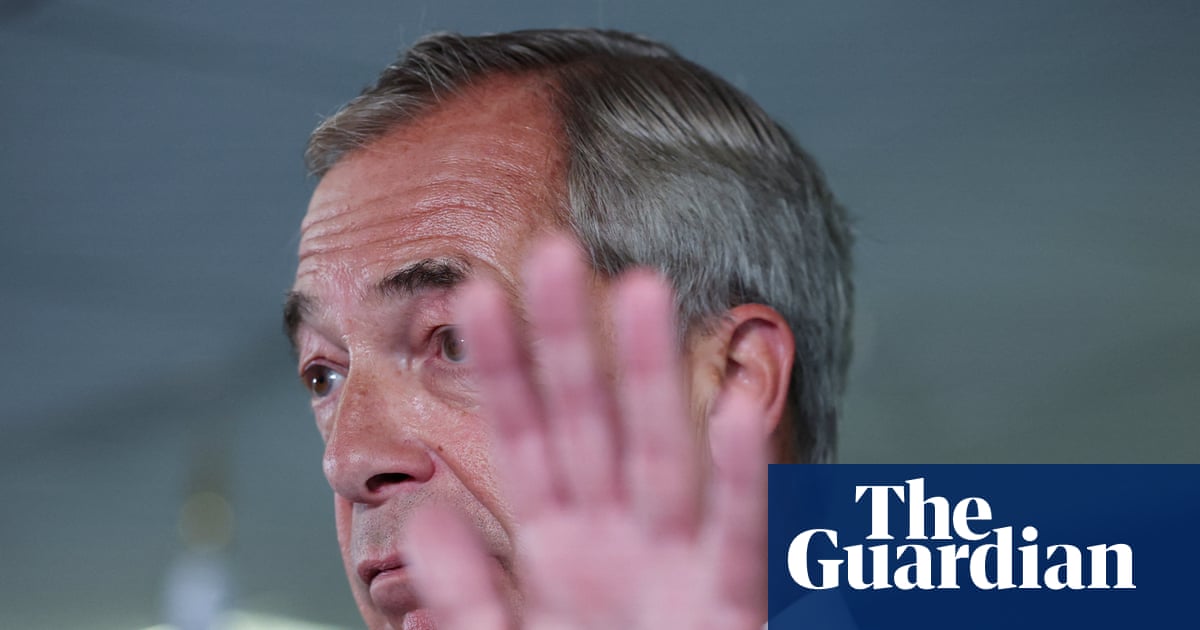
Farage is still planning to use Reform’s biggest conference yet to make a blitz of policy announcements. Photograph: Isabel Infantes/ReutersView image in fullscreenFarage is still planning to use Reform’s biggest conference yet to make a blitz of policy announcements. Photograph: Isabel Infantes/ReutersAnalysisHas Reform UK donations exposé caused a split in Nigel Farage’s party? Peter Walker Senior political correspndentSenior party figures do not appear united, but Farage may be more concerned about impact on performance in polls
Midway through an event at Reform’s annual conference on Friday there was question for the audience: who was worried about a Channel 4 News exposé of potential wrongdoing by party officials over donations? Almost no hands went up. The faithful might be sanguine. But make no mistake, Nigel Farage faces yet another problem.
Careful plans have been again upset. After months of answering – or primarily dodging – questions about his own finances, Farage had planned to use Reform UK’s biggest conference yet to make a blitz of policy announcements.
These are still happening, not least among them the revelation that a Farage-led government would declare a “national emergency” on the first day it won power, so as to get to grips with the grave problems he says the UK must tackle.
Read moreBut he and other senior party figures are being forced to field endless questions about whether senior aides Dan Jukes and James Orr really were open to illegal donations from overseas, and if they were not, why Farage’s right-hand man and his policy head have been suspended.
Dealing with unexpected crises is a core task for party leaders. But following so much focus on Farage’s undeclared £5m gift, and free of the chore of a self-imposed byelection to return to parliament, he was hoping to make news in other ways.
Day one of the aftermath of the exposé has exposed another problem: party figures do not appear unified about how to deal with it. In early media interviews on Friday, Lee Anderson, the Reform chair, said there was no way back for Jukes and Orr: “They’re gone.” But since then, a series of other figures have said they were merely suspended pending an investigation, indicating a route back.
As the day progressed, the rhetoric toughened. Reform had been the victims of a “sting” and “entrapment”, Sarah Pochin, one of the party’s MPs, told a fringe event.
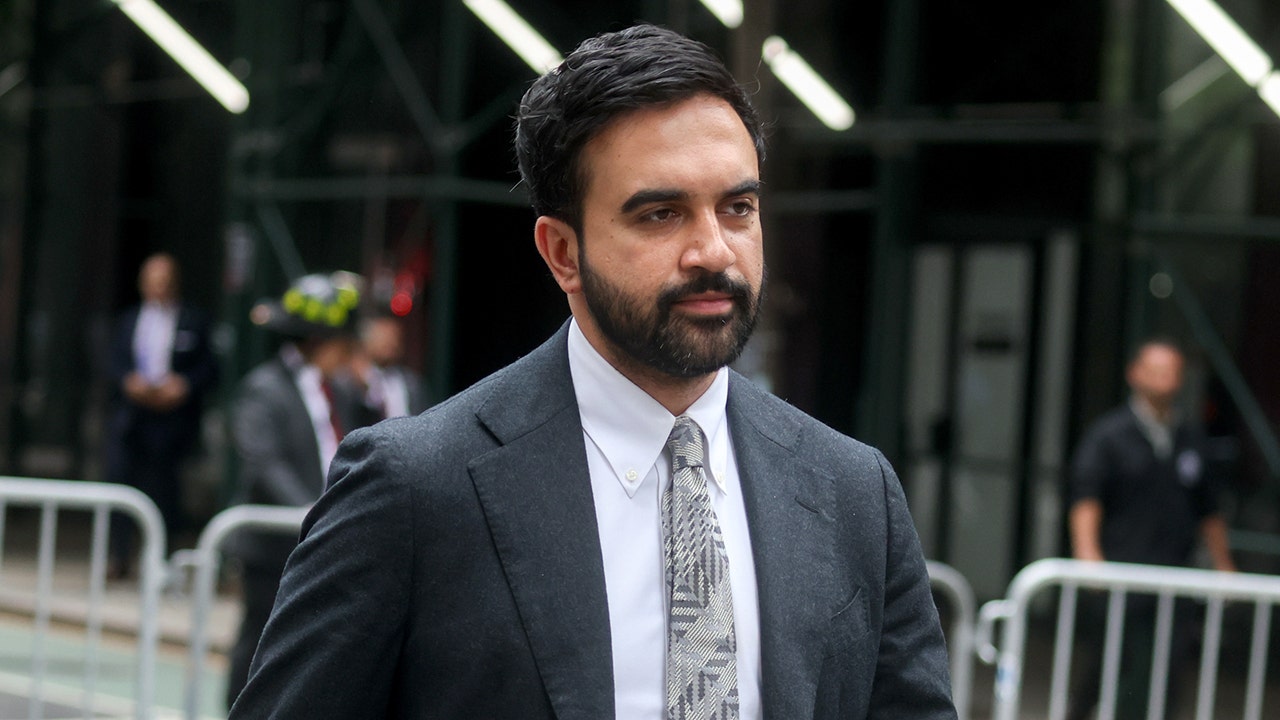
Much of this is just reaction in real time. But if there is a split between Anderson and others in the party, that means another headache for the Reform leader, who also has to deal with the combustible Zia Yusuf, its home affairs spokesperson, whom Farage is known to have described in private with a derogatory expletive.
Most of all, however, the looming problems lie outside the necessarily insular world of Birmingham’s NEC and its thousands of Reform delegates.
In a variation of the famous Ernest Hemingway description of becoming bankrupt – “gradually, then suddenly” – one of the more important rules of politics is that voters pay limited attention to claims of sleaze or ineptitude, until they do.
As Boris Johnson and his Conservative successors found to their cost, party reputations are built up very slowly but can erode at some speed.
Reform is not yet at this point. But the metrics are far from reassuring, not least Farage’s net favourability rating with YouGov, which has fallen to minus 44.
According to another pollster, Ipsos, even before the new revelations, just 20% of Britons think Farage is “an honest person”. Another study, by More in Common, found concerns around sleaze were named as the biggest barrier for people voting for Reform.
All this must be put in context. Farage achieved something unprecedented in taking a new party and topping more than 150 successive polls. No leader could keep that going forever, especially with a charismatic new prime minister in No 10.
But time is not necessarily on his side. Even though a general election is not needed before mid-2029, Reform is working on the assumption Andy Burnham will most likely seek his own mandate next year. It is in this landscape that the loss of two very core party figures is so damaging, all the more so if they end up under formal police investigation, let alone in court.
Farage sought on Friday to distance himself from Jukes and Orr, calling them “contractors”. This is very obvious nonsense, given Jukes has been at his side for a decade and Orr was trusted with devising the party’s policy.
A shadow has been cast over the two of them, with the potential to darken much further if police or the elections watchdog take action. And that shadow could yet fall on Farage himself.