Add The New York Post on Google Tennis fans’ patience reached a breaking point this week with the influencer craze that the U.S. Open has leaned into this year to bring more eyes to the sport.
Various photos and videos went viral of fans shaming several influencers who disrupted Naomi Osaka’s Monday night match against Anastasia Zakharova at Arthur Ashe Stadium, forcing the chair umpire to step in.
To Justin Morelli, the creator and voice behind “The ShotClock,” the backlash that influencers are getting has been building.
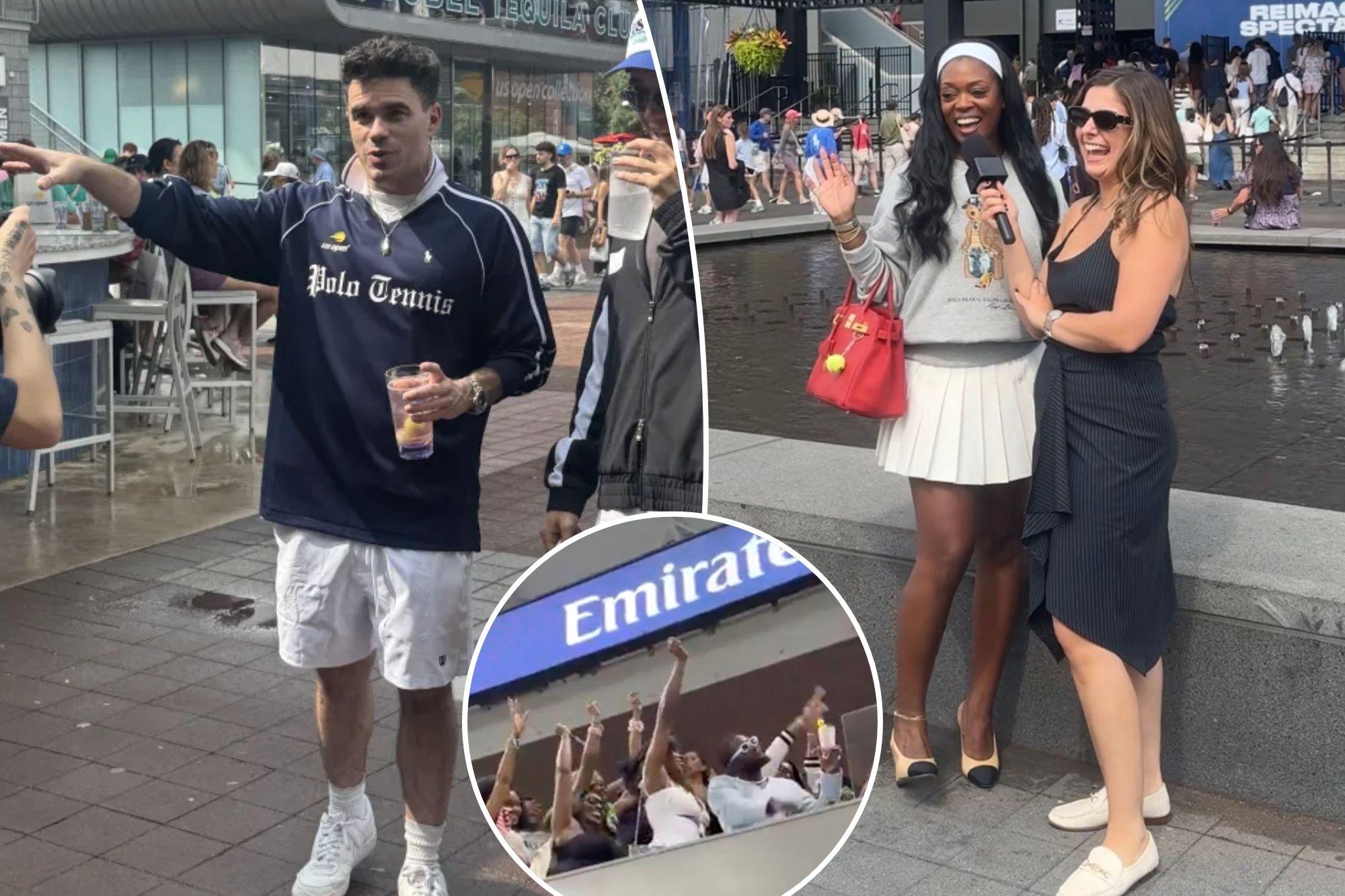
“The influencer space has exploded, especially in sports and big events that people like to frequent…,” Morelli, a credentialed influencer for the Open, told The Post on Thursday. “I think this has been brewing the last couple of years, it just didn’t get reported. This year, it’s kind of gone crazy.”
During Monday’s match, a video showed one woman using a ring light to produce content in the middle of a point. A group of influencers in a luxury suite were also seen recording a video and talking in unison, disturbing a fan sitting below them.
It has created a discourse around the Open’s first week. As an influencer and sports fan, Morelli has mixed opinions on the subject.
“Tennis is more of a global game and an international game…but it’s not what it used to be in America,” he said. “I think having influencers there, promoting the game in whatever way and just showing that they’re there is good for the game because it gets more people to the U.S. Open. It gets more people to watch. It gets more people to know about the event and see tennis. Even if it’s as a casual thing, I think that’s better than nothing.
“But at the same time, I think there’s probably a better way to police some of the things that maybe affect the root of the game, which is sometimes people taking photos during a point or something that would distract players on the court to take away from the actual game of tennis. I think maybe that is where we take it too far and some influencers take it too far.”
Alyssa La Spisa, food and lifestyle influencer, as well as the creator and host of “Where Hot Guys Eat IRL” — who is also credentialed for the U.S. Open — agreed that influencers need to be “mindful” of what the event’s focus is.
However, she told The Post that the backlash is a “blanket statement” and she would not want it to hinder access moving forward, especially for those content creators not directly tied to the sports space. La Spisa added that the issue also doesn’t stem from the Open’s content creator credential program alone.
“I would argue too it’s not just credentialed creators. It’s also brands inviting creators to their suites,” she said before adding that she has seen influencer pushback while attending F1 events as well.
“But it has popularized the sport [motor racing] a bit more, especially in America, it’s not as big,” she said. “I feel like it’s fun that people want to participate in whatever way.”
Morelli explained that the backlash against influencers has been “blown a little out of proportion” when considering other hindrances that sports deal with, such as a fan running out on the court or field.
“It’s just what happens in life sometimes,” he said. “There’s going to be people that are maybe rude or don’t have a sense of respect for the game or what’s going on. But those people, to me, are fewer than the people who maximize the game and do good things for the game.”
In 2025, the USTA issued 54 media credentials to content creators, a first for the tournament. This year, the organization has issued “close to 100,” USTA director of media operations Jeanmarie Daly told Front Office Sports.
Beyond fans, the athletes have taken notice of the change as well.
No. 3 Jessica Pegula said she can “appreciate” one side of it that shows off the U.S. Open but did admit it’s “tough” when it comes to disrupting matches. Perhaps not coincidentally, Osaka said after her second-round match on Thursday that “today the umpire… told everyone to quiet — like, be quiet more than I’ve ever heard an umpire tell a crowd to be quiet.”
— Additional reporting by Brian Lewis