Add The California Post on Google It could soon be bye-bye, Bambi on Catalina Island.
Nearly all of the popular SoCal tourist spot’s roughly 2,000 mule deer are set to be killed under a controversial plan designed to save native plants — and make the wildfire-prone day-trip destination less combustible.
A Los Angeles County judge on Tuesday tentatively rejected opponents’ attempt to block the massacre, clearing the way for the Catalina Island Conservancy to begin culling the herd, The Guardian reported.
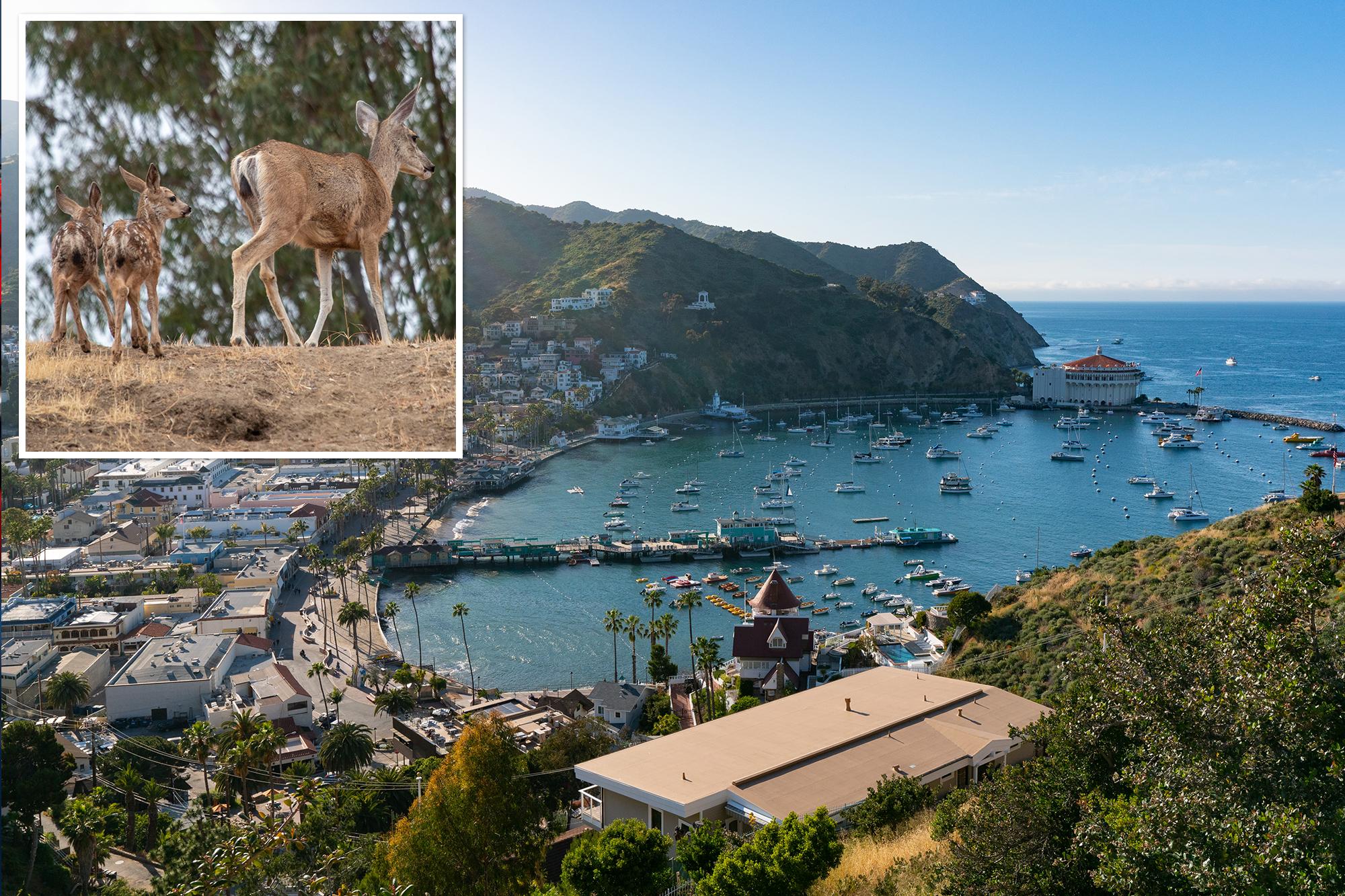
A general view of Avalon harbor at Santa Catalina Island on Monday, May 22, 2023, in Avalon, California. GC Images The nonprofit — which controls 88% of the island — has plans to wipe out most of the deer population over five years.
An estimated 200 animals are expected to be hunted with rifles over the next two months.
The deer may be a beloved fixture around Catalina — including in downtown Avalon — but scientists say their appetite for native shrubs has helped invasive grasses take over parts of the island.
Those grasses ignite more easily and allow flames to spread faster than the native vegetation they replace, according to Anna L. Jacobsen, a plant biologist at California State University, Bakersfield.
Jacobsen, who studied the island’s ecosystem following major fires in 2006 and 2007, told The Guardian that native plants already threatened by climate change cannot regenerate quickly enough when they are repeatedly eaten by deer.
As the shrubs disappear, they are replaced by the more flammable invasive grasses.
The problem began about a century ago, when hunters introduced mule deer to Catalina to hunt for sport. The population eventually swelled into the thousands despite droughts and decades of regular hunting seasons.
Max Moritz, a wildfire specialist who advises California state and local governments, told the outlet that removing the deer was the most practical option from ecological and fire-prevention perspectives.
The conservancy previously considered contraception and sterilization — but determined those methods would not be feasible for such a large population.
Fencing off the animals was also rejected, while introducing predators was deemed too dangerous for native wildlife and residents. Four decades of recreational hunting also failed to meaningfully shrink the herd.
A deer and its babies walk near the hospital on Saturday, June 26, 2021, in Catalina Island, CA. Los Angeles Times via Getty Images The California Department of Fish and Wildlife approved the conservancy’s plan in January, allowing it to more forward with the killings.
Only a small group of deer living near Avalon will be spared and sterilized. Island residents will also be allowed one final hunting season from late October through mid-December.
The deer meat will be donated to local tribal groups or used as part of the California condor recovery programs.
California Post News: Facebook, Instagram, TikTok, X, YouTube, WhatsApp, LinkedInCalifornia Post Sports Facebook, Instagram, TikTok, YouTube, XCalifornia Post Opinion California Post Newsletters: Sign up here!California Post App: Download here!Home delivery: Sign up here!Page Six Hollywood: Sign up here!
Carcasses found near roads and hiking trails will be removed, while those in steep or dangerous terrain may be left to decompose naturally, the conservancy told The Guardian.
The plan has triggered fierce opposition from an unusual alliance of animal-rights activists and hunters.
An online petition seeking to halt the cull has collected more than 32,000 signatures.
Los Angeles County Supervisor Janice Hahn also appeared to Gov. Gavin Newsom to intervene earlier this week, but the plea failed to stop the plan before the judge’s tentative ruling.
Pepe Barton, the conservancy’s communications director, said killing the deer was “never our first choice,” calling their deaths a “noble sacrifice” — needed to protect Catalina’s ecosystem, residents and economy.