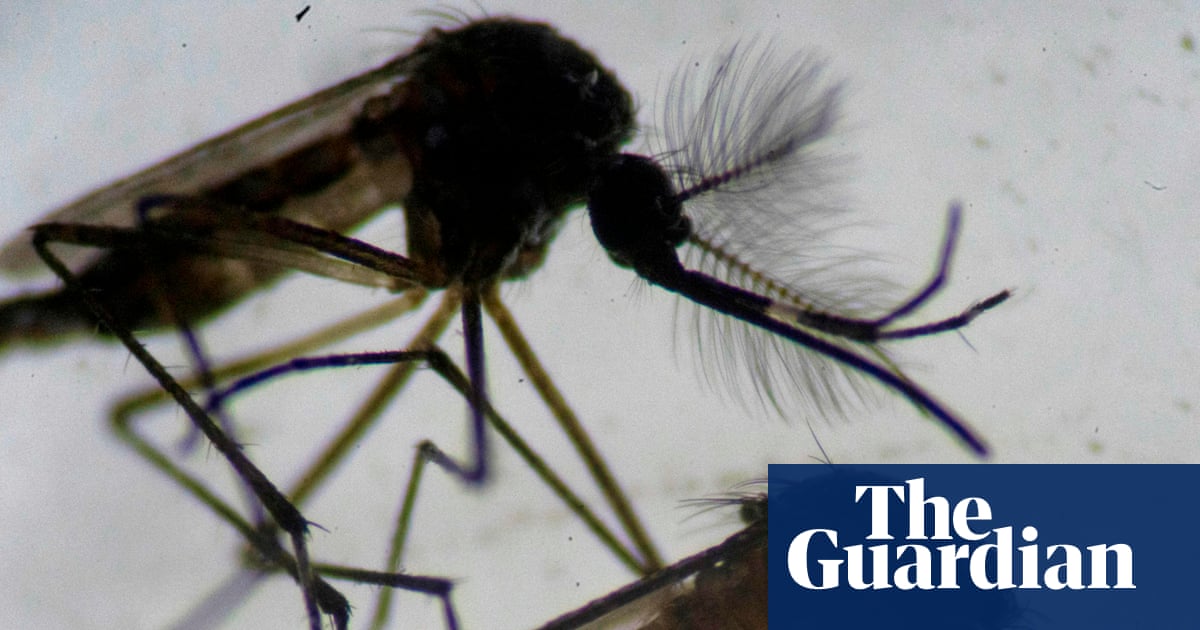
Aedes aegypti seen through a microscope in Brazil. The UKHSA said the risk to the public in Britain was low. Photograph: Mauro Pimentel/AFP/Getty ImagesView image in fullscreenAedes aegypti seen through a microscope in Brazil. The UKHSA said the risk to the public in Britain was low. Photograph: Mauro Pimentel/AFP/Getty ImagesInvasive tropical mosquito found breeding in east LondonClimate crisis could increase incursions of Aedes aegypti, which can transmit Zika virus and dengue, experts say
An invasive mosquito capable of transmitting tropical diseases has been found breeding in homes in east London, with warnings that the rapidly warming climate will lead to greater “incursions of invasive mosquitoes”.
This is the first time the species has been identified breeding in the UK and the fourth time it has been detected.
Aedes aegypti, which are normally found in tropical and subtropical regions, can transmit dengue, chikungunya and Zika virus in countries where these infections are circulating.
While none of these diseases are deadly, they can cause complications, with Zika virus linked to serious problems during and after pregnancy.
The UK Health Security Agency (UKHSA) said the risk to the public was low, with no evidence that the mosquitoes in east London have have caused human infections.
The initial finding was reported through UKHSA’s mosquito watch surveillance scheme. The agency said the species could have come into the UK through vehicles, baggage and imported plants and, if the insects found a suitable climate, they could survive.
It said that despite evidence of breeding, the species was not established in the UK and could not survive for long in the typical UK climate, which was too cold.
However, the agency warned that in a warming climate, “we will continue to see incursions of invasive mosquitoes, and increased reports of them being able to survive in the UK”.
David Smith, advocacy and social change manager at the charity Buglife, said the rapidly warming climate was creating conditions that were more favourable for exotic and potentially invasive species to establish in the UK.
A study earlier this year found that chikungunya, an excruciating tropical disease, can now be transmitted in most of Europe because of higher temperatures caused by the climate crisis. The analysis was the first to assess the effect of temperature on the incubation time of the virus in the Asian tiger mosquito.
Smith said: “Recent reports of non-native invertebrates, including mosquito species, highlight the urgent need for the government to strengthen biosecurity, improve surveillance and address pathways such as the movement of potted plants and soils, through which numerous invertebrates can hitchhike undetected.”
The UKHSA said control measures had been implemented to destroy the larvae, and the area would continue to be monitored closely to identify and eradicate any further mosquitoes and larvae.
It advised residents to remove standing water from gardens and outdoor spaces, including from buckets, containers, paddling pools and plant pots, to reduce opportunities for all species of mosquitoes to breed.