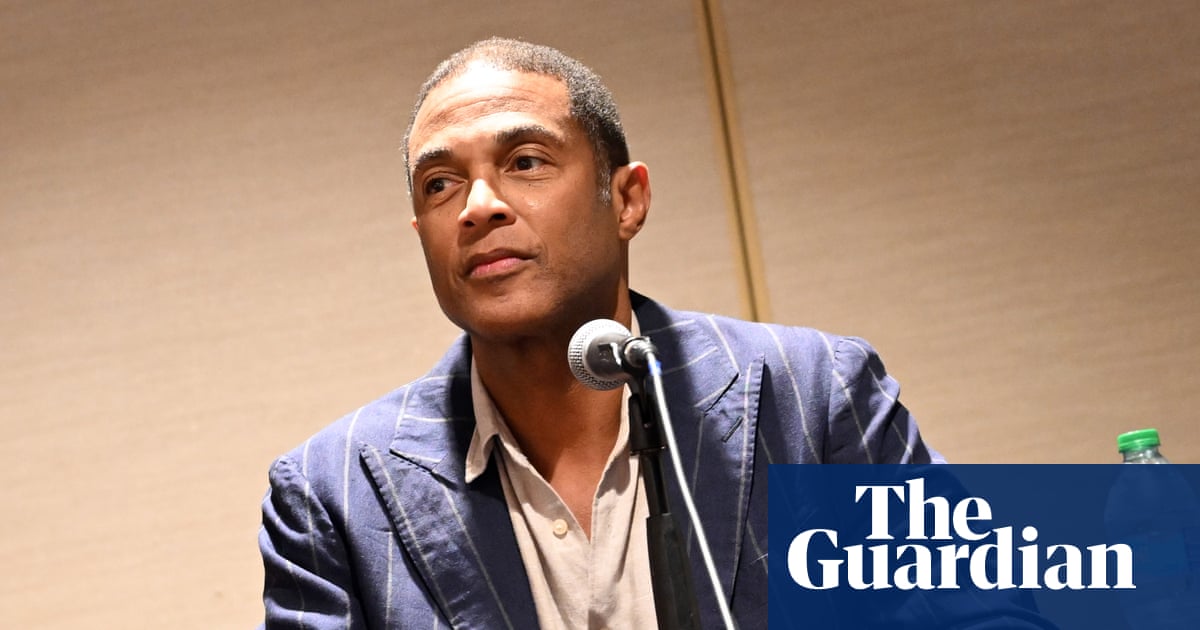
Journalist Don Lemon speaks onstage during a National Association of Black Journalists convention panel on rebuilding after career turns on 13 August 2026 at the Atlanta Marriott Marquis in Georgia. Photograph: Paras Griffin/Getty ImagesView image in fullscreenJournalist Don Lemon speaks onstage during a National Association of Black Journalists convention panel on rebuilding after career turns on 13 August 2026 at the Atlanta Marriott Marquis in Georgia. Photograph: Paras Griffin/Getty ImagesUS prosecutors refuse to say if they secretly obtained Don Lemon’s phone records Experts have expressed deep concerns that the practice runs afoul of the fourth amendment’s right to privacy
Federal prosecutors have declined to say whether they secretly obtained phone records for the journalist Don Lemon using an unusual administrative summons, his lawyers said in a Monday court filing, highlighting concern about a controversial legal authority the government has claimed to gather information as it charged Lemon and dozens of others with civil rights crimes in connection to a January protest at a church in Saint Paul, Minnesota.
In January, officials served Verizon with an administrative summons for a log of Lemon’s phone records between 19 December and 20 January. The subpoena did not come from a grand jury, as is typical in criminal investigation, and also was not a court-approved search warrant. Instead, it was a unilateral request from the Department of Homeland Security (DHS), which said it was requesting the information under 19 USC 1509 – an obscure law that gives the department power to investigate records related to customs issues. Experts say the government is abusing that authority to gather records on journalists, activists, unions, non-profits and online critics, and have expressed deep concerns that the practice runs afoul of the fourth amendment’s right to privacy.
Records produced by the government to Lemon’s lawyers in the case have left it unclear whether Verizon complied with the request, his attorneys wrote. His lawyers said they had contacted prosecutors on Friday for clarity on the issue and had not received a response as of Monday.
The justice department declined to comment. Verizon and the DHS did not return requests for comment.
Lemon was charged in January with conspiring to violate federal laws that protect religious expression after he covered a protest at a church where activists said a pastor was a member of Immigration and Customs Enforcement.
The DHS used a 1509 summons to secretly obtain six months’ worth of telephone records from T-Mobile for Georgia Fort, an independent journalist who, like Lemon, was covering the protest and subsequently charged. Fort’s lawyers said in a filing last month they were “stunned” the government had obtained the records without notifying Fort or giving her a chance to contest the demand.
Unlike a grand jury subpoena, companies are not required to respond to a 1509 summons, and can force the government to go to court to enforce them.
The government’s effort was especially alarming, they said, because a magistrate judge in the case previously rejected a separate effort to obtain YouTube records on Fort and Lemon. In his decision, the judge told the government there were special protections that applied when the government sought records from journalists and that the government needed to give the reporters a chance to challenge the effort to get information.
The filing from Lemon’s lawyers came on the same day that nearly all of the defendants charged in the case sought to have the case dismissed, in part because of the way the government has abused 1509 summonses. In a joint filing on Monday, they said the government had filed more than 90 administrative summonses in the case for information including telephone, airline, social media, car rental and employment records. They also said the DHS did not have the legal authority to investigate the case.
“The Government acted beyond the authority Congress conferred on it, repeatedly invoked a purpose-limited customs summons to obtain evidence in an unrelated domestic criminal investigation, and continued doing so throughout an active prosecution,” they wrote. “The scale, duration, and deliberate use of that compulsory power are central to whether the Government’s conduct crossed the constitutional boundary into outrageous Government conduct.”
Prosecutors have defended their use of 1509 summonses in the case, even though it has nothing to do with customs. They have pointed to language in it that says they can be used in matters “for ensuring compliance with the laws of the United States administered by the United States Customs Service”, they argued in a brief earlier this year. Because the US customs service was folded into the DHS, the agency is entitled to use the summons in any case involving a law the department enforces, lawyers wrote earlier this year. They went on to say that because the protesters went to the St Paul church looking for an ICE official who was also a pastor there, there was a potential crime committed against a DHS official, which makes the use of the summons proper.
Lawyers for the defendants rejected that argument in their Monday filing. The language does not give them subpoena power involving every law the DHS “happens to investigate”, they wrote.
“DHS therefore inherited Customs’ Section 1509 authority subject to the same limits Congress imposed,” they wrote. “The reorganization changed who could exercise that authority, not its scope.”