Following voter approval of a constitutional change that expands presidential powers, Guinea-Bissau faces renewed debate over legitimacy, civilian rule and democratic safeguards.
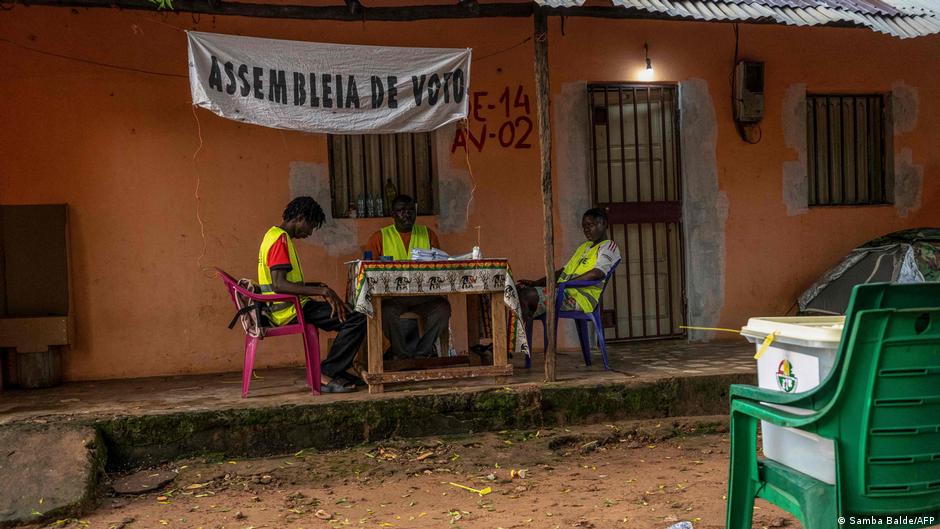
https://p.dw.com/p/5JzQZGuinea-Bissau has voted in support of expanding presidential powers and trimming the country's legislatureImage: Samba Balde/AFPAdvertisementGuinea-Bissau is facing a new political test after voters approved a referendum on a proposed charter that will give the president the power to appoint and dismiss the prime minister and government ministers, while reducing the number of seats in parliament from 102 to 65..
Sunday's referendum came less than 10 months after a coup in which the military seized power and three months ahead of presidential and parliamentary elections scheduled to take place on December 6.
The transitional authorities say the constitutional reform is intended to bring stability to the impoverished West African country and prepare it for a return to civilian rule.
On Monday, the National Transitional Council claimed victory for the "Yes" camp. "The majority of those who went to vote voted yes. In conclusion, the victory of yes is guaranteed," council spokesman Alberto Pinto Pereira said.
On Tuesday, the National Electoral Commission (NEC) confirmed victory for the "Yes" side, saying it had received 70% of the vote, compared with 30% for the "No" camp, and that voter turnout exceeded 50%.
NEC chairperson Carmen Izaura Lobo described the Guinea-Bissau referendum as a success, due to the "organizational capacity, professionalism and dedication" of teams on the ground, Agence France-Presse (AFP) reported.
Lobo praised the "transparency" and "credibility" of the process.
The opposition, however, says the referendum has no legal basis because it was organized by institutions created after the military coup. It had called on voters to boycott the vote.
Domingos Simoes Pereira, leader of the African Party for the Independence of Guinea and Cape Verde (PAIGC), who was detained after the military coup and later released into house arrest, rejected the referendum as legally invalid.
Speaking to DW from Portugal, he said the institutions established by the military have no democratic mandate to rewrite Guinea-Bissau's constitution.
The PAIGC and other opposition groups maintain that the vote is a continuation of the November coup.
Fernando Dias Costa, the main challenger to then-President Umaro Sissoco Embalo in the November 2025 presidential election that was annulled by the military, disputed the official turnout figures.
"Very few citizens took part in this referendum," he said, noting that the people have sent an important message that must not be ignored.
"They are not prepared to simply accept political changes that are clearly unconstitutional and have not been publicly debated."
The proposed constitution would move Guinea-Bissau toward a much stronger presidential system. The president would appoint and dismiss the prime minister and government ministers and would have the power to dissolve parliament.
Supporters argue that the existing political system has repeatedly led to conflicts between the president, government and parliament. They say stronger presidential authority would create greater stability.
Bubacar Ture, head of the Guinea-Bissau Human Rights League, told DW that the draft constitution would lead to "an excessive concentration of power in the person of the president."
He argues that the proposed system could make parliamentary elections less meaningful because the president would have much greater control over the government regardless of the parliamentary balance.
Ture also criticizes the way the constitution was drafted. "No one was consulted," he said. "Neither the parties nor civil-society organizations, nor traditional or religious authorities. Everything was produced in secret."
He is particularly concerned that provisions concerning constitutional oversight have been removed. In his view, this would weaken the rule of law.
Supporters and critics view the referendum through the lens of the political crisis that began in November 2025, when both former President Umaro Sissoco Embalo and opposition candidate Fernando Dias claimed victory in a disputed presidential election.
Before the results could be officially announced, the military seized power.
Embalo was briefly detained and subsequently left the country. His current whereabouts are unclear, and speculation continues over whether he retains influence over the military leadership or could seek a political comeback.
The referendum in Guinea-Bissau also reflects a broader trend across parts of Africa, where constitutional reforms have sparked debate over the concentration of presidential power.
In recent years, countries including Togo, Chad, Uganda, Zimbabwe and Guinea have seen leaders pursue constitutional changes that critics say strengthen executive authority.
Despite the "Yes" vote, opposition and civil society groups continue to challenge the legitimacy of the process. The referendum also takes place against a backdrop of longstanding political instability.
Guinea-Bissau has experienced repeated coups and attempted coups since independence, contributing to recurring periods of political instability.
The December elections are intended to mark the return to civilian rule. But opposition criticism of Sunday's referendum has raised further questions about how difficult that transition may be.
A key point of contention is whether the new constitutional order will strengthen democratic institutions or concentrate more power in the presidency.
Zimbabwe's term‑extension bill sparks democracy concernsTo view this video please enable JavaScript, and consider upgrading to a web browser that supports HTML5 video