Add The New York Post on Google To Madison Keys, it doesn’t feel possible. Everyone, she said, has reminded her the past two days that this is her 15th U.S. Open, an annual appearance that began back in 2011 when she was just 16 years old and featured a run to the final in 2017.
When she debuted, Keys was the lowest-ranked woman in the field at No. 455 and became the youngest player to win a match in Queens since 2005.
So much has changed since then. She nearly conquered what she referred to as the “big-show Grand Slam” and made two other semifinals. She won an Australian Open for her first Grand Slam title in 2025.
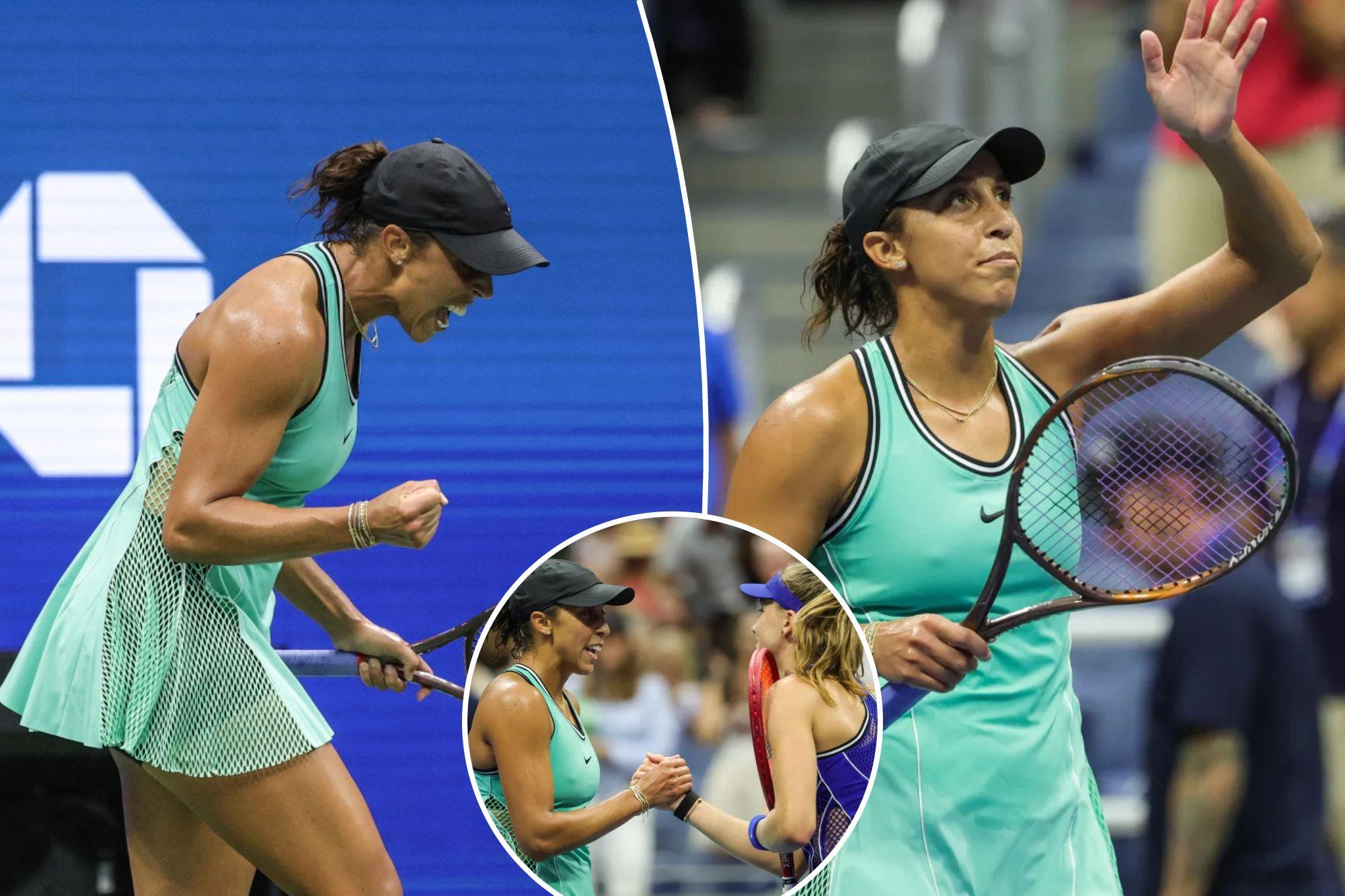
Keys, 31 and the No. 22 seed, also stumbled into lows like last year, when she lost in the first round after committing 89 unforced errors and battling nerves. And that made Tuesday — her straight-sets win over unseeded Alina Korneeva — significant as her quest for her first U.S. Open title continues, since “it’s always hard to come back to a place where you last played and it was a tough loss.”
“I think that today is obviously tough,” Keys said, “because you go back on the court where you had a really tough loss and to go back out and play another first round, it’s always hard. To have that kind of lingering memory is tough.”
Keys didn’t recall how long it took to shake the lingering sting of the loss last year to Mexico’s Renata Zarazua. She just forgot about it. And Keys, who has been transparent about her mental health and battling nerves in the past, said that she still feels the tension ahead of Grand Slam tournaments and recently spoke with Jessica Pegula about it.
Following her upset last year, Keys generated runs in the first three Grand Slam tournaments of 2026 — falling in the Round of 16 at the Australian Open, Wimbledon and the French Open — and won the Eastbourne Open. But as she hit a milestone for U.S. Open appearances, an absence on her tennis résumé remains, and another run at Flushing Meadows could change that.
The tenor of women’s tennis has started to shift, too. When Keys broke into the professional space as a 14-year-old, she joined a group featuring Sloane Stephens, Christina McHale and Taylor Townsend referred to as the next generation of American women’s singles stars. Pegula eventually soared up the rankings, while Coco Gauff, Amanda Anisimova, Emma Navarro and Iva Jovic have, in recent years building to the present, been labeled as the future of the sport.
That puts Keys at a critical juncture. She entered play as the No. 22 seed — a major drop from the No. 6 of last year. But she flashed vintage moments Tuesday, including when she sent a strong backhand winner past an outstretched Korneeva racket to gain an advantage and set up a third set point. That time, she converted as a shot from Korneeva went long and Keys yelled in celebration.
Keys, she was reminded by a reporter during her post-match news conference, has now spent more than half her life playing professional tennis. It’ll take another decade-plus to match Venus Williams’ mark of 26, and counting, U.S. Open appearances. But a low point in the tournament last year added meaning to a day like Tuesday, as a quest that’ll take two more weeks and six more wins — while being 15 years in the making — begins to form.
“It’s just I think that in a lot of ways it’s been a huge blessing I started so young,” Keys said of turning pro, “just because I really got to get into it at such a young age and when I didn’t really even understand what was going on, so I was able to just kind of experience it in a really different way.
“But it’s definitely been, I think, the most interesting because I feel like as a person I’ve changed a lot throughout the years and kind of just evolved as a person while getting to kind of do the same job.”