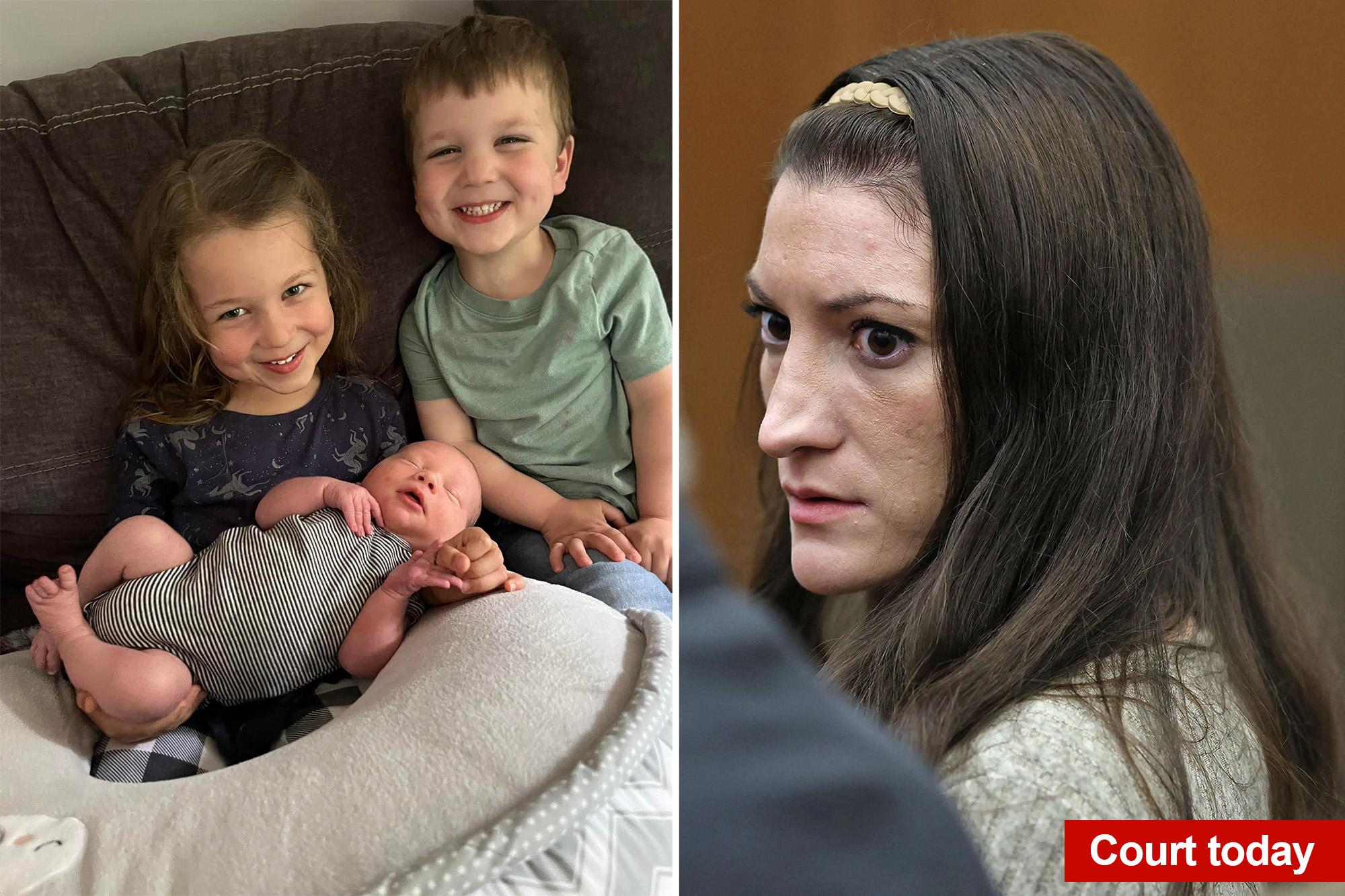
Add The New York Post on Google PLYMOUTH, Mass. — Lindsay Clancy’s high-stakes triple murder case has a “very high probability” of ending with jurors unable to agree on whether she should be held criminally responsible for strangling her three young kids, experts predict.
The jurors — who are in their fourth day of deliberations — are tasked with deciding whether they buy the 36-year-old Duxbury mom’s defense that she should be found not guilty by reason of insanity on the grounds she was in the throes of severe postpartum psychosis when she took her kids’ lives and tried to take her own.
Prosecutors argued at trial that she carefully planned the slayings of Cora, 5, Dawson, 3 and 8-month-old Callan and made up hearing a hallucinatory voice to avoid culpability.
Veteran Boston criminal defense attorney Peter Elikann told The Post the consensus among him and other experts is “there was always going to be a very high probability that there would be a deadlock jury in this case.”
The panel — composed of nine women and three men — sent out a note after nearly 18 hours of deliberations Tuesday morning telling Judge William Sullivan they were at an impasse.
“I know there were over 80 witnesses, there were over 300 exhibits, but because of that I’m going to ask you to go back out … and continue your deliberation at this time,” Sullivan told jurors before sending them back.
Elikann explained the judge still has at his disposal a formal instruction under Massachusetts law that he could give to the jury if they send out another note saying they still can’t reach an agreement, called a “Tuey-Rodriguez” charge.
He said the instruction is “known colloquially as the dynamite charge … And it really pushes the jury and urges them to try to work out a unanimous decision. It’s almost equivalent to a pep talk by the judge encouraging them to go back and try harder.”
After that, if the panelists tell the judge a third time they remain deadlocked, the judge could choose to declare a mistrial.
“It depends on who the judge is, but normally once Tuey has been given, if they come back again and say they are still deadlocked, the judge is constrained to grant them a mistrial,” Boston defense lawyer Brad Bailey told The Post.
Both lawyers noted, though, that Sullivan could tell jurors a third time to keep at it.
“I believe there is a good chance, given the nature of this particular case [and] evidence that there will be a further deadlock note later [in the] day,” Bailey said.
On his way into court Tuesday morning, Lindsay Clancy’s lawyer, Kevin Reddington, told reporters he would “absolutely” stick with the killer mom’s case if the trial ends with a hung jury and is retried.
Reddington said if there is a mistrial, they would “try it again.”
He said Plymouth District Attorney Timothy Cruz “would never drop it. That’s for sure.”