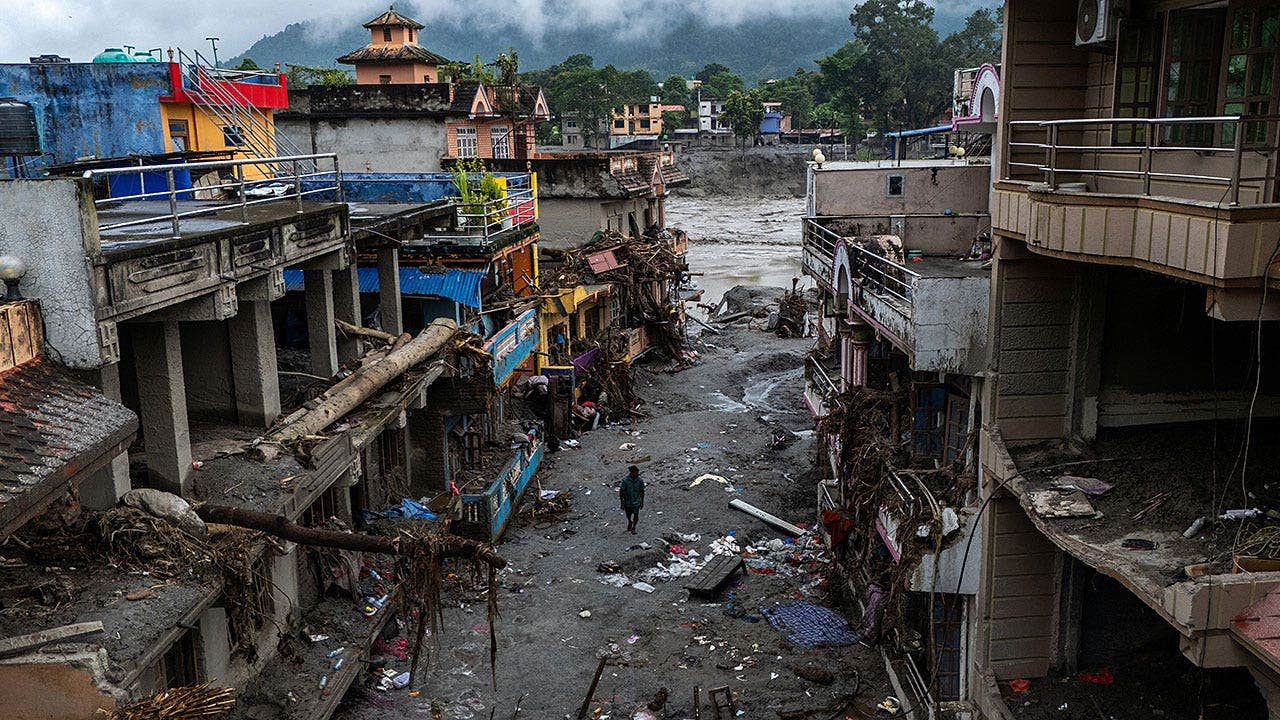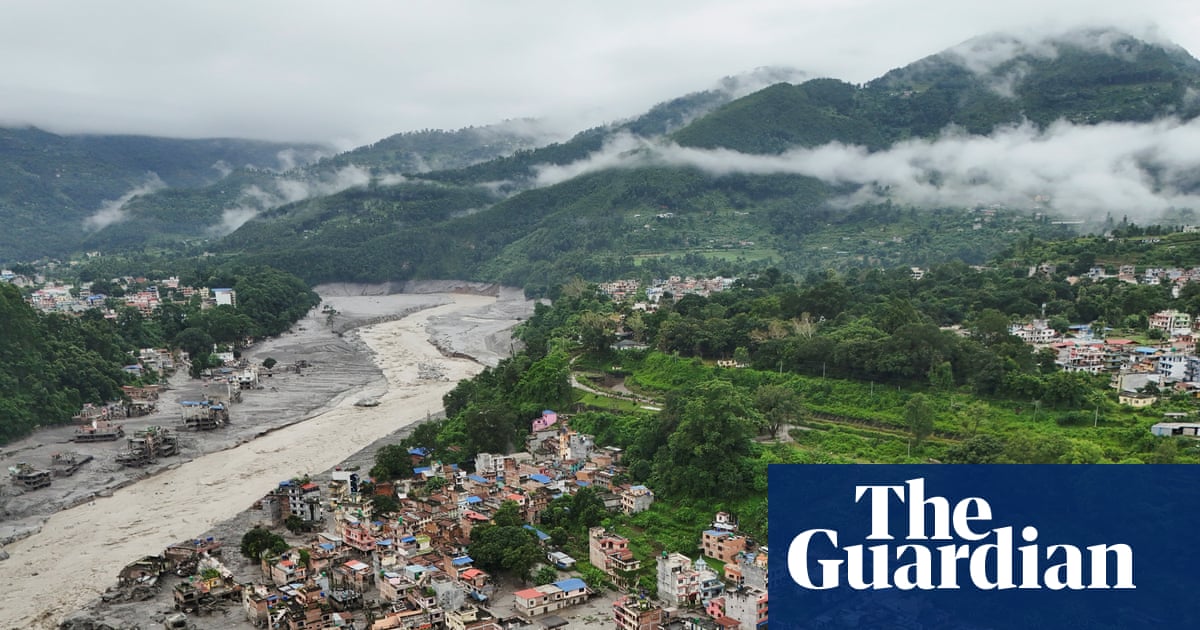
A drone view shows mud covering properties following a flash flood in Trishuli, Nuwakot district, Nepal. Photograph: Navesh Chitrakar/ReutersView image in fullscreenA drone view shows mud covering properties following a flash flood in Trishuli, Nuwakot district, Nepal. Photograph: Navesh Chitrakar/Reuters‘The mountains are changing’: What the floods tell us about the future of India’s HimalayasAs families await news of missing loved ones, the disaster is a stark reminder of how the climate crisis is creating a fast-growing threat. Plus, the town considered India’s ‘Jurassic Park’
It has been hard not to despair while watching the ruinous floods swallow parts of Nepal, and harder, still knowing that the agony compounds each passing day for dozens of Indian families whose members remain unaccounted for.
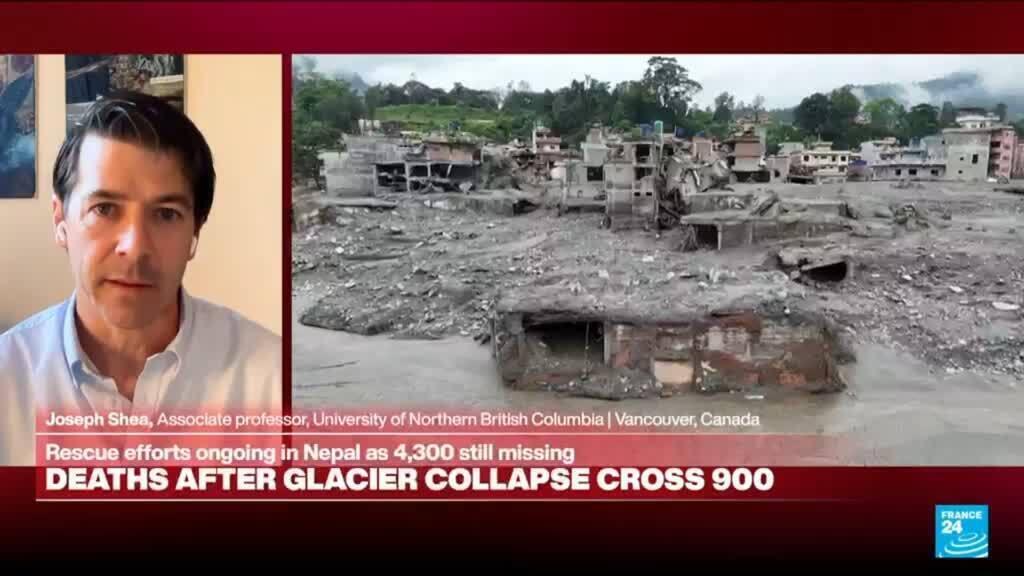
Social media is awash with desperate pleas, photos and details of the young and old, men and women, from Mumbai to Kolkata, posted by families searching for traces of life. The disaster unfolded when a melting glacier slammed into the valley below, unleashing a deadly cascade of rock and ice down the Bhote Kashi River, which flows from Tibet into Nepal.
Among the 275 Indians missing at the time of writing are workers of a hydropower project and people undertaking the Hindu pilgrimage to Mount Kailash in Tibet. Another 128 people of Indian origin, including a large group of Sadhguru’s Isha Foundation spiritual group, are also missing; 149 Indian people have been rescued as of Monday.
For Gauri Joshi, whose five relatives remained unaccounted for over the weekend, the last few days have been a blur of calling their numbers in vain, watching news of rescue operations and trying to reach Indian officials – over and over again. What she has pieced together so far is that her relatives, part of a pilgrim tour group from Maharashtra, cleared immigration at the Gyirong border between Nepal and Tibet and boarded buses shortly before the flood waters destroyed the crossing.
“Chances appear very bleak now. But maybe a miracle will happen,” Joshi said.
The tragedy has reignited the question of how vulnerable the Himalayas are to climate change, and what its implications are for India. To understand the risks of glacier collapse and thawing permafrost leading to sudden floods and debris flows, I spoke to Dr Ashim Sattar, a professor at Indian Institute of Technology Bhubaneswar and an expert on glacial lake outburst floods. The conversation has been edited and condensed.
What are the climate- or glacier-related risks emerging across the Himalayas?
“There are different forms of cryosphere and how they pose a hazard. In a layperson’s terms, the cryosphere is where water exists in solid form, for example a glacier. When it melts, it forms glacial lakes. If they have an outburst, they can cause damage downstream.
Another cryospheric component is glacier ice. This is what we’ve seen in Nepal, where a glacier detachment happened. The frontal part of the glacier detached from the main glacier and eventually led to a debris flow.
The third component is permafrost. They exist widely in the Himalayas, but there has not been much monitoring because it’s very difficult. Everything – these lakes, glaciers and permafrost – are all hazards. Unless they’re triggered, they would not cause damage.
With climate change, these grounds will go above zero degrees and will start to degrade. These would need very little … to mobilise debris. We might expect a higher frequency of debris flows in the future. We won’t know how they are getting conditioned, unless we have some monitoring stations and scientific investigation.
And given the Himalayas are very vast, monitoring every part of it becomes tricky. It can be the mountain ranges within India, or maybe outside India, eventually, which drains into the Indian subcontinent. That needs to be well studied.”
View image in fullscreen‘[Floods] might happen any time’ … a Devighat resident retrieves some of his belongings. Photograph: Ahmer Khan/The GuardianHow big are the downstream risks for India?
“Right now, this is a gap in scientific studies; nothing [is] quantified yet. There is direct evidence of climate impacts, even in the Indian part of the Himalayas. The number of glacial lakes is increasing, the size of glacial lakes is increasing, the volume of glacial lakes is increasing, and glaciers are retreating. The risk exists because it might happen any time.”
Which parts of India are the most vulnerable?
“Everyone in the Himalayas, every Himalayan state has hazards. We can’t deny it. If you look at the eastern side, they have a lot of glacial lakes. They have already reached their maximum extent. Most full-grown lakes are about to reach their limits, like maximum extent. In the western Himalayas or even the central Himalayas, there’s a lot of scope for the lakes because they have not reached their full extent. As the glaciers would retreat, they would keep on growing.
We are still unsure when the status is going to change for any of these states. That’s a very, very difficult question, and I don’t think anyone [can] answer it at this moment without any scientific investigation.”
How would you describe India’s early warning systems and disaster preparedness?“The National Disaster Management Authority is taking proactive steps now with the glacial lake outburst flood (GLOF) Risk Mitigation Programme to install early-warning systems.
Maybe an early warning system should be community-based. It should be for the people and by the people. It’s not always the scientist or the policymakers who can actually make this work at its full potential. We need to have local knowledge, involve the communities to make them more effective.”
How long will it take to have these systems in place?
“I have no idea because each of these organisations are working at their own pace. They have their own style of working. I’m sure it is going to happen soon. I can just comment on the areas where I know, and I’ve been in touch.”
Is prevention possible, or can it only minimise the damage?
“Prevention is possible, but it is very expensive: computationally, financially and manpower-wise. Minimising is also possible. It would require a lot of intervention in the high mountains, which is very difficult in those terrains.
We know that the mountains are changing and the hazard levels are increasing, so the only way forward is to minimise the exposure to the risk below. That means how much of the hazard is going to interact with the downstream. If something is in the path, we remove them.”
To support relief efforts in Nepal, you can contribute to the prime minister’s Disaster Relief Fund here.
View image in fullscreenPeople protest against an appearance by Mohan Bhagwat, a leader of the far-right paramilitary group RSS, in New York. Photograph: Ryan Murphy/APRSS in New York | Last weekend, Rashtriya Swayamsevak Sangh (RSS) chief Mohan Bhagwat addressed Indian Americans at New York’s Madison Square Garden calling for global unity. The Quint reported that the newly formed group behind the event has RSS links. The visit was opposed by several diaspora groups that reject the RSS’ Hindu nationalist ideology and criticise its record on minority rights.
Books and backlash | A reading session organised in Ahmedabad after a private school was forced to drop books by Malala Yousafzai and Anne Frank was allegedly disrupted by a group affiliated with the rightwing Bajrang Dal. Three people have been arrested.
Indian cinema abroad | Two Indian films have been selected for the Busan International film festival, which begins on 6 October. Birds in the Dark, by Shashank Walia, explores an unexpected human connection while Tamil writer-director Sailesh Rathnakumar’s Selvi is set in the world of home-care workers.
A recommendation from someone with great taste
View image in fullscreen‘Jurassic Park of India’ … a dinosaur museum in Raiyoli. Photograph: Ajit Solanki/APPhotographer Aashim Tyagi (@aashim), who once documented Art Deco architecture in Gujarat’s Balasinor, suggests a prehistoric side quest: “I was intrigued by the town’s reputation as the ‘Jurassic Park of India’ and a little digging led me to a dinosaur museum in neighbouring Raiyoli. It’s set amid open fields near one of Asia’s largest fossil beds where Rajasaurus narmadensis and a dozen other species once roamed. Much of the museum and the village’s paleontological preservation is owed to Aaliya Babi of Balasinor’s erstwhile royal family, earning her the nickname ‘Dinosaur Princess’. Balasinor and its dinosaur museum are a worthwhile detour from Ahmedabad or Baroda.”
View image in fullscreenIndia ranked 176th out of 177 countries in the 2026 Environmental Performance Index. Photograph: Anushree Fadnavis/Reuters176
India ranked 176th, second from the bottom, in the 2026 Environmental Performance Index, which evaluates countries on environmental health, climate change and ecosystem vitality. The country recorded negative values on air-quality indicators but showed an improvement on the index’s 10-year change metric. In 2022, when India had been ranked last, the central government had dismissed the EPI’s conclusions, saying it used “unscientific methods”.
Do you have any thoughts or responses to this week’s newsletter? Is there anything you’d like us to cover in the future? Share your feedback by replying to this, or emailing us at thisisindia@theguardian.com and we may include your response in a future edition.