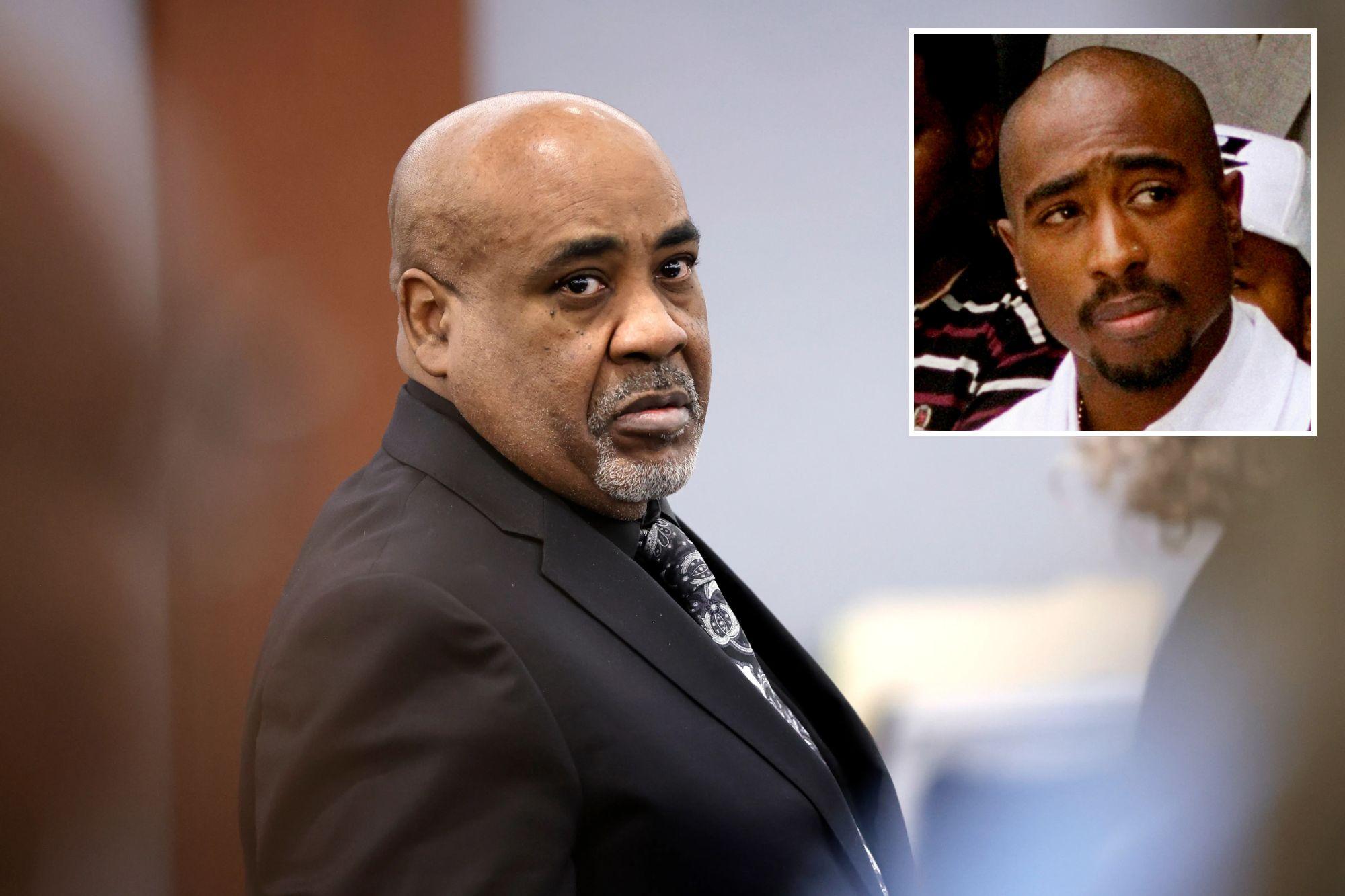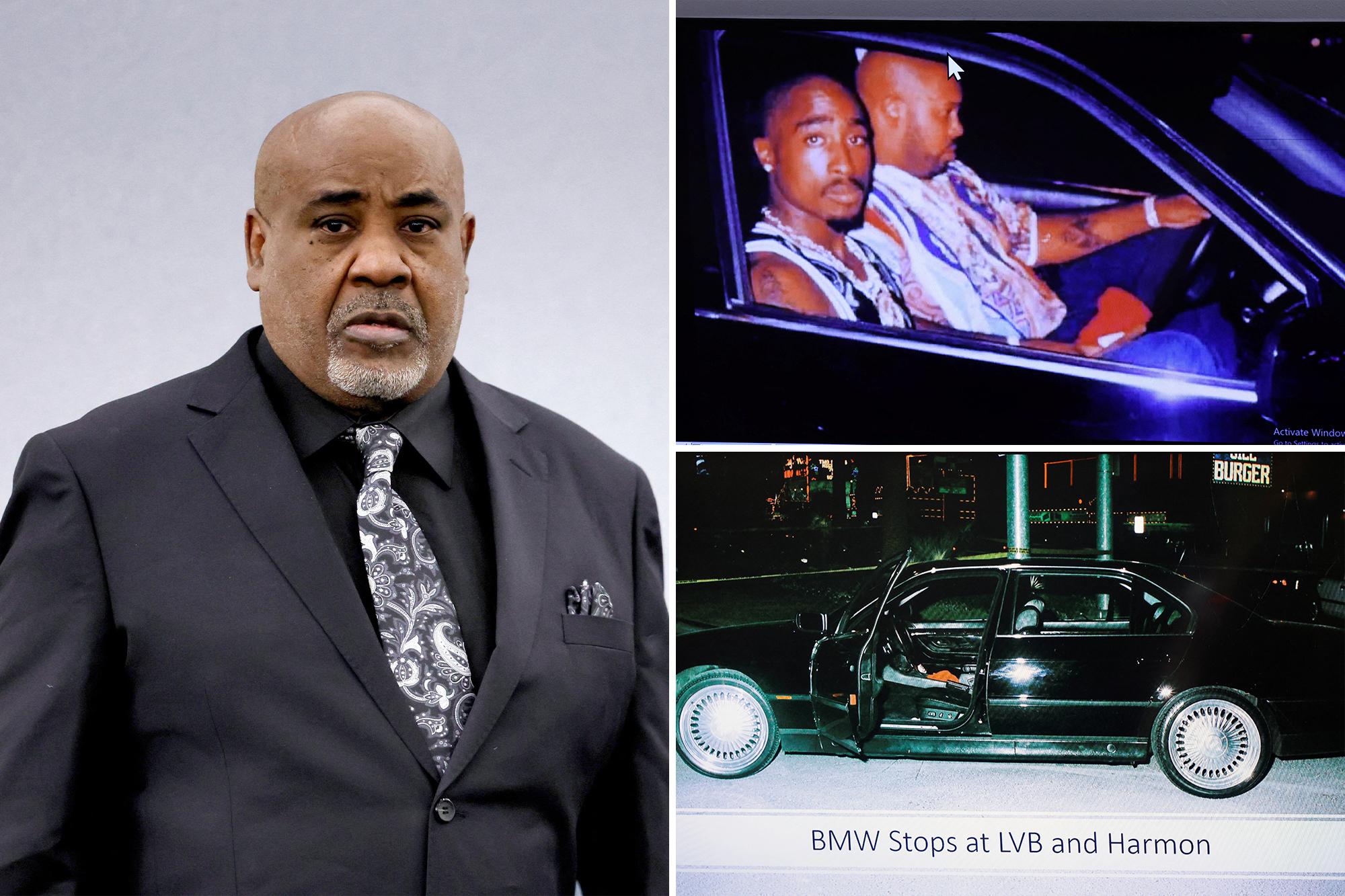
Add The New York Post on Google Prosecutors in the Tupac Shakur’s murder trial on Monday urged jurors to believe Duane Davis when he repeatedly bragged about his involvement in the rapper’s killing 30 years ago — and convict him.
The explosive trial rested nearly 30 years to the day after Tupac — one of rap music’s most iconic pioneers — was shot dead during a drive-by shooting in Las Vegas on Sept. 7, 1996.
Davis, 63, was arrested in 2023 after his own memoir claimed credit for the shooting — one of numerous alleged admissions.
“For nearly 18 years, Duane Davis has told police, television, books, YouTube interviewers — anybody that will listen he has told he is responsible for the murder of Tupac Shakur,” prosecutor Binu Palal told jurors Monday in a Las Vegas courtroom.
“Tell him you hear him, find him guilty,” Palal added.
Davis was not charged with actually firing the shots that killed Shakur — that has long been attributed to Davis’ nephew Orlando Anderson, a fellow gangster killed in a shootout two years after the rapper’s murder.
But prosecutors argued he orchestrated the killing as an act of revenge after Shakur helped beat up Anderson in public hours earlier.
That theory of the case is based on Davis’ own telling of the fateful night — he offered it to police in 2008 when he was being probed for criminal activity and seeking an immunity deal.
He repeated that story in various forms in public over the years, most notably in his 2019 memoir “Compton Street Legend,” where he wrote “Them jumping on my nephew gave us the ultimate green light to do something to their ass” while providing other specifics of the murder.
Prosecutors also argued Davis’ guilt was also “drenched with circumstantial evidence” to back his own claims, laying out how he was known as a “shot-caller” among his local Crips gang and that the attack from Shakur — said to be close with a rival Bloods gang — on his nephew necessitated a response.
“That was the nature of the gang life in the 1990s in Compton – you had no choice, you could not go back to Compton after being beaten publicly,” Palal said.
But Davis’ defense argued everything he said about the murder was a fabrication — even calling the damning memoir outright fiction and comparing it to the movie “Titanic.”
“Has anybody seen the documentary called ‘Titanic,’ with Jack and Rose?” defense attorney Michael Sanft joked to the jury — urging them to remember the difference between fact and fiction based in historical events.
“What the state wants you to do is take this book as proof,” he said. “You are reading a book that is fiction and not fact, and the state wants you to believe that this is somehow a confession.”
The defense also claimed there wasn’t even proof Davis was in Las Vegas the night of Shakur’s killing, listing off the lack of footage or photographs, paperwork, receipts, phone records or ticket stubs prosecutors had to place the defendant in the city.
“They have nothing in this case that says that man was in Las Vegas on September 7th, 1996,” Sanft said. “There’s not one thing that says my client Duane Davis was in Las Vegas on that night of the shooting of Tupac Shakur.”
Davis faces life in prison if convicted of his charges of murder with a deadly weapon with the intent to promote, further or assist a criminal gang.
He would be the only person convicted in Shakur’s murder.