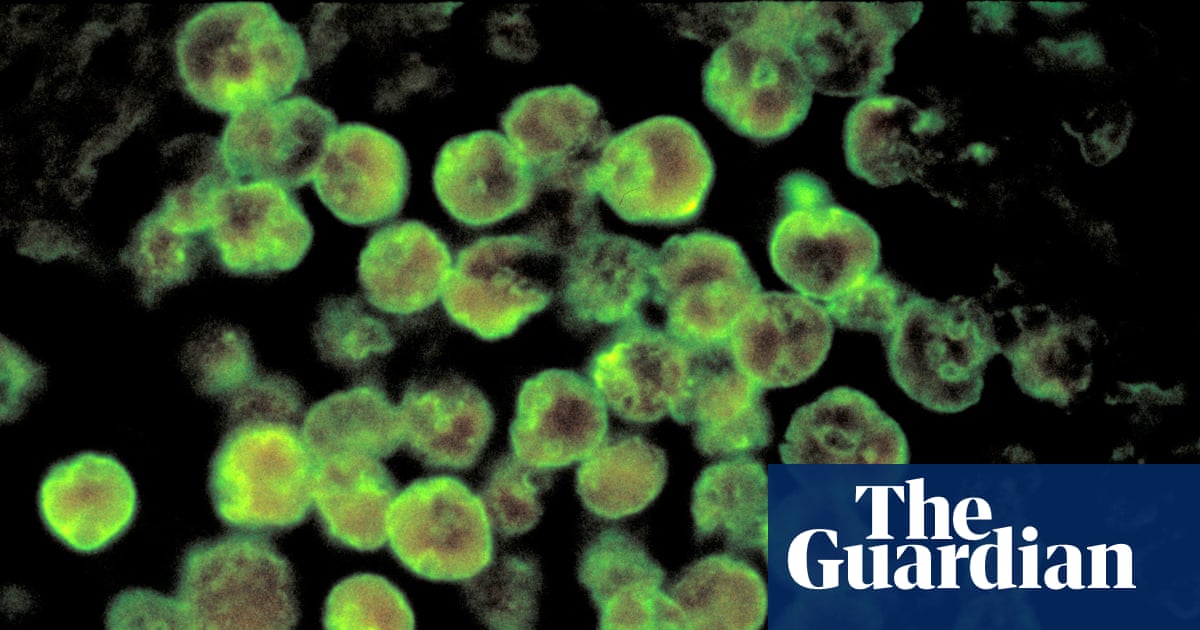
Photomicrograph depicting the characteristics associated with a case of primary amebic meningoencephalitis. Photograph: CDC/ReutersView image in fullscreenPhotomicrograph depicting the characteristics associated with a case of primary amebic meningoencephalitis. Photograph: CDC/ReutersNorth Carolina teenager dies from rare infection caused by brain-eating amoebaNaegleria fowleri is commonly found in warm freshwater, and if it enters through the nose, can cause brain damage
A North Carolina teenager has died after contracting a rare and often fatal brain-eating amoeba.
The state’s health department (NCDHHS) confirmed the boy’s death on Monday, saying: “NCDHHS has been informed that the teen who developed a rare illness, caused by Naegleria fowleri died on Aug. 31, 2026. We extend our condolences to the family, friends and community impacted by this loss.”
Last Thursday, NCDHHS reported that the boy had contracted a rare illness caused by the single cell organism commonly found in warm freshwater.
The teenager – whose mother, Monica Mendoza, identified him as Moises Ponce Mendoza in an online fundraiser – was described earlier by the NCDHHS in its statement as “critically ill and receiving medical care”.
A Facebook post from a user who identified himself as a close relative of Ponce – also said that the teen had died by Monday.
Read moreIn the online fundraiser, Mendoza described her son in Spanish as a “young man full of life currently fighting for his life in the hospital – in a coma”, adding that his illness started with severe headaches.
She said she initially took Moises to a Burlington hospital for severe symptoms on 21 August – but they were sent home after a doctor briefly examined him.
His condition quickly worsened and Mendoza said she rushed him to the University of North Carolina hospital’s emergency department at 7am the next day. Doctors there found he had an infection caused by Naegleria fowleri, which she described as “an extremely rare amoeba that can enter through the nose, reach the brain, and cause inflammation, infection, and brain damage”.
“From that moment on, our lives changed completely,” Mendoza added. “Moises is in a coma, and doctors are doing everything possible to fight this illness and give him a chance to pull through.”
Pictures posted online showed Moises intubated in a hospital bed and receiving intravenous fluids.
The Guardian has contacted Mendoza for additional comment.
Naegleria fowleri is often found in warm ponds, lakes and rivers. It is not found in saltwater or in properly maintained and chlorinated pools, the NCDHHS said.
The amoeba is harmless if swallowed – but is often deadly if contaminated water enters the nose and reaches the brain, such as while diving in water, water-skiing or engaging in similar activities.
Naegleria fowleri can cause an infection known as primary amebic meningoencephalitis (PAM), according to the US Centers of Disease Control (CDC). Its symptoms can include severe headaches, fever, nausea and vomiting, followed by stiff neck, seizures and coma, with the illness often progressing rapidly and causing death within about five days.
Fewer than 10 cases are typically reported in the US each year, usually during prolonged periods of hot weather when freshwater temperatures rise, the NCDHHS warned. The CDC says more than 97% of people who contract PAM die from the infection.
Health officials advise swimmers to keep their heads above water in warm freshwater, use nose clips or hold their noses shut when entering the water, and avoid diving or jumping in. They also recommend avoiding submerging the head in hot springs or thermal waters and disturbing sediment in shallow, warm freshwater.
Ponce’s story gained attention after an eight-year-old Louisiana girl died after contracting a Naegleria fowleri infection. Lillian Smart may have been infected while she was swimming in Louisiana’s Lake Claiborne, the Louisiana health department said.
The girl died on 23 August, eight days after she was hospitalized.
As the climate crisis continues to alter environmental conditions, scientists warn that Naegleria fowleri is being detected in parts of the US where it has not traditionally been found, with the amoeba appearing to expand from southern states into the Midwest.
“It likes warm surface waters during the summer in the northern latitudes,” Charles Gerba, a University of Arizona microbiologist, told the Guardian in 2022.