Add The New York Post on Google Southern shoppers are bracing for a crackdown on junk food.
New SNAP restrictions will prohibit some shoppers at Walmart and other major grocery stores from buying certain controversial items in South Carolina.
Under the Southern state’s new policy, SNAP shoppers will no longer be able to use their benefits to purchase sugary foods and drinks.
South Carolina’s junk food crackdown will begin on November 1, 2026, according to the state’s Department of Social Services.
Long known as food stamps, SNAP provides food assistance to eligible households and supports approximately 42 million Americans.
In certain states, SNAP shoppers will no longer be able to use their benefits to purchase sugary foods and drinks at Walmart and other major grocery stores. Gado via Getty Images The monthly benefit, which is delivered on debit cards that can be used only for groceries, is $344 per household on average.
Under the federal statute, SNAP benefits can generally be applied to any food intended for home consumption with the exception of alcohol, tobacco, and hot prepared foods.
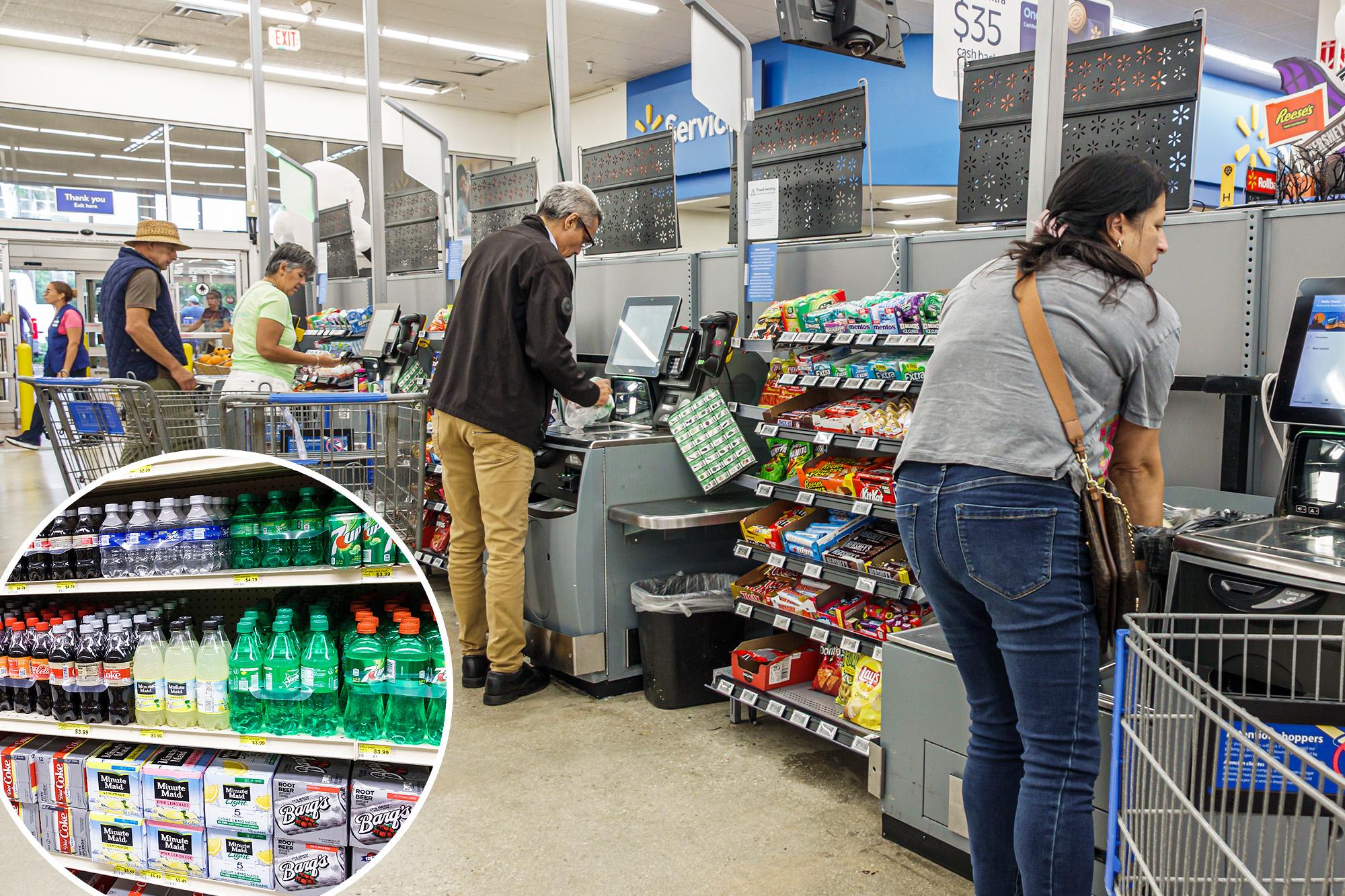
In South Carolina, the new policy will restrict the purchase of candy, energy drinks, soft drinks, and sweetened beverages across the state, including at grocery stores, convenience stores, farmers’ markets, and online retailers.
The candy ban encompasses chocolate, fruit or nut-based bars, drops and pieces; however, protein and granola bars will still be allowed.
The beverage ban also excludes coffee, tea, milk-based beverages and the majority of fruit and vegetable juices.
Other exemptions include baby formula, sports drinks, carbonated water and medically necessary beverages.
Items that used to be SNAP-eligible may no longer ring up at checkout, and/or customers could see “item not allowed” messages when trying to buy groceries online or with an EBT card.
Items that used to be SNAP-eligible may no longer ring up at checkout, and/or customers could see “item not allowed” messages when trying to buy groceries online or with an EBT card. Jeffrey Greenberg/Universal Images Group via Getty Images Customers can still purchase these restricted items with another form of payment, including self-checkout — but they may run into issues at the ring-up.
For in-store purchases, experts recommend opting for regular checkout over self-checkout, as cashiers may be able to provide clarity and assistance.
For shoppers confused about what items are and are not included in the ban, consider using full-service checkout aisles, or online shopping, to check individual eligibility.
The USDA’s Food and Nutrition Service approved the program after a waiver request was made by South Carolina Governor Henry McMaster.
“Thank you to President Trump and Secretary Rollins for approving our light-touch, common-sense approach to strengthen the SNAP program by promoting healthier outcomes for South Carolinians,” Governor Henry McMaster said in a news release.
The new policy will restrict the purchase of candy, energy drinks, soft drinks, and sweetened beverages across the state, including at grocery stores, convenience stores, farmers’ markets, and online retailers. AFP via Getty Images “By encouraging families to purchase healthy, nutritious food – and not junk food – we ensure federal taxpayer dollars are used to their maximum benefit and keep South Carolina at the forefront of the effort to Make America Healthy Again.”
In March, SNAP participants in several states sued the USDA over the approval of state-specific waivers that prohibited the purchase of certain items through the SNAP program, claiming the agency lacked authority to decree which foods qualify for purchase.
Judge Amy Berman Jackson of the US District Court for the District of Columbia ruled that the waivers violated Congress’s definition of “food” and unlawfully redefined which foods could be purchased through the food assistance program.
“Congress defined what ‘food’ is supposed to be, and it did not authorize the agency to amend or waive the definition it enacted,” the judge wrote. “It did not authorize the agency to cut types of food out of SNAP entirely.”
Further, a report by the National Grocers Association and other industry trade groups estimated that implementing SNAP restrictions would cost US retailers $1.6 billion initially and $759 million annually thereafter.
The USDA’s Food and Nutrition Service approved the program after a waiver request was made by South Carolina Governor Henry McMaster. Jeffrey Greenberg/Universal Images Group via Getty Images “Punishing SNAP recipients means we all get to pay more at the grocery store,” said Gina Plata-Nino, SNAP director for the anti-hunger advocacy group Food Research & Action Center.
Waiver advocates, including Health and Human Services Secretary Robert F. Kennedy Jr., claimed these measures would ensure SNAP funds were not used to buy health-compromising, highly processed foods.
“We cannot continue a system that forces taxpayers to fund programs that make people sick and then pay a second time to treat the illnesses those very programs help create,” Kennedy said in a statement in December.
In June, the US District Court for the District of Columbia ordered that FNA’s approval of the waiver be vacated and that the waiver’s implementation may not proceed in Colorado, Iowa, Nebraska, Tennessee, and West Virginia.
Meanwhile, other states are moving forward with their waivers.
Earlier this year, Arkansas, Florida, Idaho, Indiana, Louisiana, Oklahoma, Texas, and Utah began enacting similar restrictions on the purchase of soda, sugary drinks, candy, and other “unhealthy” options
Meanwhile, Hawaii, Kansas, Missouri, Montana, North Dakota, Nevada, Ohio, Virginia, and Wyoming have plans to begin restrictions as soon as next month.