play Live Sign upShow navigation menuplay Live Click here to searchsearchSign upEXPLAINERNews|US-Israel war on IranWhy has Greece signed a $3.5bn missile deal with Israel?Analysts say Greece is concerned about threats posed by the US-Israel war on Iran and Turkiye’s growing capabilities.
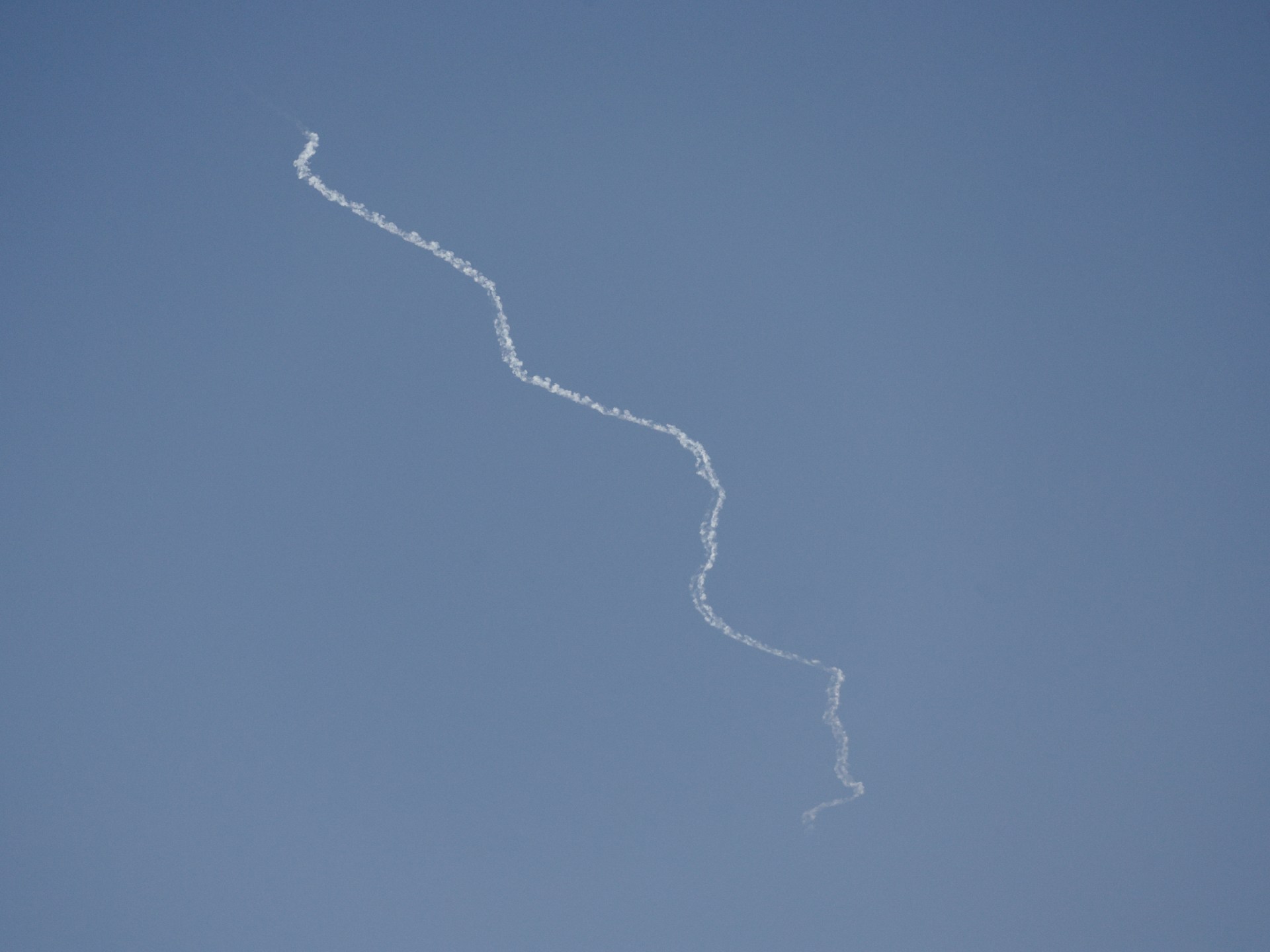
xwhatsapp-strokecopylinkgoogleAdd Al Jazeera on GoogleinfoIsrael's David's Sling system intercepts rockets fired from Lebanon, amid the ongoing conflict in Gaza between Israel and Hamas and cross-border hostilities between Israel and Lebanon's Hezbollah, as seen from Tel Aviv, Israel, September 25, 2024 [Amir Cohen/Reuters]By Shola LawalPublished On 31 Aug 202631 Aug 2026Greece has inked a weapons deal with Israel that will see a $3.5bn multi-layered air defence system delivered to Athens in what is the largest defence agreement ever between the two countries.
The agreement, signed on Monday in Tel Aviv, comes as Greece’s relations with its neighbour and rival, Turkiye, have grown more sour. It also, however, breaks with a broader European wariness of being seen as too close to Israel, following the genocidal war on Gaza and Israel’s increasingly blatant efforts to annex the occupied West Bank.
Greece and Israel have long shared economic and diplomatic ties. They’ve also regularly conducted joint military exercises.
The new purchase is part of Greece’s plans to modernise its military by 2030. Athens will spend about 28 billion euros ($32bn) by 2036 to build the Israeli defence system, known collectively in Greece as the Achilles Shield, as well as to buy up to 40 F-35 fighter jets from the United States and frigates from France and Italy.
Achilles Shield, which was negotiated over three years, will be delivered in stages. It is scheduled to reach full operational readiness within 35 months.
According to a statement by the Israeli Ministry of Defence, the Achilles Shield comprises three core systems:
As part of the deal, Israel will also deliver multi-mission radars for air surveillance, as well as an artificial intelligence-enabled command centre incorporating all the technologies.
A statement by an Israeli Defence Ministry spokesperson also added that a supplementary deal valued at 26 million euros ($30m) would see Israel sell Greece drone dome systems as well.
Analysts say Greece is increasingly concerned about threats posed by the US-Israel war on Iran, especially as Tehran has launched strikes on US allies in the Gulf.
“One needs to be aware that Greece is the host of American naval bases and those might become in the future a target for the Iranians,” Wolfgang Pusztai, a security policy analyst who formerly served as an Austrian defence attache in Greece, told Al Jazeera.
“This is a capability that Greece and other European countries might need in the case that Iran is threatening them, too,” he added, referring to the defence systems.
While the US’s Patriot defence system is highly coveted, several European nations have been turning to Israel’s David Sling, which is cheaper and more effective, Pusztai said. The US itself is also running critically low on Patriots. In May, Switzerland was informed that a Patriot’s delivery from the US would be delayed and would be more expensive amid the war on Iran.
Greece is also wary of Turkiye’s increasing drone capabilities, analysts say. Ankara and Athens have long sparred over maritime boundaries, including control over disputed areas in the Aegean Sea and the Eastern Mediterranean. Tensions between Turkiye and Israel are also rising over Israel’s genocide in Gaza.
“This is certainly a reason why [Greece] will deploy the first elements of the Achilles Shield in the Aegean,” Pusztai added.
Turkiye has not yet reacted to the new defence deal. The growing military relationship between Greece, Israel and Cyprus – with which Turkiye also has territorial tensions – has previously drawn negative reactions from Ankara.
“We’re already hearing some Turkish analysts talking to Turkish media about how Greece’s weapons procurement deal from Israel makes Greece effectively co-responsible for everything that Israel does in the occupied West Bank and Gaza,” Al Jazeera’s John Psaropoulos said from Athens.
Cyprus, in December, was the first to buy Israel’s Barak defence system.
Turkish defence commentators at the time condemned the purchase.
“The Greek Cypriot administration has now become a complete proxy for the US and Israel,” said Cem Gurdeniz, a prominent retired rear admiral and a major proponent of Turkiye’s “Blue Homeland” maritime doctrine, which asserts Ankara’s sovereignty over large swaths of disputed areas in the Aegean, Black, and Eastern Mediterranean seas.
As in several European countries, many people in Greece are opposed to Israel’s genocide in Gaza and to deepening ties with Israel.
About 76 percent of Greeks do not believe Israeli Prime Minister Benjamin Netanyahu will do the right thing regarding world affairs, according to a Pew Research Center poll released in June.
Opposition figures and intellectuals have loudly criticised Prime Minister Kyriakos Mitsotakis’s strengthening relations with Israel, and have accused Israel of seeking to use their country as a proxy.
“The transformation of Greece into an Israeli satellite is proceeding at breakneck speed,” Greece’s former Finance Minister Yanis Varoufakis posted on X last week. “This bodes ill for the majority of Greeks, for peace in our region and for Europe and West Asia more broadly. It must be resisted.”