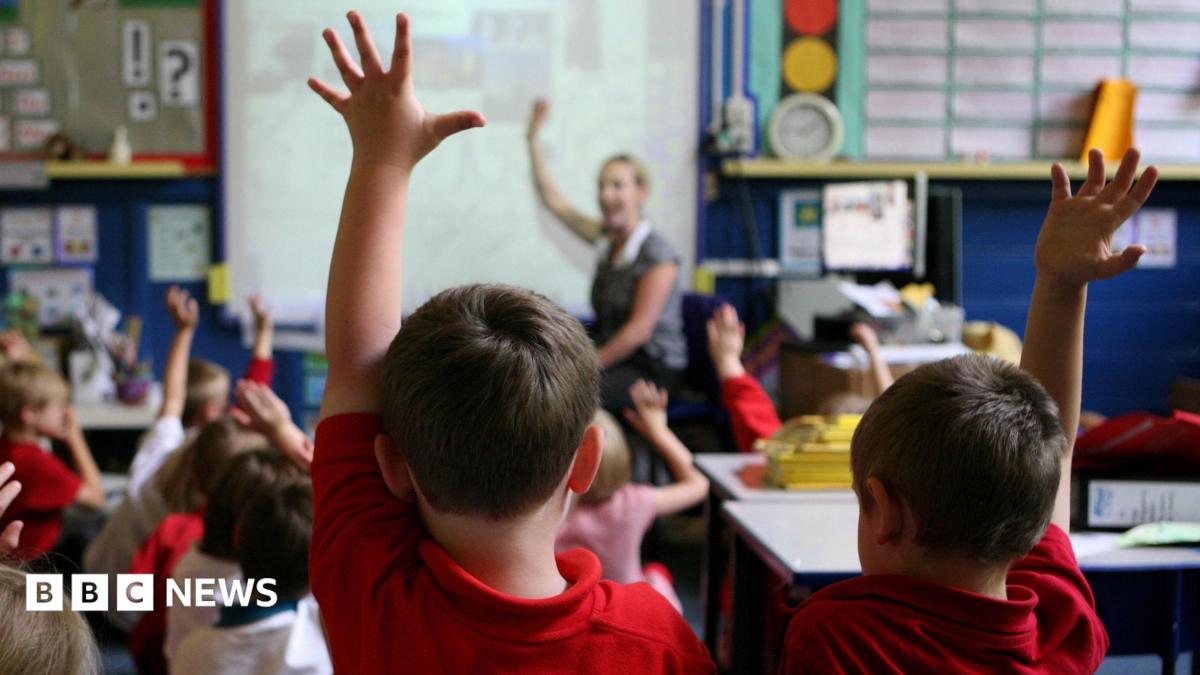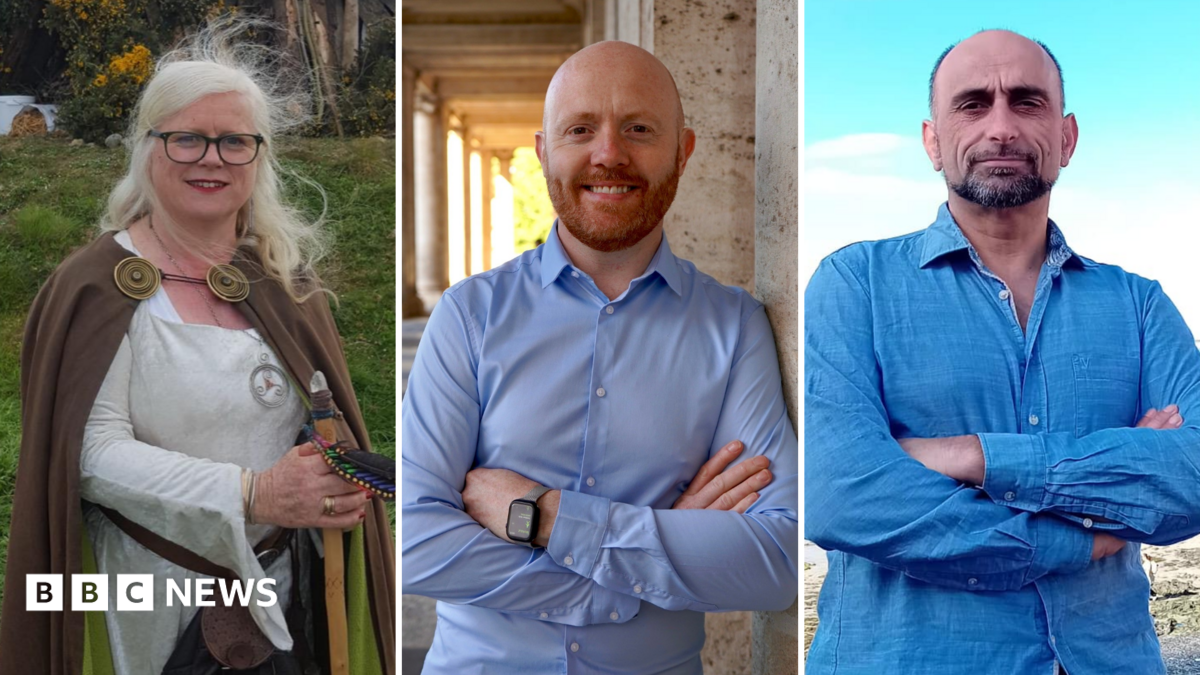
Image caption, When does autumn actually start and why are there three different calendars?
For most of us, autumn means falling leaves, shorter days, returning to school and the more modern tradition of pumpkin spice lattes popping up again.
But when does it officially begin? Well that depends on which calendar you follow.
Many will argue 1 September is the day the seasons change, and they are right according to the meteorological calendar.
However, in the ancient Celtic calendar we've already been in autumn since 1 August.
But it's different again for those following the astronomical calendar who say we won't officially be in autumn until 23 September.
So why do we have three calendars and in 2026 who is actually using them?
Image source, Eimear BurkeImage caption, Dozens gathered at Kilkenny druid grove in August to celebrate Lúghnasadh, the beginning of Celtic autumn
At the beginning of August, dozens of people gathered in a druid grove in County Kilkenny to celebrate Lúghnasadh - the start of autumn in the Celtic calendar.
The ritual was led by Eimear Burke, Chosen Chief of the Order of Bards, Ovates and Druids which has 30,000 members around the world.
"It's the early harvest. This is the time when the first corn is cut, the first wheat is cut, the first bread of the year, as it were."
Image source, Eimear BurkeImage caption, Eimear Burke became the Chosen Chief of the Order of Bards, Ovates and Druids in 2020
"It also represents that life, death and rebirth motif. Something dies in order to be reborn."
Standing in a circle in the grove, they shared bread and wine and welcomed the changing of the season and the landscape "because within druidry we have that strong sense of interconnectedness with everything".
"It's about reminding us that we're harvesting some things, but we need to wait. We need to wait in stillness."
Image source, NMNIImage caption, The Ulster Folk Museum also follows the more traditional Celtic calendar
Fiona Byrne is a history curator at the Ulster Folk Museum, which follows the Celtic calendar for its events and exhibitions.
"It's the calendar when people had a much better relationship with the land. The seasons and the changes were obviously very important to how they worked the land."
She says for the ancient Celts it was "vitally important" to be prepared for the darker days of winter and to get the harvest in before All Hallows Eve, what we would call Halloween.
"There's lots of traditions that the roaming spirits would spoil anything left out."
Image source, NMNIImage caption, A collection of traditional harvest knots owned by National Museums Northern Ireland
Byrne says while some ancient Lúghnasadh traditions like making harvest knots have almost disappeared, others like bonfires have remained a staple of our modern autumn celebrations.
And when asked when she thinks autumn starts: "I think that's the big debate... and it just all comes down to what you want to follow yourself.
"I've got the dual identity. At the Folk Museum, it is 1 August, when I'm in home life, it's all about back to school."
Image caption, The meteorological calendar is used by BBC weather presenters
The meteorological calendar is a much more modern phenomenon, evolving through the 20th century as scientists and climatologists discovered more about weather patterns around the globe.
Like the Celtic calendar, it is divided into 4 seasons, but it starts one month later on 1 September.
BBC NI weather presenter Barra Best says it allows forecasters to "compare one season with another and look back through decades of weather records".
"I use the meteorological calendar when putting current conditions into context - whether that's comparing this summer's temperatures with a long-term average, or looking at how a season compares with previous years."
That does not mean the weather suddenly changes when the calendar flips to 1 September.
"We can still have very summery weather well into meteorological autumn, or wintry conditions during spring. The calendar simply gives meteorologists a consistent framework for recording and comparing our climate."
Image source, Department for InfrastructureImage caption, Gary Quinn is part of the body which prepares Northern Ireland for weather-related emergencies like flooding
One person keeping a close eye on the meteorological calendar is Gary Quinn, who is part of Northern Ireland's civil contingencies group.
The multi-agency body is responsible for planning emergency responses in the event of a major weather event.
As director of rivers operations within the Department for Infrastructure, his main concern this autumn is the potential for flooding.
"It's been a fairly dry summer, but we expect rivers to recover, so we'll be keeping an eye on our hydrometric stations to see how those rivers perform.
"We talk to our Met Office colleagues continuously to get information around what potentially might happen. And we're in an alert state of readiness."
Image source, PA MediaImage caption, In autumn 2023 there was severe flooding in Downpatrick town centre
September will also see the release of the named storms for 2026/2027.
Quinn says a named storm is "more serious" than normal rainfall activity and puts them on a "heightened state of awareness".
Remembering the severe flooding in south-eastern parts of Northern Ireland in autumn 2023 Quinn says: "These things do live long in the memory because they're quite hectic at the time and that's notwithstanding the problems that they've brought to communities or to the people that are severely impacted by flooding. We're working to try and mitigate that as best as possible."
Image source, Marc SarziImage caption, Marc Sarzi at the Southern African Large Telescope, which Armagh Observatory and Planetarium has special access to
While the meteorological and Celtic calendars are seasonal, the astronomical calendar is based on the earth's position in relation to the sun - so it is defined by two solstices and two equinoxes.
For Marc Sarzi, Head of Research at Armagh Observatory and Planetarium, autumn will therefore begin on 23 September.
"What really is an astronomical year? It is what we call a sidereal year. This is exactly how much time it takes for the earth to go around the sun, or where, we basically are in the same position with respect to distant stars.
"I'm an extragalactic astronomer. And we say that distant galaxies are like flowers - each have their seasons.
"For us, it's a continuous spectrum of when we can see objects at night and when we can't."
"You start to see Orion in late autumn. Orion is a distinct constellation that you can see with the three stars... the belt of Orion."
He also says to watch out for Venus shining brightly in the evenings.
"We are lucky in Northern Ireland. We have quite a lot of dark places... and you can see lots of stars, lots of constellations."
Stormy autumn, cold winter - how might El Niño affect the UK weather?
Gardeners reporting false autumn after dry weather
Springwatch 2026 finds new home in Northern Ireland