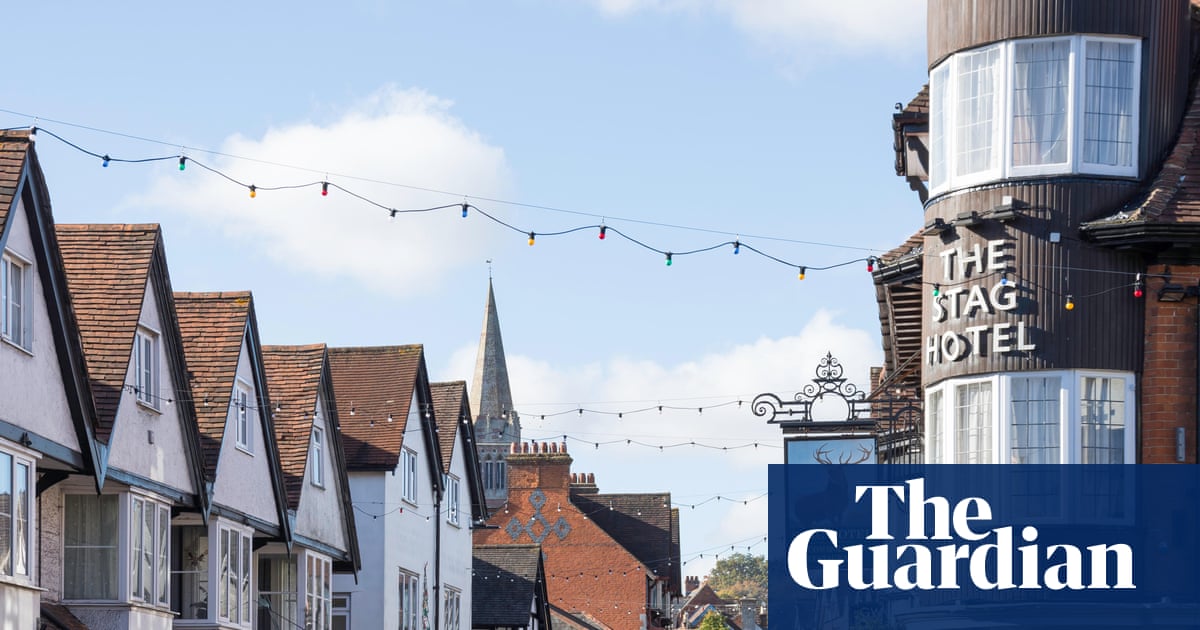
The town of Lyndhurst in the New Forest, which remains the most expensive national park in which to buy a house, according to the building society. Photograph: Greg Balfour Evans/AlamyView image in fullscreenThe town of Lyndhurst in the New Forest, which remains the most expensive national park in which to buy a house, according to the building society. Photograph: Greg Balfour Evans/AlamyProperties in UK national parks command 24% premium, study findsNationwide research also shows average 14% premium for housing in national landscapes of England and Wales
Housebuyers are paying a premium of almost a quarter to own a property located within a UK national park, with the New Forest the most expensive national park to live in, according to Britain’s biggest building society.
Nationwide found that a property located within a national park cost 24% more on average than a similar property elsewhere, while buyers were also stumping up a 6% premium for homes within three miles of a national park.
The lender said that, as well as the attractions of the beautiful countryside, restricted development in national parks meant construction of new housing was limited, which kept house prices relatively high.
The average property in the New Forest was £563,000, followed by the South Downs park at £485,000, and the Peak District at £450,000.
Nationwide also found a 14% premium for properties located in the national landscapes of England and Wales, formerly known as areas of outstanding natural beauty, such as Surrey Hills and the Chilterns.
Surrey Hills is the most expensive national landscape in which to buy property, with average prices of £710,000, the building society said. Designated in 1958 and covering approximately a quarter of the county of Surrey, the area is home to about 40,000 people who mostly live in small villages and rural hamlets, such as Shere, Mickleham and Westhumble.
The premiums paid on properties in these areas appear to be remaining remarkably consistent, with similar research by Nationwide from 2024 showing that homes in national parks attracted a 25% premium, while national landscape properties were 15% more expensive.