In the immediate aftermath of the floods, the government refused overseas help, only to reverse its decision days later
4-MIN READ4-MIN ListenBibek BhandariPublished: 10:45am, 31 Aug 2026The Nepalese government has appealed for rescue aid from other countries just two days after it reportedly refused help, as several hundred people are still believed to be trapped in hydropower tunnels and thousands remain missing following the catastrophic flash flooding at the border with China last week.Kathmandu’s apparent reversal reflects caution born from its chaotic experience with foreign teams after the 2015 earthquake, according to observers. Other factors include the government’s need to tightly control relief operations and failure to anticipate how quickly domestic capabilities can be overwhelmed in the aftermath.
Foreign Minister Shisir Khanal said the country had requested “specific specialised assistance” – including technology to locate people in affected areas and provide quick forensics and DNA analysis, as well as mortuaries to preserve dead bodies. He dismissed media reports rejecting international help and support as “false”.
“The scale of devastation is extremely huge and support and assistance are required, not just in the phase of rescue and relief but more so in the phase of reconstruction and rehabilitation,” Khanal told a press conference on Saturday. “Given these very complex challenges of geography, we had to be very sensitive.”
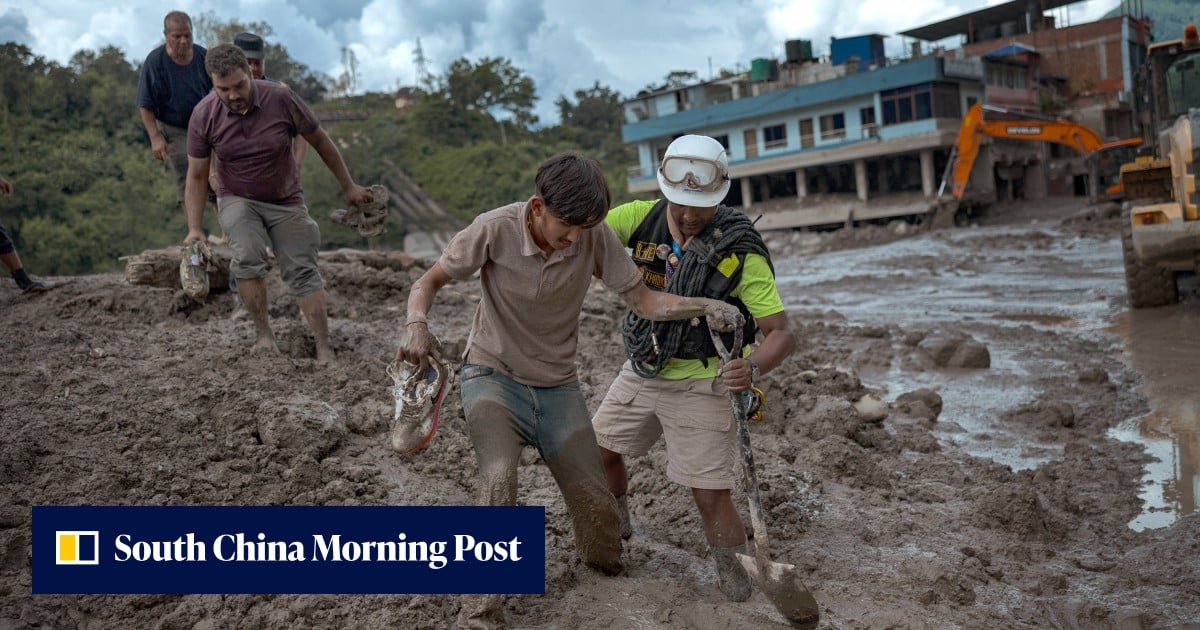
The ice-rock avalanche and ensuing floods on Wednesday along the Nepal-China border, which is flanked by towering mountains and deep gorges, have obliterated settlements in both countries, with the churning water swallowing villages hundreds of kilometres downstream.
In Nepal, the death toll has climbed to nearly 800 with over 2,500 people still missing, including 592 foreigners, as of Sunday, though the numbers are expected to rise. Across the border, China has reported at least 16 deaths and 546 people as missing.