How CityUHK’s innovative Community Chilling Hub is reimagining human care in Hong Kong
4-MIN READ4-MINAdvertising partnerPublished: 12:00am, 31 Aug 2026[The content of this article has been produced by our advertising partner.]
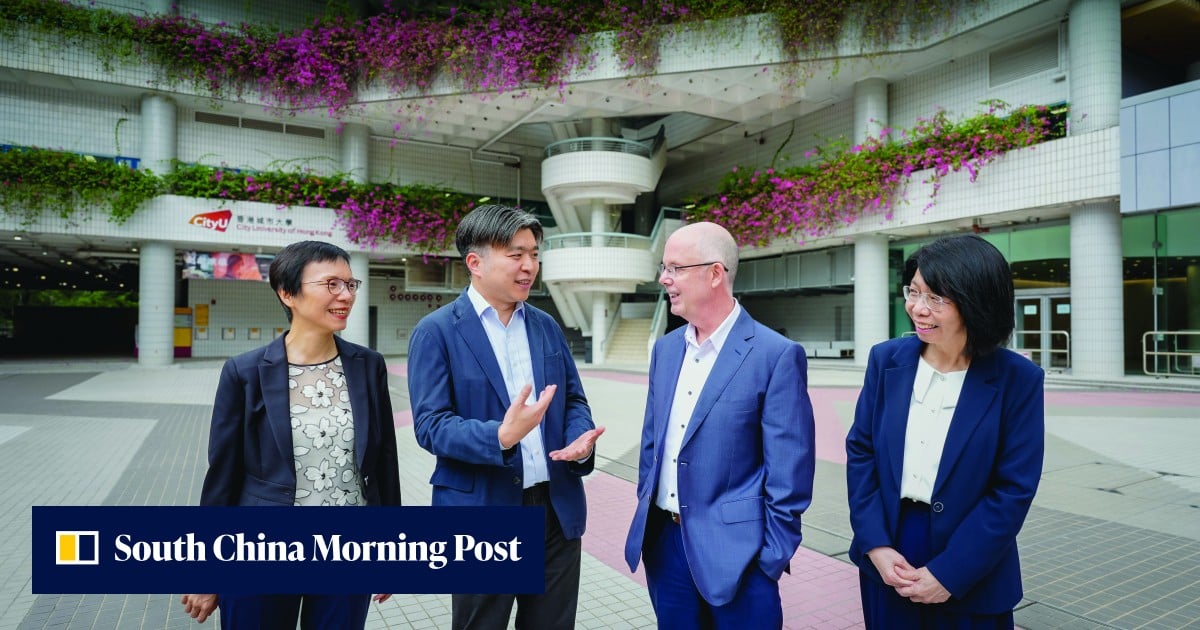
When the devastating fire broke out at Wang Fuk Court in Tai Po on 26 November, the response from City University of Hong Kong (CityUHK) did not begin with a strategy memo. “In fact, since the very beginning, it was not a strategy,” says Professor Cherry TAM, Associate Professor from the Department of Social and Behavioural Science (SS). “We viewed it as our expertise, our responsibility … our aim is to care for people and society.”
Within five days—by 1 December—the university had organised a public lecture on resilience, mobilised psychosocial support for affected primary school pupils and begun planning trauma-informed workshops for frontline professionals. What started as an instinctive response soon evolved into something more ambitious: the CityUHK Community Chilling Hub, an innovative model demonstrating the synergies among private and public sectors, academia, public health and social care in Hong Kong. At its heart, the new model demonstrated how crisis exposes the urgency of human care and how universities can help innovate the possibilities. From Academic Department to First Responders
Tam resists the language of “strategy”. The response, she insists, was embedded in CityUHK’s DNA. “At CityUHK, we have the very important mission to engage with the community ... we generate knowledge and we need to contribute to society,” she says.
In this instance, that ethos translated into speed. The resilience lecture was held just days after the fire. Senior management, academic staff and technical support units worked across time constraints and boundaries. “This kind of interdisciplinary, cross-departmental collaboration … happened in a minute,” Tam recalls. In governance terms, that agility matters. Complex crises rarely fit neatly into existing silos. CityUHK’s response showed how mission-driven institutions can act responsibly across established structures.
Trauma Support Rooted in Humanity
Beyond public messaging, the department provided direct psychosocial support, particularly for affected primary school pupils. “When we provide professional services for this kind of traumatic experience, the very important first step is to understand, to listen,” Tam explains.
Her team, partnering with an NGO and the University’s senior management, invited students onto campus, offering distance from the disaster site and emotional breathing room. Using adapted cartoon storytelling, facilitators helped children externalise their fears. “Let them know that their reaction is common, it’s normal,” Tam says. Artistic drawing allowed quieter students to express what words could not: “Silence is a very, very important signal.”
This layered approach—listening, normalising, identifying and referring—demonstrates sustainable recovery at the human scale. Rather than imposing solutions, the team built support around lived emotional realities. Hope, Tam emphasises, is central to recovery. “Hope is very important. Without hope, maybe they would keep declining.” Bringing children to campus was therefore symbolic as well as being therapeutic. “Even though university feels like it’s a long way off,” she says, “bringing them onto campus gives them hope for the future.” Exposure reframed identity not around trauma, but possibility.
It is understandable that the fire’s psychological impact extended beyond residents. “Even many helping professionals felt it was totally out of their capacity to handle such a big trauma,” explains Tam. By early January, the department launched a full-day trauma-informed workshop using a “train the trainer” model. The aim was not just immediate intervention, but strengthening the professional ecosystem. “This kind of training is very sustainable,” Tam explains. “With more professionals equipped, when we have other issues they can take action more immediately.” Rather than relying solely on centralised emergency responses, the university invested in distributed capacity—networks of practitioners ready to respond to future crises.
From Fragmentation to Integration
The early initiatives made clear post-traumatic recovery after such an unprecedented fire was not short-term but challenging. Long-term and continuous support to guide affected people to overcome and develop post-traumatic growth is indispensable. With this mission—and made possible through the generous and timely contribution of China Hongqiao Group Limited—CityUHK established the Community Chilling Hub, drawing on interdisciplinary expertise in social work, counselling, psychology, criminology and sociology, as well as technologies in health screening, to offer longer-term and sustainable support for the affected communities in a welcoming, stigma-free space.
“The services nowadays in Hong Kong to handle mental wellness-related issues are quite fragmented,” Tam says. Many are limited by age or socioeconomic criteria. The hub aims to be different: “Without age limit, without economic limit. Anyone can come here. It is a very inclusive service.”
The hub’s model integrates physical health screening, mental health support, social services and spiritual well-being. “It’s a one-stop shop—physical, social, mental and spiritual wellness support,” Tam says. This integrated design aligns with sustainable development goals: breaking down silos, reducing inequalities in access and addressing well-being holistically.
Beyond the Medical Model
Central to the hub is social prescribing, first developed in the United Kingdom. Traditionally, mental health systems have been “very diagnostic oriented, very medical oriented”, Tam says, but after acute intervention, people need community and social support. Social prescribing connects residents not only to therapy, but to social resources through trained community link workers—volunteers drawn from university students and residents.
“We provide basic volunteer training,” Tam explains, linking them with families to co-design tailored “social prescriptions”. The volunteers also build social capital, becoming “the pool of resources in the community to serve in Hong Kong”.
If evidence demonstrates effectiveness, the university hopes to present the model to the government as a scalable alternative. “We can prove the model … and let the government have more alternatives to improve the existing services,” she says.
Enhancing Human Care Through Community
Innovating for better human care is often framed around digital platforms or policy reform. CityUHK’s Community Chilling Hub suggests another path: human care with community capacity, interdisciplinary collaboration and human dignity. “It’s in our DNA … to work with the community, to break through existing silos. Unfortunately, people fall through these cracks,” Tam reflects.
The hub is an attempt to close the cracks. If it succeeds, it may offer Hong Kong—and beyond—a blueprint for human care that is responsive, more inclusive and more sustainable because it begins where all sustainable development must: with people.