Add The New York Post on Google One of my favorite recent cultural acquisitions from the global mixing bowl of the professional tennis circuit is a Russian maxim about whining: “A bad dancer will even blame his balls for getting in the way.”
On the tennis tours lately, it’s been many of the world’s very best tennis players complaining about tennis balls with increasing frequency. The balls are blamed after losses. The balls are blamed for injuries. The balls just aren’t what they used to be.
Tennis players are prone to nitpicking by nature — it’s inevitable in a high-stress sport with margins of millimeters. But the increasingly unified complaints about balls have been rolling on for years now, with many veterans citing a change around the time of the COVID-19 pandemic.
The balls are irregular and inconsistent, they say, with felt that either fluffs up or thins out too quickly. Duds might require overexertion to propel powerfully, or could go sailing into the back fence with the lightest touch.
At Wimbledon this year, 24-time Grand Slam singles champion Novak Djokovic recounted “quite a few conversations” he said he’d had with players and coaches about the topic.
“We all agreed that, since COVID, something has changed,” Djokovic said.
“There was a change, no doubt. Some material — something — has changed that has affected the way the ball reacts nowadays.”
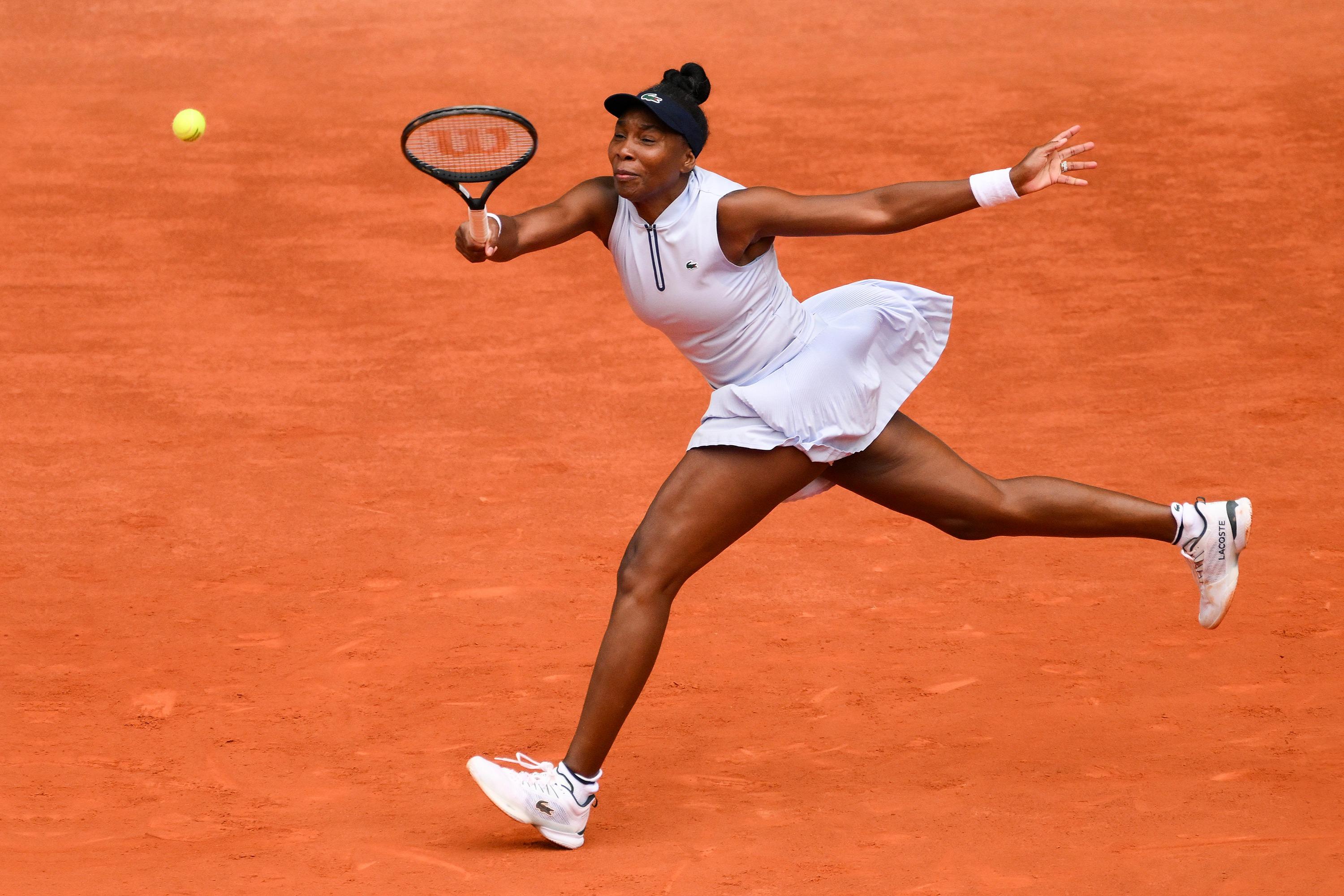
Venus Williams, who turned pro in 1994, has often prided herself on not being bothered by small details during her career.
“When you’re in Compton, you don’t sweat the details, truth be told,” she said when asked about modern ball quality.
Williams then conceded, however, that she had noticed a dropoff.
“There’s a lot of balls that have lost quality — even I can see that,” Williams said. “So there has been a change.”
Jessica Pegula, currently the highest-ranked American woman and a member of the WTA Player Council, said ball-quality discussions predominate.
“We’ve talked a lot about these fricking tennis balls,” Pegula said. “Like, until the cows come home. Oh, my gosh.”
2024 US Open runner-up Taylor Fritz, one of the most meticulous players on tour, said he’s gotten more attuned to the subtle differences in ball composition over time.
“After playing for so long, I just became much more perceptive to all the little differences,” Fritz said. “I notice all those little things more than I did when I was younger. It’s like that with anything you do a lot: You start to notice more details the more you’ve done it.”
“Some brands stay more consistent; some brands, they say it’s the same ball, but from week to week, even though it’s labeled the same, it feels really different,” Fritz said. “It’s tough to really pinpoint it.”
Changing ball brands from one tournament to the next frequently is one of the most common player complaints. Tennis players encounter different manufacturers and models as they traverse the globe-trotting tour. On the men’s tour calendar this year, eight different companies’ balls were officially used.
When we spoke in Washington, Chilean player Alejandro Tabilo told me he’d just come from a tournament in Portugal where balls by the French sports brand Decathlon were used.
“It’s just weird to adapt to those, and then you don’t see them in the rest of the year,” he said. “I would love for them to just decide on a couple and just stick with that.”
Factors like weather — heat makes balls go faster — and the smoothness of a court surface can also impact how players feel about a ball’s performance.
“Sometimes the balls are OK, but you put them on a gritty court, and they get really chewed up,” Pegula said.
Pegula, who turned pro in 2009, said that “the main thing since COVID has been the quality.”
“They just don’t last,” she said of the balls. “They get chewed up. They either get really super fluffy or they get really thin. They just don’t last. They don’t play the same way as when you start.”
Pegula said she’d learned loads about the topic in recent years, including how variations in ball quality are traced to different factories and countries where balls are manufactured.
“Tournaments get the same ball, but it’s from a different place that makes them, so it feels different,” she said.
Variation is even higher when players source balls for themselves for training blocks at home and on the road.
“When we’re at home practicing and you buy them off the shelf, they’re definitely not the same as, like, when you get to the US Open,” Pegula said of Wilson balls.
Ben Shelton, the top American man, said similarly of balls he’d gotten off Amazon.
“I would like to think that the pro tournaments still get the best quality of balls,” Shelton said. “If you are buying balls off the shelf, they may not always be the same quality, or you might get dud balls. I felt like the last three weeks I definitely opened some cases of balls that I felt like, ‘Oh, these ones are duds.’ That does happen some.”
Fritz once blamed an oblique injury on trying to hit with a dud batch of balls during a training block, overexerting himself to try to make the unresponsive balls move as he wanted them to. He’s learned over time to spot balls that might be problematic.
“The Dunlop ATP balls: getting those from the store or getting them online — not through the ATP — those are absolutely nothing even close to what we’re playing with on tour,” Fritz said.
“If I look at the can and it has a paper top to the can, instantly I know that it’s not the ball. Even though it says it’s the ball, it’s not.” The same thing happens, Fritz said, with the Wilson US Open balls.
Fritz didn’t try to hide his exasperation when we spoke in Washington, where he ultimately won the tournament.
“It happens a lot, and it’s frustrating,” he said. “What’s the point of practicing for a tournament? Like last week, I’m getting ready to come here: what’s the point of practicing if the ball that I’m practicing with is going to be completely different to the one here? I might as well come here a week early if that’s the case. It’s frustrating, for sure. It didn’t used to always be like that.”
Personal preference can play a role in feelings, of course. The Wilson balls used at the U.S. Open and its lead-up tournaments generated mixed reviews this year, which could be reasonably interpreted through the lens of players’ fortunes.
“Whenever I’m here in the US, the hard court feels pretty good, and the Wilson US Open ball feels pretty good too, so I guess that’s all I have to say on that,” said Shelton, who went on to win the Canadian Open in Montreal.
Second-ranked Alexander Zverev, who lost his opening match in Montreal, was less glowing after his defeat.
“The balls are just not controllable,” Zverev told reporters. “It’s the same every year. It’s nothing new. The Wilson balls are difficult. But again, that’s not the reason I lost today… I think with the conditions and the balls, I think there is going to be some strange-ish results, ranking wise, player wise, that you maybe don’t expect during other tournaments.”
Brendan McIntyre, head of US Open communications, affirmed the tournament’s confidence in its Wilson balls.
“We are incredibly proud of our longstanding relationship with Wilson,” McIntyre said. “We believe that the performance of their ball is unmatched and have no concerns about quality control at the US Open.”
Most ball manufacturers have declined to discuss the issue in recent years, even as player complaints have mounted. Both Dunlop and Wilson did not respond to requests for comment for this article.
Eric Babolat, CEO of tennis manufacturer Babolat, offered his insights into the industry’s shift in an interview last year. (Babolat balls were used at the French Open from 2011 to 2019, and are still used at some smaller pro tournaments.)
Babolat traced the issue to separate manufacturing standards in the US and Europe. Stateside, tennis balls were sold as a quick consumable that players would use and then throw away after a short time. In Europe, however, tennis balls were made to last longer and used more wool in their felt, rather than synthetic materials. “This gives a feel which is very different,” he said.
According to Babolat, more manufacturers have shifted to using more synthetic materials, hemming to the American standard.
“The European standard was more dominating the pro tour; now, it’s more the [American] one, he said. “From an industrial perspective, I think it’s this balance which is changing.”
Wool, Babolat said, stays stiffer and tighter for longer, while the synthetic material loosens and gets fluffier more quickly.
“The feel is really different for players that look for small details,” he said. “Pros are really sensitive to very small things. So for them, I think it’s part of the challenge.”
Babolat framed the issue not as a problem, but as another variable which the best players should be prepared to overcome.
“It’s like the weather: you need to adapt,” he said. “That’s part of the game. The ones that don’t like it are the ones who don’t win, usually.”
Shelton said he’s been trying to get himself not to fixate on ball quality, which is ultimately out of his control.
“The ball is not something that I can let occupy my mind all the time and still be able to play and compete well,” Shelton said. “Obviously it is one of the issues of our tour, but for me it’s tough to be ready to play mentally when you are thinking all the time about what’s wrong with the court or the ball or the conditions. At some point you just have to suck it up.”
Ben Rothenberg is the author of the Substack Bounces (benrothenberg.com).