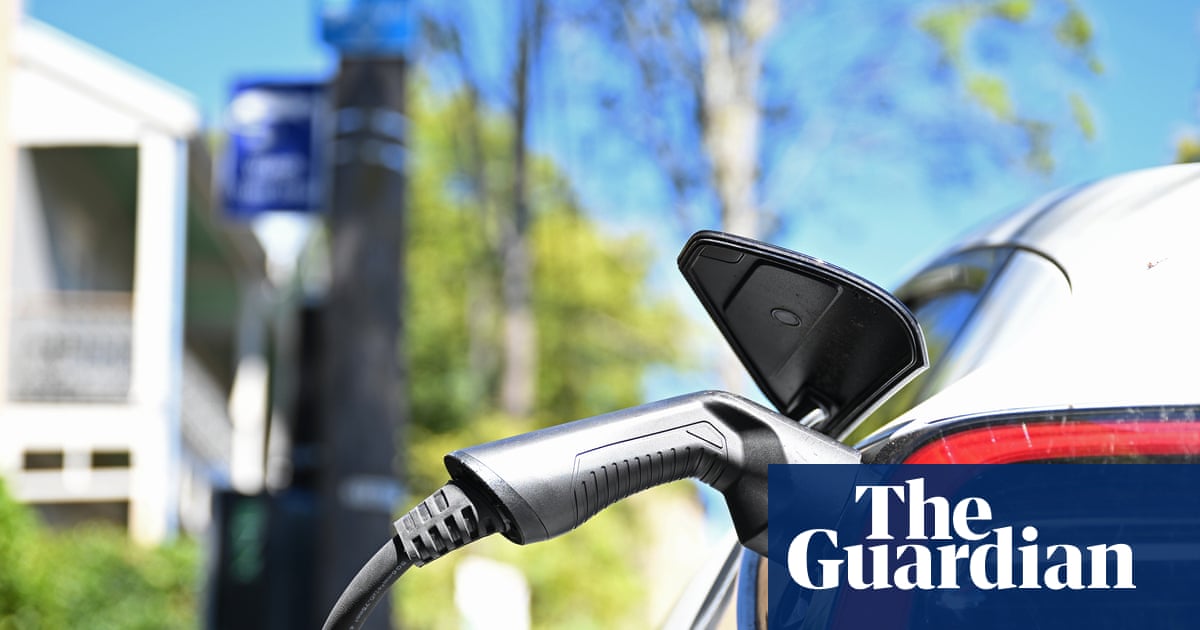
High petrol and diesel prices are causing Australians to turn to electric vehicles, with almost a third of new car sales in July being an EV. Photograph: Dan Himbrechts/AAPView image in fullscreenHigh petrol and diesel prices are causing Australians to turn to electric vehicles, with almost a third of new car sales in July being an EV. Photograph: Dan Himbrechts/AAPExplainerAugust reveals Australians’ big appetite for weight-loss drugs, love for ‘dupe’ brands and an accelerating EV uptakeReporting season shows how consumers are responding to cost of living pressures and how retailers are responding
Get our breaking news email, free app or daily news podcast
Australians are buying less pizza but more weight-loss drugs. They love “dupes” but don’t enjoy writing letters.
Here are five key takeaways from the August reporting season that show what consumers are buying as cost of living pressures reignite, and how retailers are responding.
Kmart’s home brand, Anko, started out with a strategy of mimicking popular items, like Birkenstocks and Skims, at a fraction of the price.
The “dupe” strategy that won over the masses is expanding, and going upmarket.
The Wesfarmers-owned Kmart Group, which includes Target, generated $11.7bn in sales last financial year, underpinned by Anko, according to its annual results.
Anko has moved into furniture and is pitching itself as a rival to Ikea through its new K home store. Meanwhile, there are now six Anko-branded stores in the Philippines run via a joint venture, and further global expansion on the horizon.
The biggest strategy change in recent months has been what the retailer describes as “one-up and two-up” price tier categories, whereby Anko offers an entry-level product and a couple of higher quality – and higher priced – options to entice those who like more stylish dupes.
Domino’s Pizza has long been popular for budget conscious families and penniless teenagers, with value deals aplenty.
That has started to change, with the pizza chain reducing its level of discounting, in a move designed to improve profitability for franchisees and investors.
While revenue dropped more than 11% from its Australian and New Zealand operations over the past 12 months, it believes the new model will help its franchisees operate more sustainable businesses.
Domino’s is the fourth biggest fast food chain by store numbers, in Australia after Subway, McDonald’s and KFC, data from analytics company GapMaps shows.
But the pizza chain is in a tricky place given it is trying to reduce discounting at the same time as cost of living pressures reignite.
It is hoping its new tie up with Coca-Cola, replacing Pepsi from September, may pay dividends as customers respond to a new and expanded drinks menu.
Sigma Healthcare-owned Chemist Warehouse is cashing in on weight loss drugs in unexpected ways, as sales of appetite altering GLP-1 drugs grow.
Sigma’s chief executive, Vikesh Ramsunder, told analysts after the company’s earnings result that customers buying GLP-1 drugs, like Ozempic, are also putting other products such as protein powders into their shopping baskets because rapid weight loss can also lead to muscle loss.
Interestingly, those taking weight loss drugs are also buying more beauty products.
“It’s really about the fact that we’re selling products linked to individuals who are taking these medicines that they probably feel better, so they buy more kinds of beauty products and more healthcare-related vitamins and supplements,” Ramsunder told analysts.
All up, the shopping basket size of a GLP-1 customer is 40% larger than those not buying weight loss products, according to Chemist Warehouse data.
The electrification of Australia’s car industry is in full swing, accelerated by high petrol prices caused by the Iran conflict.
Eagers Automotive, operator of the largest network of car dealerships in Australia, noted in its financial results that once a driver steps away from a full combustion engine, they rarely go back.
“The one thing we have observed is that the transition from a fully combustion engine car to a full electric vehicle – and that transition might include a hybrid vehicle, a plug-in hybrid vehicle, and ultimately a full battery electric vehicle – is a one-way street,” the chief executive of Eagers Automotive, Keith Thornton, told analysts.
Almost one in three new vehicles sold in Australia during July was electric, with combined battery-electric and plug-in hybrid sales reaching a record 32% of new car sales, according to the Electric Vehicle Council.
EV sales are now running about triple the volume from a year ago.
The government-owned Australia Post reported a pre-tax loss of $108m for last financial year, as rising delivery costs and the existential decline of letter sending weighs on its finances.
Letter volumes are now at 1930s levels, when Australia’s population was about one-quarter the current size. Today, most letters are sent by businesses and government agencies.
The problem for the postal service is that the cost of maintaining a national delivery system is getting more expensive at the same time as letters are phasing out, with volumes falling a further 15% during the last year alone.
To partially offset costs, Australia Post is increasing the price of a basic stamp by 15c to $1.85 on 1 September.
Stamp price increases have been extreme – it cost 70c just over a decade ago to send a regular letter – raising questions over how much longer snail mail will exist.