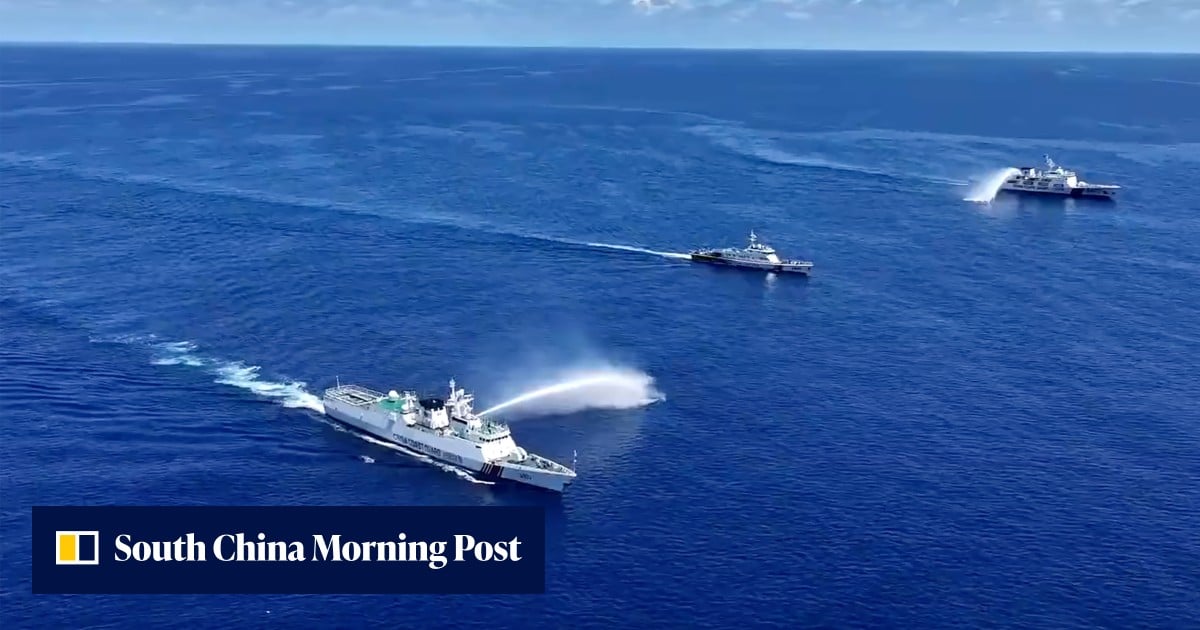
Researchers create AI framework to read unknown vessels’ intentions by identifying them as ‘hostile’ or ‘harmless’ to assess risks at sea
3-MIN READ3-MIN1Chao Kongin BeijingPublished: 10:00pm, 29 Aug 2026A Chinese coastguard ship is shielding a cluster of fishing boats when several small, fast vessels begin circling – sometimes darting closer, sometimes backing off. Are they just curious fishermen? Or are they probing for a weak spot, trying to lure the patrol ship into a trap?In the real world, a split-second decision could escalate a tense maritime stand-off into something far more dangerous. This is exactly the kind of nerve‑wracking scenario Chinese coastguard researchers have been running inside a computer war game.Their findings, published this month, revealed a surprising number: under the existing rule‑based command system, the simulated Chinese coastguard would resort to lethal weapons only 0.3 per cent of the time.
It is a remarkably low risk – but for Beijing, even that chance is too high when the encounters involve sensitive, disputed waters.
The AI does not simply stamp a target as “hostile” or “harmless”; it continuously calculates the odds of multiple possible intentions – from routine fishing to coordinated harassment – and adjusts its response accordingly.