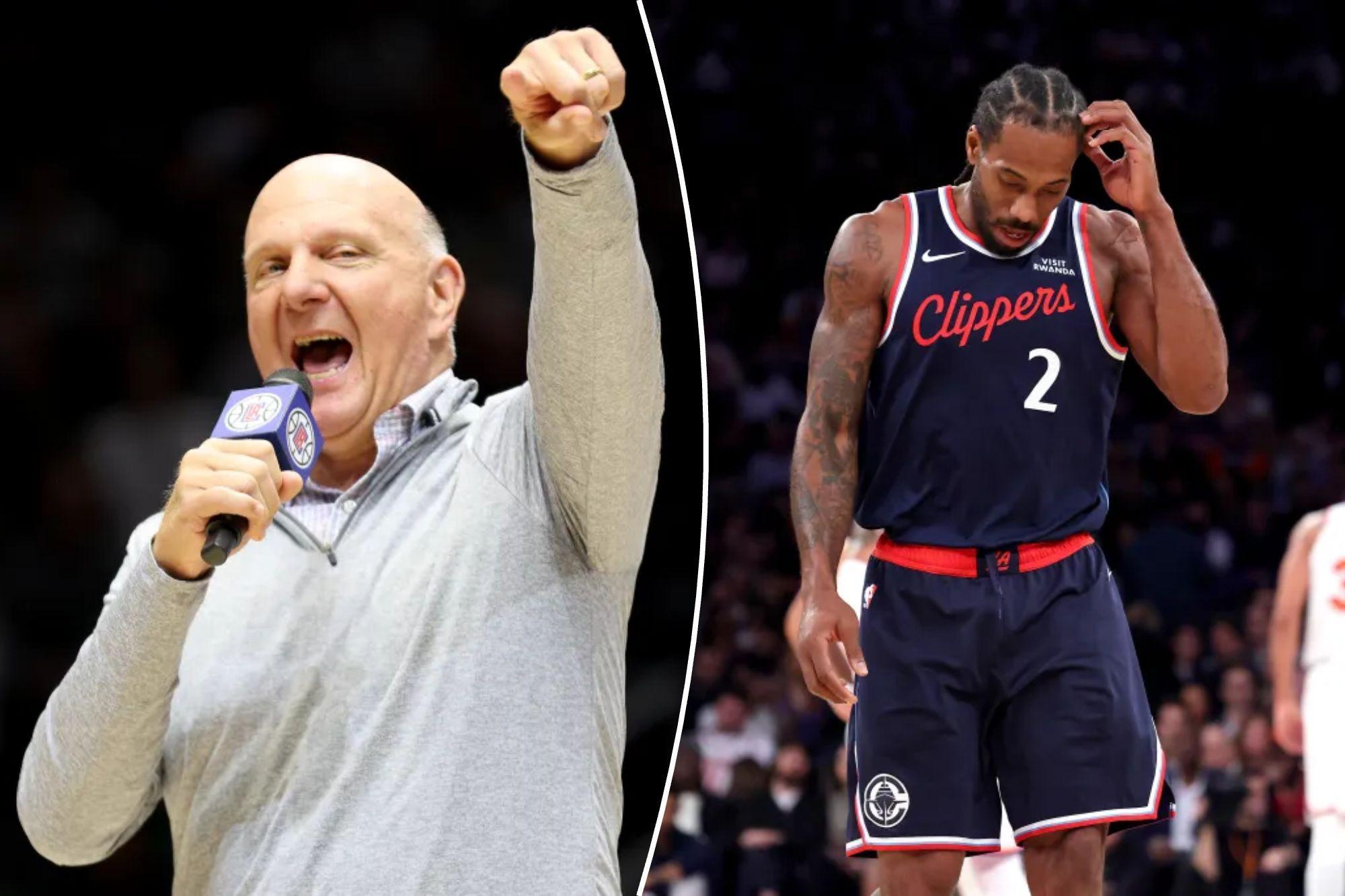
Add The California Post on Google The most consequential outcome of the NBA’s Kawhi Leonard investigation may not be the punishment. It may be the road map the league leaves behind.
After nearly a year examining whether the Clippers circumvented the salary cap through Leonard’s endorsement relationships with team sponsors, the investigation reportedly appears to be moving away from its most serious possibility.
ESPN’s Ramona Shelburne said discussions between the league and Steve Ballmer’s lawyers have focused more on a potential “failure to supervise” and the Clippers’ introductions of Leonard’s representatives to sponsors than on direct evidence that Ballmer funneled money to his star.
Shelburne called direct cap circumvention the investigation’s “murder charge”—the most serious allegation and the hardest to prove.
The NBA has cautioned that the investigation remains unfinished and accused ESPN’s previous account of containing “numerous and significant inaccuracies.” Ballmer, Leonard and the Clippers have denied circumventing the cap.
That uncertainty matters. So does the direction of the reported negotiations.
If the league concludes that an owner can introduce a player to team business partners, benefit from the resulting arrangement and avoid the harshest accountability unless investigators uncover a direct order or payment, it will create a dangerous blueprint.
Future teams would not need a secret contract. They would only need some distance.
An owner could connect a superstar with a sponsor, allow intermediaries to handle the terms and later claim no knowledge of what occurred. Plausible deniability would become a roster-building strategy.
That would undermine the salary cap’s purpose. Competitive balance becomes impossible if the wealthiest owners can use their commercial networks to arrange outside compensation that smaller-market or less-connected rivals cannot match.
The scrutiny has already expanded beyond Leonard’s deal with Aspiration to another sponsorship involving Clippers partner Daktronics.
Draymond Green identified the incentive created by weak enforcement.
California Post News: Facebook, Instagram, TikTok, X, YouTube, WhatsApp, LinkedInCalifornia Post Sports Facebook, Instagram, TikTok, YouTube, XCalifornia Post Opinion California Post Newsletters: Sign up here!California Post App: Download here!Home delivery: Sign up here!Page Six Hollywood: Sign up here!
“If the punishments aren’t steep, everybody should do it,” Green said while discussing the Leonard allegations.
The NBA’s collective bargaining agreement permits fines, lost draft picks, contract voidance and suspensions for proven circumvention. Those deterrents mean little, however, if the evidentiary standard effectively requires a billionaire owner to leave written instructions explaining the scheme.
None of this means the NBA should punish Ballmer without sufficient evidence. It means “failure to supervise” cannot become a convenient safe harbor for owners who benefit from arrangements they claim not to understand.
If the league cannot prove this so-called murder charge, it must still establish clear disclosure rules for sponsor introductions, owner investments and endorsement agreements—and impose meaningful consequences when those safeguards are ignored.
Otherwise, the lesson will not be that cap circumvention is forbidden.
It will be that it is permissible when structured carefully enough.