Add The New York Post on Google WASHINGTON —Treasury Secretary Scott Bessent on Friday threatened to cut off $1.8 billion in Iranian shadow banking being processed through the United Arab Emirates as part of Operation Economic Outcast.
The Treasury is targeting Banque Misr UAE, which it estimates processed about $1.8 billion between January 2024 and June 2026 for 103 companies that are potentially part of Iranian shadow banking networks.
The five branches of the targeted bank operating in the UAE were listed in a proposed Treasury rule on Friday “as a Financial Institution Operating Outside of the United States of Primary Money Laundering Concern,” meaning within 30 days the department could boot it from the US financial system.
Each branch is part of Egypt’s second-largest bank, Banque Misr. Its customers include companies that front for Iran’s Ministry of Defense and the Islamic Revolutionary Guard Corps to evade US sanctions, as well as to launder money on behalf of Iranian Supreme Leader Mojtaba Khamenei, Treasury claimed.
Treasury’s Financial Crimes Enforcement Network, or FinCEN, previously identified as much as $9 billion related to possible Iranian shadow banking activities passing through US financial institutions in 2024 alone.
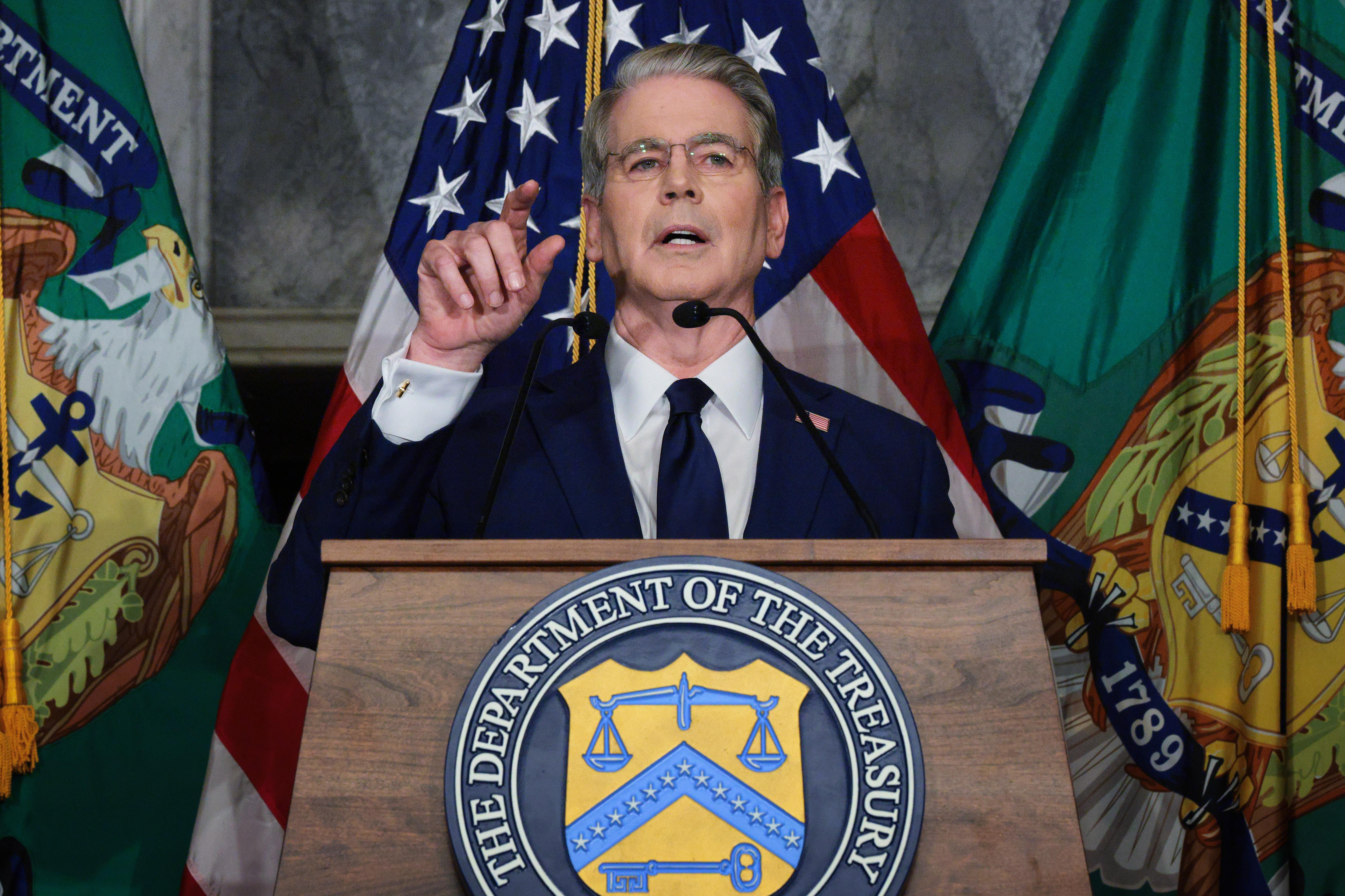
Treasury Secretary Scott Bessent is leading Operation Economic Outcast Getty Images “Treasury promised to sever every economic lifeline Tehran has left and finally end the threat of the Iranian regime,” Bessent said in a statement.
“We also warned that Iran’s enablers cannot continue to enjoy access to the U.S. dollar and the global financial system. Banque Misr UAE decided to find out the hard way, and today, we are taking the first step in holding it accountable for its continued, egregious support of the Iranian regime,” Bessent added.
The US has taken the war with Iran to the economic level, targeting the financial lifelines that keep Tehran running.
The Treasury Department is working to revoke the UAE-based bank’s access to US financial institutions, using a section of the Patriot Act that gives the government the power to target foreign banks, countries, or accounts that pose high money laundering risks related to terrorism.
A final rule from the Treasury penalizing the bank could be published in the Federal Register within 30 days, which would mark the end of the public comment period, though final discretion is left up to the department.
Banque Misr UAE “serves as a critical access node to the U.S. dollar (USD) for Iranian illicit finance, putting U.S. national security at risk and undermining the integrity of the U.S. financial system,” Treasury charged.
Iran is already subject to US sanctions so it uses “shadow” banks to launder funds, procure weapons, and bankroll its regional terrorist proxy groups.
An ATM of the Banque Misr bank – the UAE branch of the bank is facing action from Treasury dpa/picture alliance via Getty Images Treasury also blacklisted Iranian national Reza Mohammad Taeedi, the general manager of the Dubai branch of Iran’s Bank Melli.
And it sanctioned a Hong Kong entity, Kameng Trading Limited, for allegedly acting as a front company that launders money for an Iranian exchange house.
With the war at the six month mark and no peace deal in sight, the U.S. is going after Iran’s money to try and pressure them into a ceasefire.
As part of Operation Economic Outcast, which Bessent announced Monday, the Treasury mapped the networks Iran uses to smuggle oil, evade sanctions, and fund terror. The department is then targeting any source of the regime’s illicit revenue.
The administration calls it “Economic D-Day.”