Add The New York Post on Google Nassau County Democrats have introduced a new sweeping crackdown on human trafficking, positioning the county to become the toughest enforcer of laws against illicit massage establishments anywhere in New York.
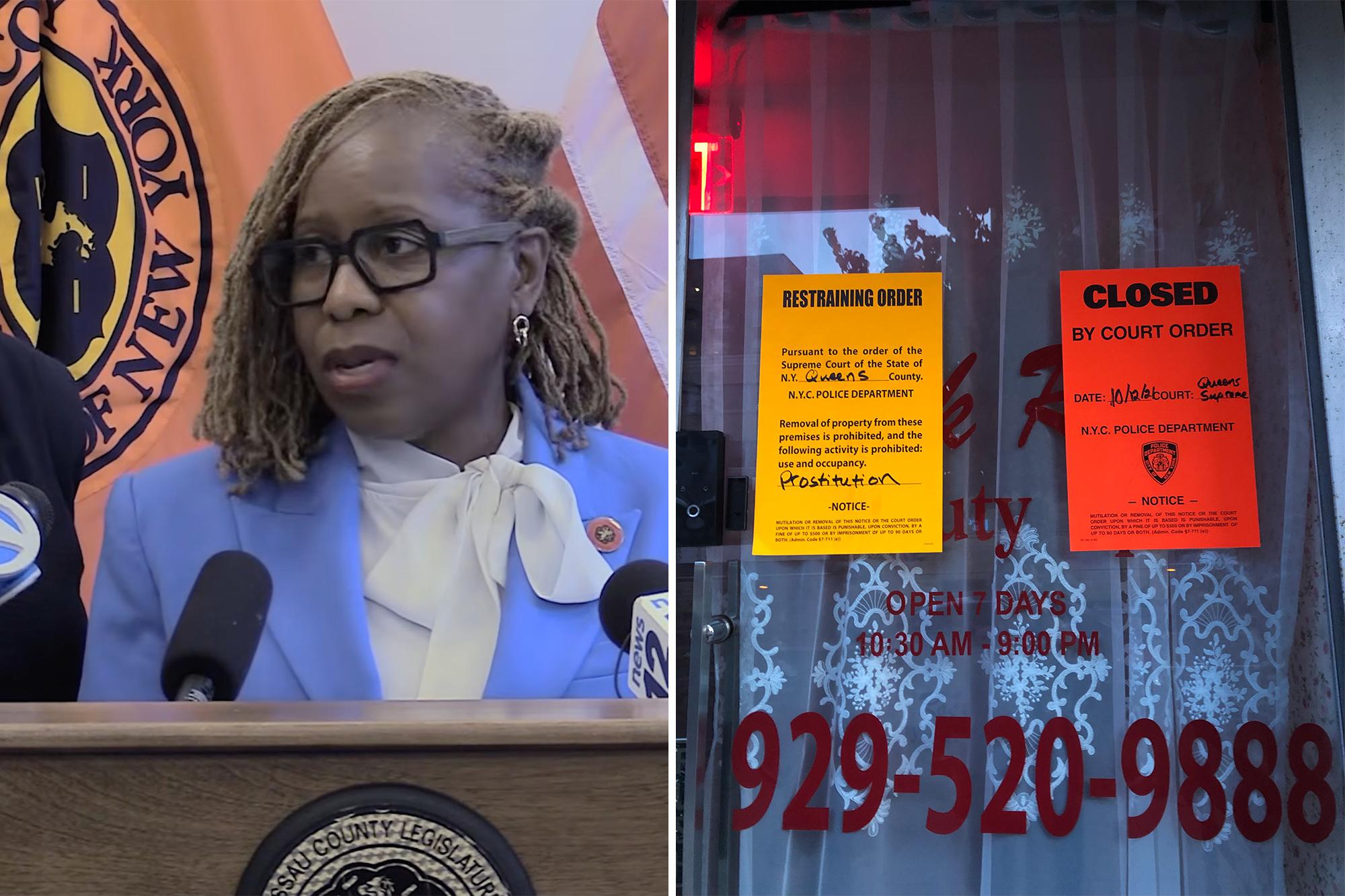
The Nassau County Anti-Human Trafficking Prevention and Victim Prevention Act, unveiled by the Democratic minority on Thursday, would force massage parlors to maintain their licensing, keep employee payroll records, bar anyone from living or sleeping inside the premises, and slap violators with fines that snowball to $25,000.
The bill also targets the landlords and property owners behind parlors raided repeatedly for sex trafficking, opening them up to legal action if their location is investigated time and time again.
“For far too long, too much of our response to trafficking has focused on the person with the least power — the woman being exploited gets arrested, the storefront gets raided, and then too often the people running the operation, enabling it and knowingly providing the location, simply disappear into the background,” said Democratic Nassau Legis. Viviana Russell.
“The victim should not be the easiest person in the room to punish — our laws need to recognize the entire operation, not just the person trapped in the bottom of it,” she added.
The money the county would collect from the fines, Russell said, would flow into a new human trafficking victim assistance fund that would cover emergency housing, counseling, transportation, legal services, workforce development and language assistance for survivors of trafficking.
The legislation would go even further by establishing a new countywide human trafficking response working group that would bring together police, prosecutors, social services, health professionals, educators and survivor advocates to help coordinate how the county identifies victims, prosecutes traffickers and connects survivors to services.
This proposed bill would expand on a Nassau County law already on the books that combats sex trafficking in hotels and motels by banning hourly motel bookings, requiring hotels to keep a detailed log of all guests, preserve all security footage for at least 90 days, and increasing financial pressure on those found to be illicit operators.
The bill is now being reviewed by Republicans — who hold an 11-8 majority — who, along with the legislature’s Presiding Officer Howard Kopel, will decide whether the legislation will be put up for a vote next month.