Add The New York Post on Google Bipartisan fixes to the business of college sports are slated for a US Senate vote next month – but for those watching the system crumble in real time, they can’t come fast enough, On The Money has learned.
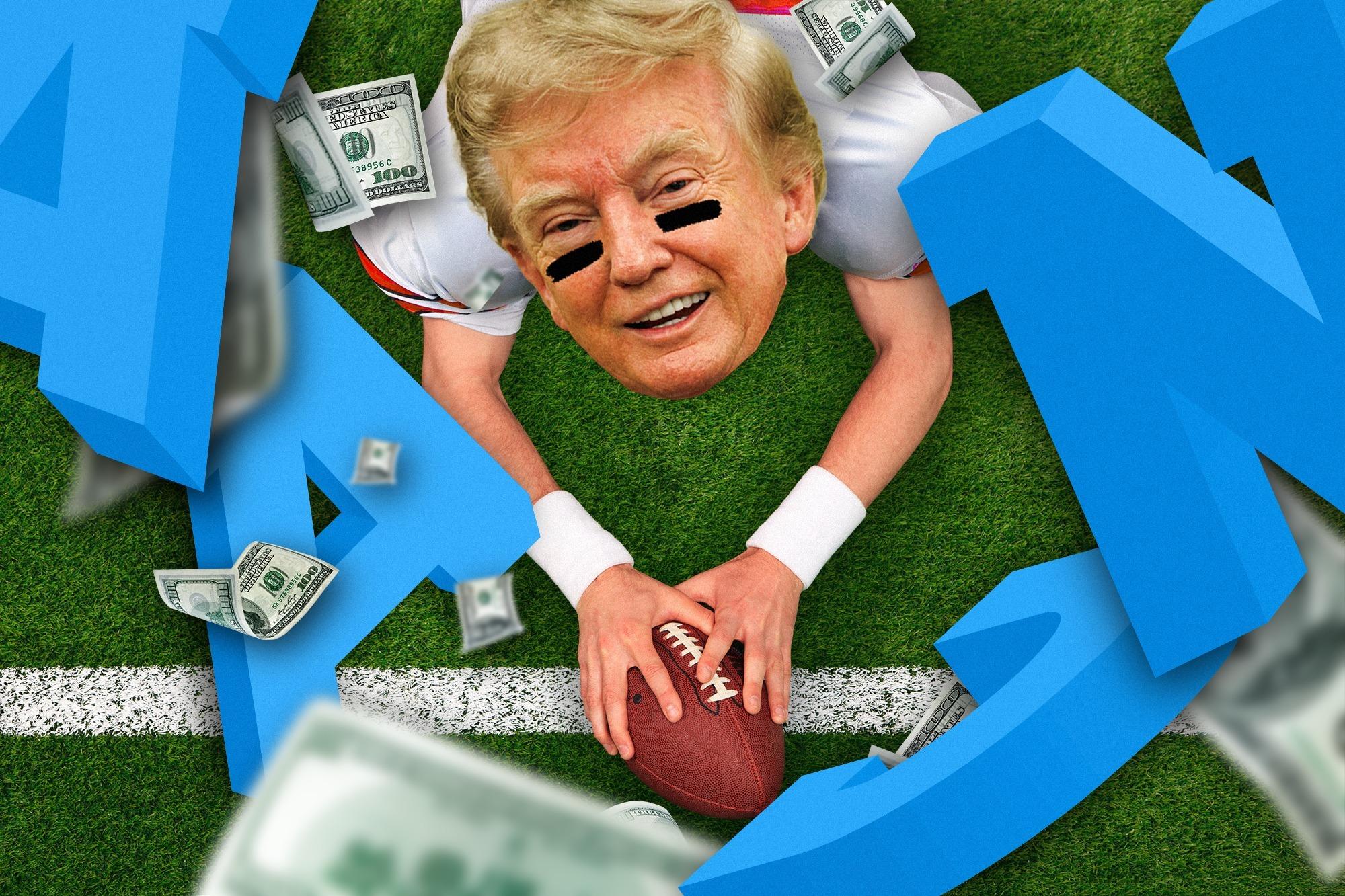
As we’ve been reporting, a court-ordered setup that was originally designed to enable college athletes to make a few bucks has descended into chaos. Big-time players can now jump from school to school in search of ever bigger paydays. Loopholes in the law allow NCAA caps to be superseded.
The biggest schools with huge budgets love the status quo even if everyone else – including many of their own athletes – are getting the shaft. While they stack football and basketball programs with stars, cash is being siphoned away from academic programs and short-changing Olympic and women’s sports.
Now, the situation has reached peak insanity, with an NFL player deciding to quit his team so he can play at the college level – and presumably make more money, my sources tell me.
The curious case of Dae’Quan Wright might be the straw that breaks the back of the bizarre left-wing opposition, which is the only lingering obstacle to the common-sense bipartisan bill now in the upper chamber and slated for a mid-September vote. The simple reason is that the Wright case proves reform is needed immediately.
Wright is a rookie, undrafted tight end with the Cleveland Browns. He was recently in training camp and according to my sources he was cut. Nevertheless, he recently inserted himself into the so-called NCAA sports portal that is designed to allow student athletes to jump to different schools during their college days.
Because of a recent court ruling, and because of the absence of federal rules barring such a move, Wright is likely to play tight end for LSU for Lane Kiffin, who coached Wright while he was at Ole Miss.
A reverse commute like this seems absurd to most of us. Until now, no NFL player has ever returned to college sports. But maybe it’s not so absurd when you consider what Wright would make riding the bench or making the practice squad in Cleveland.
Specifically, compare that to what he can earn by selling his “name image and likeness” for a big-time football program like LSU that’s backed by third-party booster organizations that can skirt NCAA endorsement limits.
We’re talking about millions now that a state court judge in Louisiana said a loophole in NCAA rules allowing college athletes to play for five years can apply to Wright and a coterie of other college football players. They filed their legal action to be allowed to return to college sports because that’s where the money is, I am told.
Former Ole Miss tight end Dae’quan Wright was recently waived by the Cleveland Browns. He inserted himself into the so-called NCAA sports portal designed to allow student athletes to jump to different schools during their college days. Getty Images One person pointing out the madness is Randy Levine, president of the New York Yankees. He’s also vice chair of President Trump’s college sports roundtable (along with Florida Gov. Ron DeSantis, a former college baseball player) that helped formulate a series of recommendations that prompted the Texas Republican Ted Cruz and Washington state Dem Maria Cantwell to introduce legislation known as the Protect College Sports Act.
Levine told me that Wright’s possible return to college football is just the beginning of continued madness unless the legislation gets through the Senate and the House. At least one former NBA player is also looking to return to college and there will likely be more unless sanity returns to the college sports ecosystem.
“Just as we predicted, if no legislative action occurred, the college sports system would crash into chaos,” Levine tells me. “Players who have actually signed pro contracts and played in pro games to be allowed to return to play in college breaks the wall between student athletes and pro athletes.”
Levine notes that Cruz-Cantwell specifically bans pro athletes from returning to college if they’ve just attended four years of school. The reason is obvious.
“Colleges cannot sustain paying pro rates and this will destroy the hope of 18- and 19-year-old freshman and sophomore student athletes,” he adds. “There is only one way to stop this madness and get one standard for all.”
A rep for Wright had no immediate comment; LSU declined comment.