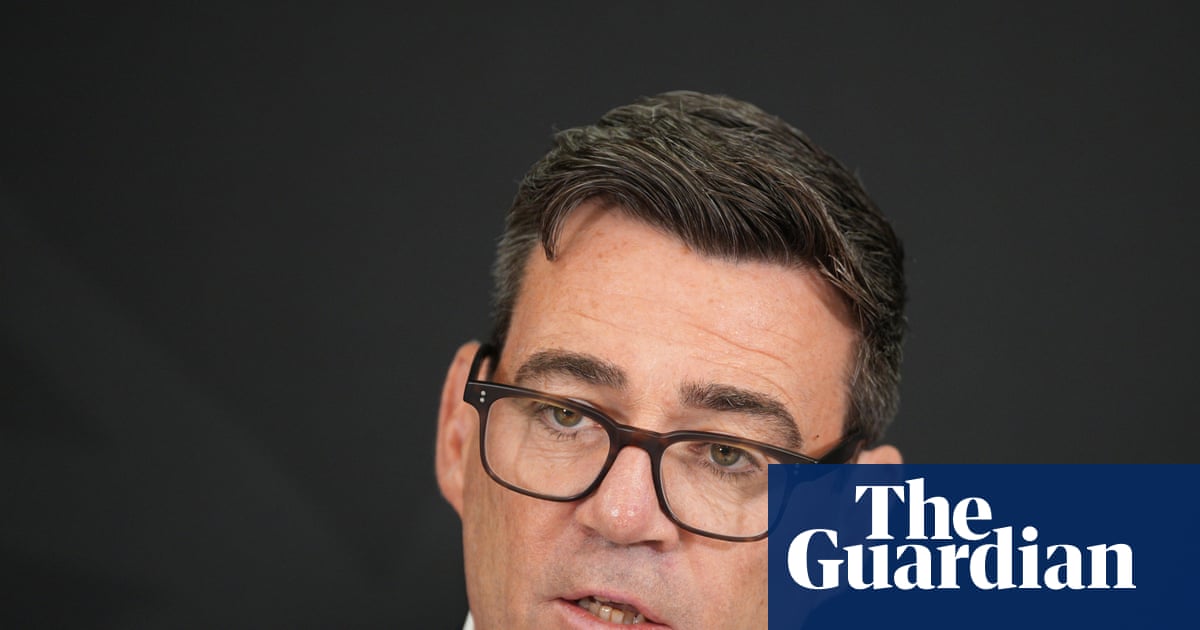
‘There is no single right position and I have deep respect for MPs on all sides, and the expertise they bring to this debate,’ Burnham said. Photograph: Christopher Furlong/Pool Getty/APView image in fullscreen‘There is no single right position and I have deep respect for MPs on all sides, and the expertise they bring to this debate,’ Burnham said. Photograph: Christopher Furlong/Pool Getty/APAndy Burnham to abstain on assisted dying bill to avoid influencing debateExclusive: PM also warns his ministers against trying to influence vote when bill returns to Commons next month
Andy Burnham has told Labour MPs that he will not cast a vote when the assisted dying bill returns to the Commons next month to avoid influencing the debate.
While the move was welcomed by supporters of the measure, No 10 officials say the prime minister has no wish to affect the process in either direction, and is just doing what he thinks is best to allow MPs to reach their own collective view.
In a separate letter to his ministers on Friday, Burnham warned them against trying to influence the process. When an earlier version of the bill was before parliament, Wes Streeting, the then-health secretary who now holds the defence brief, voiced worries about its impact on the NHS.
An original version of the private member’s bill to permit assisted dying in limited circumstances in England and Wales, led by the Labour MP Kim Leadbeater, ran out of time in the last parliament after peers tabled 1,200 amendments.
Another Labour MP, Lauren Edwards, who came second in May’s new ballot for private members’ bills, has tabled a near-identical version to allow adults with fewer than six months to live to apply for an assisted death subject to the approval of two doctors and an expert panel.
It has its second reading in the Commons – the first opportunity MPs get to vote on a bill – on 11 September.
Keir Starmer voted for Leadbeater’s bill as prime minister on its second and third readings, while otherwise remaining neutral on an issue seen as a matter of conscience, and where MPs were given a free vote by their parties. In his letter to MPs, Burnham said he was taking a different approach.
“The government remains neutral on the question of assisted dying and on the passage of the bill,” he said, saying it was “vital that every view is respected”.
Burnham wrote: “There is no single right position and I have deep respect for MPs on all sides, and the expertise they bring to this debate.”
Saying he had “my own personal views on the issue”, Burnham went on: “However, I am also clear that this is a matter for parliament to decide and my role, as the prime minister, will be to lead a government that implements the will of parliament in this area – whether that is to change the law or not.
“I also do not want to unduly influence the debate as prime minister and for every colleague to know it is a genuinely free vote. For these reasons, I have taken the decision that it is most appropriate for me not to vote at second reading.”
As Greater Manchester mayor, Burnham previously said he supported the idea in principle. But in July, he said it would be “very challenging” to introduce the change before palliative care and social care are improved.
Supporters of the bill argue that, with a proposed implementation period of up to four years, there is time for this to happen.
In his letter to ministers, Burnham confirmed that, as is the convention for issues involving conscience, collective responsibility would be again set aside, with frontbenchers free to vote or abstain as they wanted.
MPs should be “able to reach those conclusions without feeling that the government is seeking to influence the debate,” he wrote, adding: “At the dispatch box, I ask that ministers reiterate that this is a question for parliament, on which the official government position is to remain neutral, with the same approach taken outside parliament when dealing with all forms of media, including social media.
“Of course, ministers do not need to resile from their previously stated views when directly asked about them and can correspond with constituents about their previous position, but they should avoid being part of the public debate, and should not express views about the implications of the bill for their department’s responsibilities.”
When he was health secretary under Starmer, Streeting used a message to constituents to express doubts about whether the NHS could afford to establish an assisted dying service given other budgetary pressures.
In a statement, Edwards said: “Andy Burnham is absolutely right to say that people’s personal experiences around terminal illness lie at the heart of the debate and I welcome his view that everyone’s views should be treated with dignity and respect. That is certainly the approach I will be taking and I look forward to what will be a very important debate in two weeks’ time.”