Video Watch how this elephant turns a hot day into a watermelon wonderland At the Memphis Zoo in Tennessee, African elephant Asali beats the heat by munching on watermelons while cooling off in the pool.
When most people are done eating the sweet, juicy flesh of a watermelon, they toss the rind.
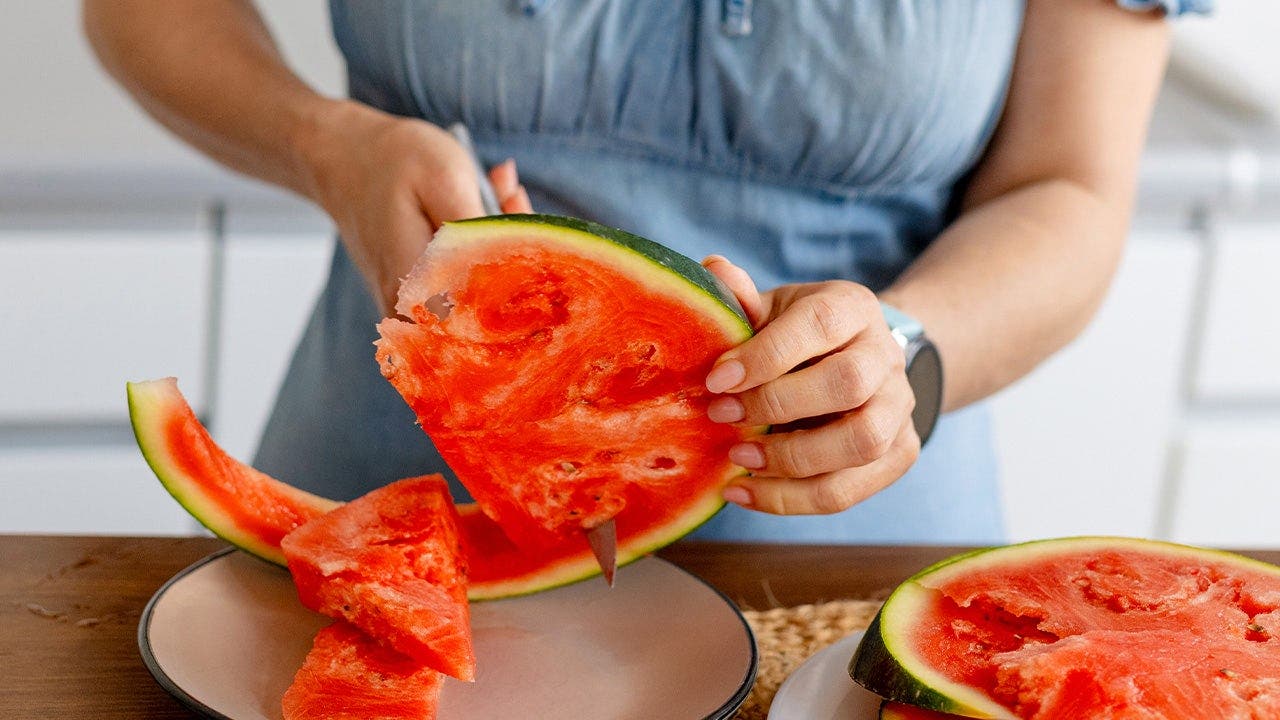
But the U.S. Department of Agriculture (USDA) recently added an official nutrition profile for watermelon rind, providing new information about its nutritional value while highlighting a potential way to reduce food waste.
A one-third-cup serving of raw, seedless watermelon rind contains 10 calories, 1 gram of dietary fiber, 140 milligrams of potassium and 4 milligrams of vitamin C, according to the USDA. While the rind is edible, it is not necessarily a replacement for the fruit's nutrient-dense flesh.
POPULAR GROCERY STAPLE COULD TAKE HIT AS CALIFORNIA FACES MAJOR SUPPLY VULNERABILITY
Watermelon rind nutrition has previously been analyzed by other institutions around the world, but not according to the USDA's standardized requirements, Stephanie Barlow, senior director of communications for the Florida-based National Watermelon Promotion Board (NWPB), told Fox News Digital.
The NWPB funded the watermelon rind analysis and spearheaded the effort to add watermelon rind to the USDA's FoodData Central database, Barlow said.
The USDA recently assigned an official nutrition profile to watermelon rind, an edible part of the popular summer fruit that often ends up in the trash. (iStock)
"Most consumers do not know the rind is edible," she said. "Plain and simple."
A watermelon is, on average, 70% flesh and 30% rind, and 62% of consumers throw out the rind, according to the NWPB's 2023 Watermelon Consumer Usage Study.
SEAWEED-BASED COATING COULD KEEP STRAWBERRIES FRESH FOR DAYS WITHOUT REFRIGERATION, STUDY FINDS
Barlow said that amounts to an average of five pounds of rind that could instead be used in a wide range of recipes.
"The watermelon rind is an interesting addition to the nutrition conversation, especially because it is a part of the fruit we typically throw away," Lisa Young, registered dietitian and adjunct professor of nutrition at New York University, told Fox News Digital. "Eating the rind can be a simple way to get a little more nutrition while reducing food waste."
"The rind skin is similar to its cousin, the cucumber, and it peels right off."
Young added that she wouldn't call watermelon rind a nutritional powerhouse or suggest eating it instead of the juicy flesh.
"The flesh provides important nutrients and antioxidants, including lycopene," she said. "Rind is tougher and less sweet, so preparation matters. … Just be sure to wash the watermelon well before cutting and eating the rind."
CLICK HERE TO SIGN UP FOR OUR LIFESTYLE NEWSLETTER
As more consumers look for ways to stretch their food budgets and use food in new ways, interest in watermelon rind recipes and the rind's versatility has increased year after year, Barlow said.
"Food creators on TikTok and YouTube have contributed to watermelon rind awareness in recipes from around the world, and interest continues to grow," she said.
Because of increasing consumption of the rind, "we wanted to explore what the nutritional benefits of the rind were," Megan McKenna, NWPB's senior director of marketing and food service, told Fox News Digital.
"This required employing the services of a USDA-approved lab to do the testing, as well as working with health professionals to verify the results."
Watermelon rind is edible and can be incorporated into a variety of dishes rather than being tossed after the fruit is eaten. (iStock)
"The new USDA nutrient profile gives dietitians and health professionals standardized data they need to confidently incorporate watermelon rind into recipes and nutrition guidance," Barlow added.
"It helps consumers – and also food service – get even more value from every watermelon they bring into their kitchens."
CLICK HERE TO DOWNLOAD THE FOX NEWS APP
For someone interested in trying watermelon rind, one of the easiest preparations is adding it to a smoothie, she said.
Her favorite way to incorporate it is in a rind slaw that involves shredding pieces of rind and adding vinegar, sugar, salt and oil.
Most consumers don't realize watermelon rind is edible, according to the National Watermelon Promotion Board. (iStock)
The recipe "even leaves on the edible outer green skin and is easily made with simple ingredients," she said.
Watermelon rind can also be pickled, used in stir-fries, roasted or incorporated into baked goods.
"Proper food safe handling at home with all watermelon must start with washing the watermelon under cool, running water," Barlow said.
TEST YOURSELF WITH OUR LATEST LIFESTYLE QUIZ
"A simple rinse is best, no need for any abrasive scrubbing or solutions. Once your whole watermelon is rinsed and dried, it's ready for cutting into slices, dices, sticks and cubes, reserving that rind for recipes."
If a recipe calls for removing the green outer skin, a vegetable peeler works well, she said.
"The rind skin is similar to its cousin, the cucumber, and it peels right off," Barlow said.
Watermelon rind can be blended into smoothies for a simple way to use a part of the fruit that is often discarded. (iStock)
For storage, the NWPB recommends refrigerating cut watermelon in a glass or plastic container, where it should keep for three to five days, McKenna said.
CLICK HERE FOR MORE LIFESTYLE NEWS
"Our watermelon rind pickles keep for up to two weeks when sealed in a glass jar and refrigerated," she said.
Teresa Mull is a freelance writer with the Lifestyle team at Fox News Digital.