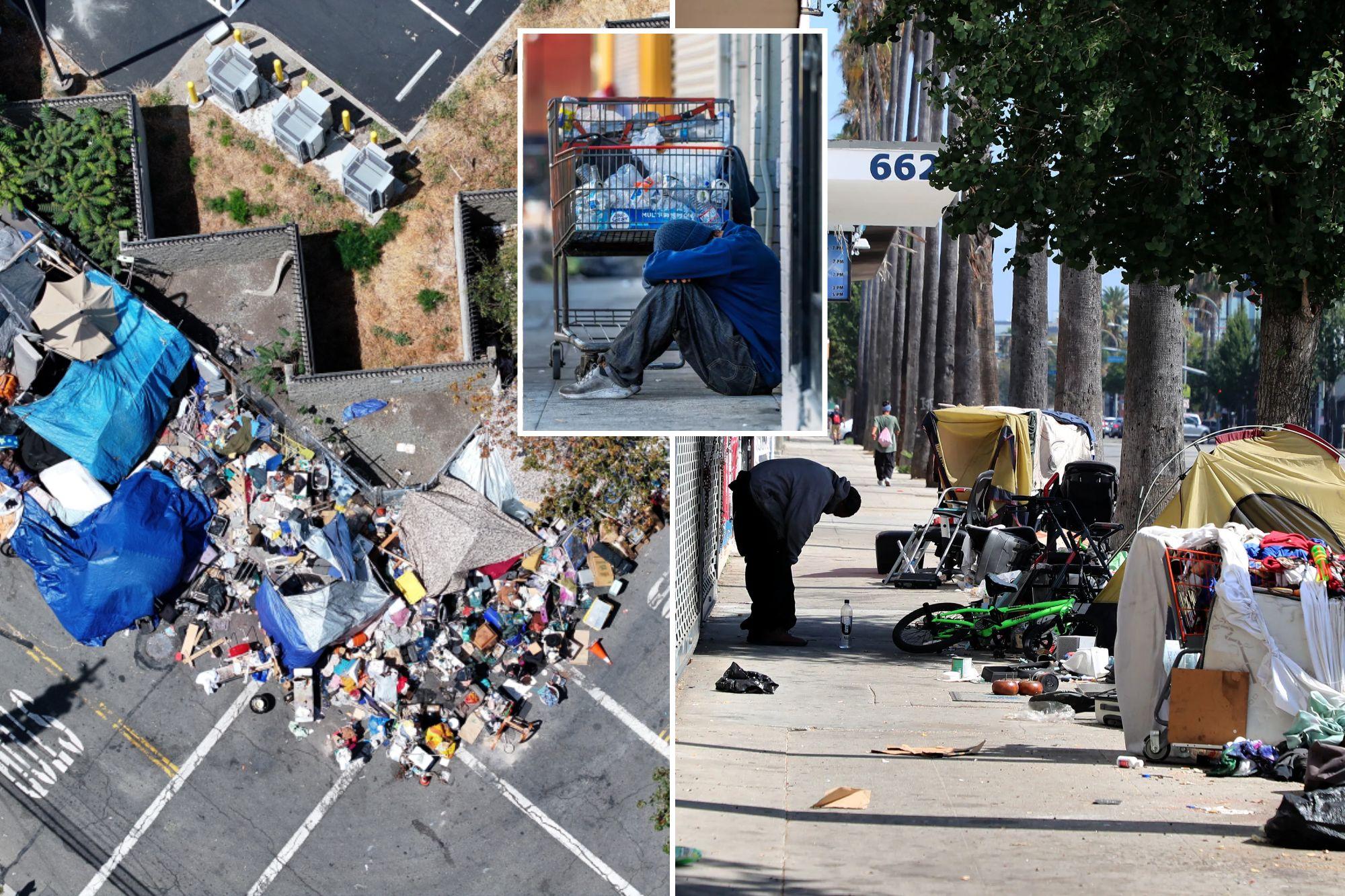
Add The California Post on Google California’s controversial soft-on-crime experiment may have helped put 7,000 more people on the streets, while drug use climbed and treatment fell, according to a new study.
Proposition 47, the 2014 measure that downgraded certain drug and property crimes from felonies to misdemeanors, appears to have driven a roughly 10% increase in unsheltered homelessness between 2015 and 2019, researchers at the Public Policy Institute of California found.
The measure was responsible for about 7,000 additional Californians experiencing unsheltered homelessness during those four years, the study concluded.
That amounted to roughly 20% of California’s overall increase in unsheltered homelessness, based on figures from the US Department of Housing and Urban Development.
And homelessness wasn’t the only troubling trend.
The researchers found that Prop. 47 likely contributed to a 7% to 8% increase in drug use, measured through overdose deaths and hospitalizations.
At the same time, drug treatment went in the opposite direction.
The number of Californians receiving treatment dropped 20%, as courts referred fewer people to treatment programs.
The law was pitched in part as a way to tackle prison overcrowding, and it did reduce incarceration.
But the new findings raise fresh questions about the price of that approach, tying the reform to more people living on the streets, increased drug use and fewer people entering treatment.
“Ever since Prop. 47 was passed in 2014, there’s been a lot of critics of that particular reform,” Magnus Lofstrom, the PPIC report’s lead author told CalMatters. “It’s important to have a sense of what those potential impacts are.”
The researchers say their work is the first study to establish a direct connection between Prop. 47 and homelessness.
They compared California with states that had similar homelessness trends before the law was enacted, then examined how California’s numbers changed relative to those states.
Counties that experienced larger drops in drug arrests and jail and prison populations were more likely to see larger increases in homelessness and overdoses.
Exactly why Prop. 47 produced the increase in homelessness remains less clear.
The researchers could not determine how much was attributable to increased drug use and how much resulted from people who previously would have been sleeping in jail instead ending up on the streets.
“Jails and prisons, they do serve as a source of shelter for people who are experiencing or are at risk of experiencing homelessness,” he said.
California voters eventually moved to partially unwind the policy.
In 2024, they overwhelmingly approved Proposition 36, which increased penalties for certain drug and theft crimes.Supporters argued the measure would reduce drug use and homelessness, although it contained no funding for treatment or housing.
Still, the PPIC researchers stressed that Prop. 47 alone does not explain California’s sprawling homelessness crisis.