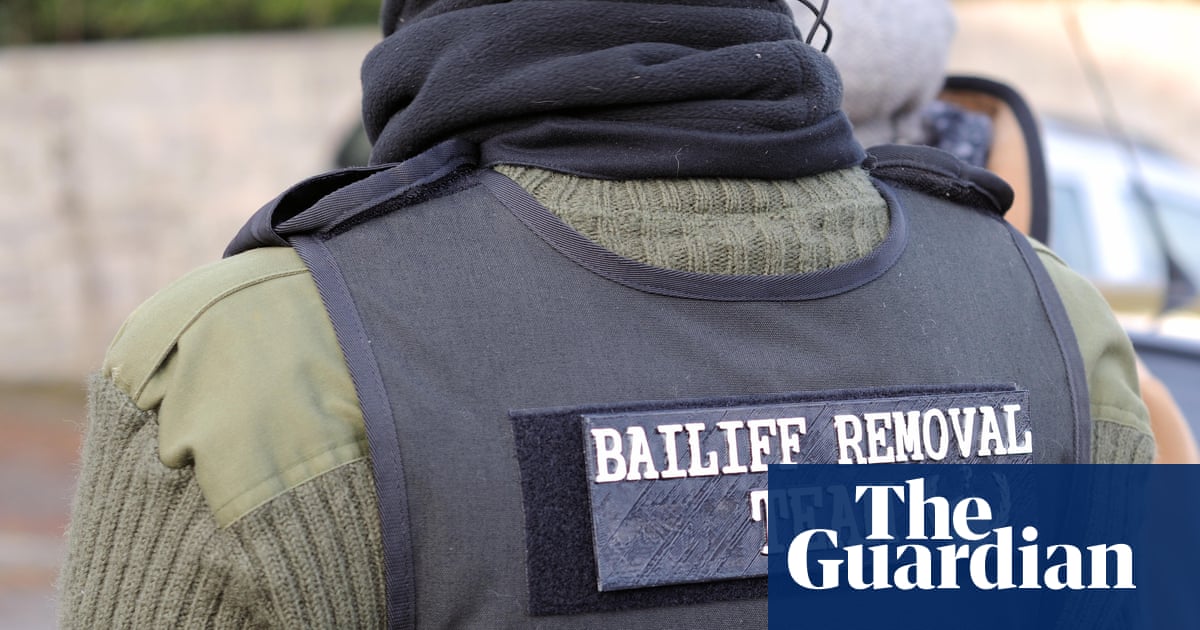
More than 7m cases are sent to bailiff enforcement each year and the industry collects more than £1bn annually. Photograph: Ian Francis/AlamyView image in fullscreenMore than 7m cases are sent to bailiff enforcement each year and the industry collects more than £1bn annually. Photograph: Ian Francis/AlamyBurnham announces crackdown on rogue bailiffs and ‘cowboy builders’New rules are aimed at protecting people in debt in England and Wales and stopping homeowners being ripped off
A clampdown on “rogue bailiffs” has been launched by Andy Burnham amid concerns that vulnerable people are being overcharged and face aggressive behaviour.
In the latest in a series of “everyday fixes” to ease the cost of living and “make Britain fairer”, the prime minister said he was strengthening the rules that apply to bailiffs in England and Wales to better protect people in debt.
He also announced measures to target “cowboy” tradespeople, including builders who rip off homeowners.
The crackdown on bailiffs comes two months after the Guardian revealed that the government had been accused of dragging its feet on the issue.
In June 2025, the Ministry of Justice announced it would legislate to make independent regulation of bailiffs mandatory. But a year later, with no clear plan in sight, the body that oversees the industry in England and Wales criticised the lack of progress.
More than 7m cases are sent to bailiff enforcement each year and the industry collects more than £1bn annually, most of which relates to unpaid parking and traffic fines and council tax arrears.
It is not a requirement for enforcement companies to be authorised by the Enforcement Conduct Board (ECB) and some companies have refused to sign up.
In June, Martin Lewis, the founder of MoneySavingExpert.com, said it was “outrageous that we still don’t have a proper independent regulator [of bailiffs]”.
Read moreIn its announcement, the government said private bailiffs in England and Wales would need to be accredited by the ECB, or work for an enforcement company that is, in order to obtain or renew the certificates they are required to hold.
It added: “Private bailiffs will be held to consistent professional standards, and those facing enforcement action will have access to an independent complaints process – strengthening the rights of the most vulnerable.”
It is thought the new regime will not fully take effect until next year.
Poor practices highlighted by consumer groups range from aggressive behaviour on the doorstep and overcharging, to clamping vehicles used by disabled people and threatening to remove “exempt” possessions.
Sarah Sackman, the minister for courts and legal services, said that when someone was already struggling with debt “the last thing they should face is intimidating behaviour, unfair treatment or being pushed into excessive repayment arrangements they cannot afford”.
Burnham said that after taking on subscription traps and fake discounts, “we’re coming for the cowboy builders” and other unscrupulous traders. From next month, a government-backed scheme will help people identify and hire trusted builders and other traders “with confidence”.
Businesses who sign up to the “Approved Code” scheme for the home improvement sector – developed by the furniture and home improvement ombudsman – will be able to show they meet higher standards, said a spokesperson. This will go live with the first businesses by the end of September and be fully implemented by December.
A separate app-based service called Trusted Payments, due to go live next week, will allow consumers to better protect their money during a building project by ensuring it is held safely – similar to deposit protection schemes for tenants. It will allow them to release cash to pay their builder bit by bit, linked to key project milestones.