Official polling suggests public sentiment in Russia is deteriorating as economic pressure builds. DW asked its users to share their experiences.
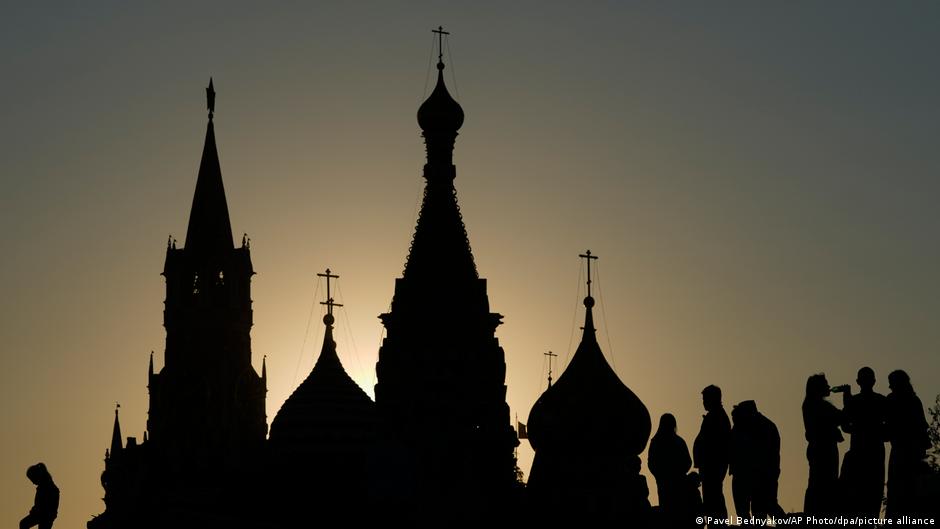
https://p.dw.com/p/5JTXKMany DW social media users paint a bleak picture of life in RussiaImage: Pavel Bednyakov/AP Photo/dpa/picture allianceAdvertisementFuel shortages are disrupting daily routines. Discontent over pay is rising as job prospects weaken. Planning for the future has given way to short-term coping as anxiety spreads in Russia.
Even Russia's major pollsters, including state-run VCIOM and FOM, as well as the independent Levada Center, report a clear decline in public sentiment. The Kremlin, however, insists that conditions remain stable. DW invited its social media users to share their stories. All responses have been anonymised for safety reasons.
A DW subscriber in Moscow's Pechatniki district described a recent attempt to refuel late at night, covering around 40 kilometers (24 miles) in search of stations with supply.
"If there is gas anywhere at all, there's a massive queue of 50 to 100 cars," he said. "We decided that waiting until 3 or 4 a.m. only to head straight to work was a terrible idea, so we went home to sleep. We're on half a tank for now, but by the end of the week we'll either have to hunt for fuel or stand still. Lately, we use the car almost exclusively for trips to the dacha to see our elderly parents."
"Now you have to hunt for gas at night. You don't always get lucky. Often there's no gas at all. If there is, it's a two-to-three-hour wait," said another subscriber.
Fuel shortages triggered by Ukrainian drone strikes on Russian oil refineries have become a leading public grievance. Data from BenZinMap, a fuel tracking portal, show severe sales restrictions across 66 regions as of August 27, with another 16 reporting localized disruptions or sharp price increases.
Alexander Shokhin, head of the Russian Union of Industrialists and Entrepreneurs (RSPP), told news portal RBC that refining capacity has fallen by nearly a third, a view echoed by independent analysts. Government measures — including export bans, increased imports, and relaxed fuel-quality standards — have failed to close the gap.
The data provided by Russia's state statistics service Rosstat show average retail gasoline prices are up 7.4% this year, outpacing overall inflation of 4.19%. But the averages conceal sharp regional variation. Stations owned by major oil companies have kept price increases relatively modest, drawing long queues. Independent stations are charging significantly more, adding pressure on household budgets.
There are few signs of outright panic, though. Drivers appear to be adapting to intermittent supply. "Gas is tight, but St. Petersburg is still holding up for now," said one user. "There were disruptions with gas, but the situation is better now, though it's not available everywhere," said another.
Putin faces falling popularity as Russian economy slowsTo view this video please enable JavaScript, and consider upgrading to a web browser that supports HTML5 video
Official statistics point to exceptionally low unemployment in Russia, with Rosstat reporting a record-low rate of 2.2%. But the figure is misleading. Recruitment platforms hh.ru and SuperJob report a sharp rise in CVs alongside a decline in job postings, suggesting growing dissatisfaction among workers but limited alternatives.
Wage growth has also slowed. Companies in struggling sectors such as automaking and coal mining are increasingly shifting staff to reduced hours or mandatory leave. Some DW readers also describe a labor market under strain.
"Getting a new job is becoming harder and harder: There are no new openings, and the ones available are either low-paying or involve gruelling 12-hour shifts," wrote one subscriber.
"Wage delays make it hard to keep up with loan payments," said another. "I've been working for two-thirds of my salary all summer. It covers food and gym, and that's about it," noted a third. "Layoffs have hit many industries," added a fourth. "The race of inflated salaries is over. And life has gotten monstrously more expensive than before 2022."
This grim sentiment has spread even to prestigious white-collar roles. An IT professional from St. Petersburg described the shift: "There are no sudden economic shocks, just a gradual decline that has been dragging on for the last 10 years. Job prospects are tight, and finding a new role will be extremely difficult."
A 54-year-old Moscow entrepreneur recalled running a service firm for Western clothing brands before Russia's 2022 invasion of Ukraine. After major clients pulled out, he was forced to close the business. He later launched a new venture manufacturing apparel in Central Asia and Bangladesh for sale on Russian online marketplaces. Early on, rising consumer incomes drove rapid growth. But as economic pressure mounted, conditions worsened.
"At first, sales grew faster than we expected. But this business too got caught in the fallout of current policies, isolation, and economic instability," the businessman explained. "Revenues are collapsing catastrophically. And it's not just us. People are cutting back on almost everything."
The dominant theme in responses received by DW is the absence of a positive vision of the future. Respondents, judging from their comments, are not preparing for a single shock, but for a prolonged period of stagnation or decline.
"In our region, the changes are not yet significant," wrote a woman from Sakhalin, an island in Russia's Far East. "Prices are rising, of course, but overall, it feels like people live just as they did before. Personally, the changes in daily life I feel most are with internet service. It has gotten slower, and the VPN is on almost constantly to bypass censorship. A huge number of people from my personal bubble left Russia, though that has been happening since 2022. We sent our son to another country, too."
When planning becomes difficult, day-to-day coping dominates. "Fuel shortages, drone attacks... Basic trips to Turkey have become unaffordable," said another subscriber. "People plan nothing, withdraw cash, and buy dollars. There are no hopes for a bright future or a change of power. Everyone lives for today. Drinking has increased significantly — even in Moscow."
Beyond anxiety and apathy, a notable number of responses point to growing social fragmentation, with people withdrawing into narrower circles and avoiding broader discussion.
"People are mad as hell and blame the West for all their troubles. Life has become far poorer, duller, and more dangerous than before the war," noted one subscriber. "People either shut down or cut off any conversation about life and the war immediately. Almost no one is left putting on a brave face or posturing."
"The issue isn't just fuel or the internet — it's the change in people, even quite decent ones," wrote another subscriber, a woman working in healthcare. "There's internal fear, deep irritation — even among those who understand nothing and want to know nothing. But everyone sees the prices. It frightens people. Internal social taboos are vanishing... The intelligentsia suddenly lost its dust, its cultural veneer — especially military-industrial engineers."
Putin admits Ukraine's drones are hurting Russia's economy To view this video please enable JavaScript, and consider upgrading to a web browser that supports HTML5 video